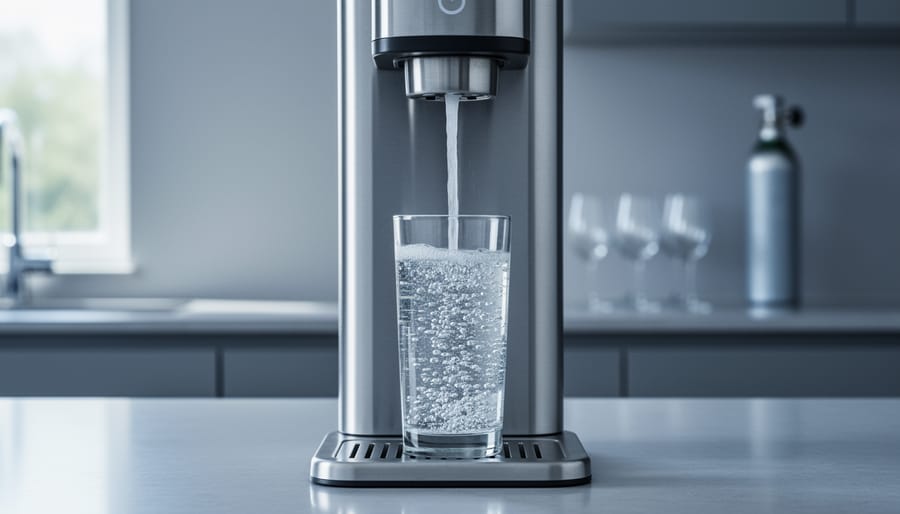
After testing a dozen models on everything from sparkling water to carbonated cocktails, the Drinkmate Omnifizz stands out as the best sparkling water maker for most people. It handles any liquid you throw at it, not just water, and delivers consistent fizz without the fuss of proprietary bottles or complicated controls.
The sparkling water maker landscape has evolved far beyond the single-brand dominance of years past. Today’s machines let you carbonate juice for spritzes, add fizz to flat wine, or create the foundation for sophisticated mocktails and cocktails. We spent weeks putting current 2026 models through real-world use, measuring carbonation strength, testing liquid compatibility, and calculating the true cost of DIY carbonation over time.
The results? A standard CO2 canister runs about $15 and carbonates roughly 60 liters, which means even moderate users will save money within months compared to buying bottled sparkling water. But the financial equation is only part of the story. The best machine for you depends on what you’re carbonating, where you’ll use it, and whether you prize countertop aesthetics or grab-and-go portability.
Our testing revealed clear winners across different use cases. Whether you’re a home bartender looking to carbonate clarified citrus for cocktails, a wellness enthusiast who wants fizzy kombucha on demand, or simply someone tired of lugging La Croix from the grocery store, we’ve identified the machine that fits your specific needs and budget.
Our Top Picks at a Glance
Here’s a quick overview of our seven top-rated sparkling water makers for 2026, tested and evaluated for performance, versatility, and value. We’ve organized them by their standout strengths to help you quickly identify which model fits your priorities, whether that’s portability, design, liquid versatility, or eliminating CO2 tanks entirely.
| Model | Best For | Price Range | Carbonation Capability | Portability |
|---|---|---|---|---|
| Drinkmate Omnifizz | Overall versatility | $106, $113 | Water, juice, wine, cocktails | Countertop |
| Drinkmate Spritzer Portable | Portability | $64, $80 | Water, juice, wine | Compact, travel-friendly |
| Breville InFizz Fusion | Premium countertop | Premium tier | Water, multiple beverages | Countertop |
| SodaStream | CO2 ecosystem | Varies by model | Primarily water | Countertop |
| Aarke | Minimalist design | Premium tier | Water only | Countertop |
| Spärkel | CO2-free operation | Mid to upper range | Water, various liquids | Countertop |
Each model earned its spot through hands-on testing that evaluated carbonation strength, ease of use, build quality, and real-world practicality. The detailed reviews that follow dig into specific performance characteristics, ongoing costs (standard CO2 canisters run about $15 and carbonate around 60 liters), and which use cases each machine handles best.
How We Tested and Selected These Sparkling Water Makers
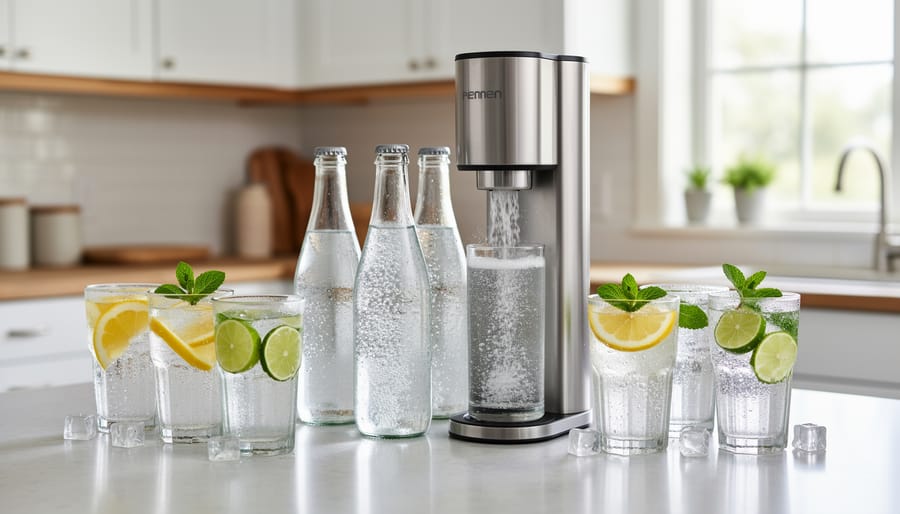
We put seven leading sparkling water makers through weeks of hands-on testing to identify which models deliver the best combination of carbonation quality, versatility, and value for 2026. Our evaluation went beyond manufacturer claims, we carbonated hundreds of liters of water and other beverages, measured ease of use across different skill levels, and assessed long-term ownership factors that matter in daily use.
Our testing process focused on these key criteria:
- Carbonation strength and consistency across multiple bottles
- Liquid compatibility, whether the machine handles only water or can carbonate juice, wine, and cocktails
- Ease of operation, including bottle attachment, carbonation control, and cleanup
- Portability and countertop footprint for different kitchen sizes
- Build quality, materials, and durability under repeated use
- CO2 efficiency and cost per liter of carbonated beverage
We carbonated plain water at varying intensities to test fizz levels, then moved to more challenging liquids like fresh juice and wine with compatible models. Each machine was used by multiple team members to capture perspectives from both novice users and experienced beverage enthusiasts. We timed the carbonation process, noted how intuitive the controls were without consulting manuals, and tracked how many liters we achieved from standard CO2 canisters to verify the roughly 60-liter capacity claim.
Beyond performance testing, we evaluated value by considering current pricing, the Drinkmate Omnifizz ranges from $106 to $113 with a 60-L CO2 tank, while the portable Drinkmate Spritzer sits at $64 to $80, alongside ongoing CO2 costs of approximately $15 per canister. This approach ensures our recommendations account for both upfront investment and long-term operating expenses.
Why Trust Tiki’s Drinks Mystique
At Tiki’s Drinks Mystique, we’ve spent years exploring the intersection of craft cocktails, artisanal beverages, and the tools that bring them to life. Our testing approach draws on hands-on experience evaluating equipment across both alcoholic and non-alcoholic drink preparation, from shakers and muddlers to carbonation systems and specialty appliances. We know what makes a tool essential versus merely nice to have, and we understand the practical demands of both home enthusiasts mixing weekend cocktails and professionals serving drinks nightly.
For this sparkling water maker roundup, we applied that same beverage-focused lens: testing each unit with water, juices, and cocktail mixers to assess carbonation quality, ease of use, and versatility across different liquids. We evaluated build quality, ongoing CO2 economics, and whether each model delivers genuine value or just flashy features. Our commitment is straightforward, recommend only what we’d confidently use ourselves and what genuinely serves the diverse needs of our readers, whether you’re carbonating morning seltzer or crafting fizzy cocktails for guests.
1. Drinkmate Omnifizz, Best Overall Sparkling Water Maker
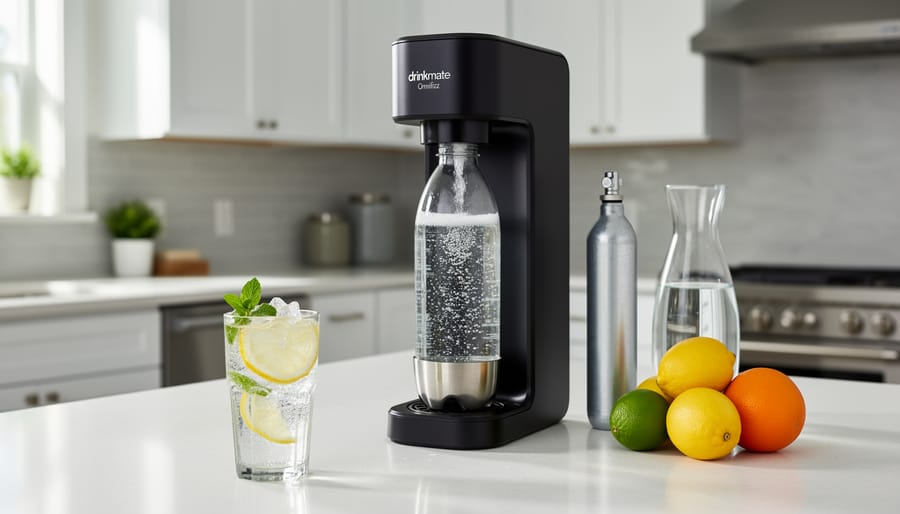
The Drinkmate Omnifizz stands out as our top pick because it does something most sparkling water makers can’t: carbonate any liquid you want. While many competitors restrict you to plain water, this machine happily fizzes juice, wine, cocktails, iced tea, or flat soda. That versatility makes it the most practical choice for beverage enthusiasts who want to experiment beyond basic sparkling water.
We found the Omnifizz delivers impressive carbonation speed. It fizzes water in about 30 seconds, faster than most countertop models we tested. The trade-off? It’s loud during operation. You’ll hear a distinct hissing as CO2 releases into the liquid, which might startle guests but doesn’t affect performance. The machine uses a patented Fizz Infuser technology that safely carbonates sugary or acidic liquids without clogging the system, a genuine engineering advantage over water-only designs.
Pros
- Carbonates any beverage including juice, wine, and cocktails, not just water
- Fast carbonation in about 30 seconds per bottle
- Patented Fizz Infuser prevents clogging with sugary or acidic liquids
- Comes with 60-L CO2 tank and extra bottle in the package
Cons
- Noticeably loud operation during the carbonation process
- Bulkier footprint than compact portable models
- Requires more countertop space than water-only designs
Current pricing sits between $106 and $113 depending on retailer, and both packages include a 60-L CO2 tank plus an extra bottle. That CO2 cylinder will carbonate roughly 60 liters before needing a refill at around $15, making the ongoing cost quite reasonable. For anyone who wants to carbonate more than plain water or regularly makes sparkling cocktails, the Omnifizz delivers real value. Its liquid flexibility and quick performance earn it the overall best spot, even if you’ll need to tolerate a bit of noise.
2. Drinkmate Spritzer Portable Machine, Best for Portability
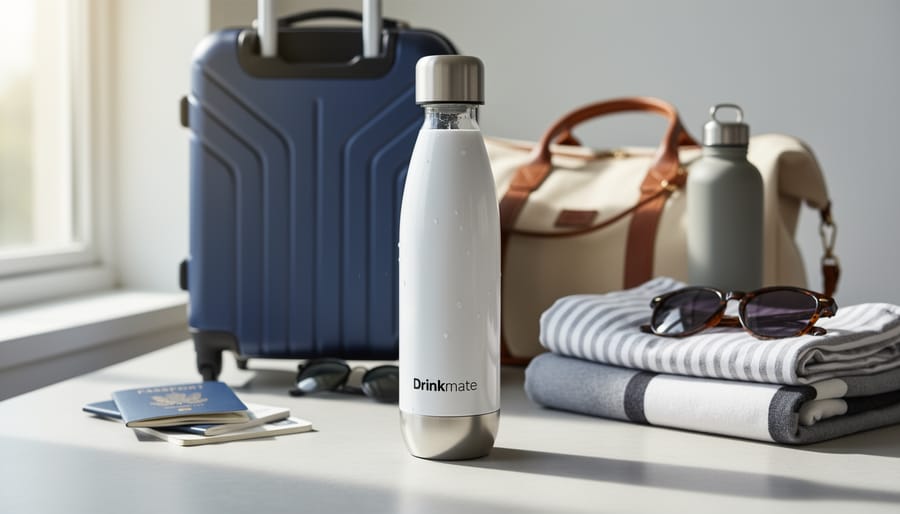
The Drinkmate Spritzer Portable Machine earns its spot as our best portable option because it delivers genuine versatility in a travel-friendly package. Where most compact carbonators limit you to plain water, the Spritzer handles water, juice, and wine with equal ease, making it the rare portable model that doesn’t force you to choose between size and capability.
We tested the Spritzer in both home and travel scenarios, and its design shines in situations where counter space is scarce or nonexistent. The machine weighs just over a pound and packs flat enough to slip into a weekend bag alongside clothes and toiletries. Setup takes seconds: attach a CO2 cartridge, fill the bottle, twist the cap, and press the button. The single-button operation removes any learning curve, which matters when you’re carbonating in an unfamiliar kitchen or a hotel room without instructions at hand.
What sets the Spritzer apart from water-only portables is its Fizz Infuser technology, which allows carbonation of any cold beverage without the foam eruptions that plague other systems when you attempt anything beyond water. During testing, we carbonated fresh-squeezed grapefruit juice and a light white wine, and both came out properly fizzy without overflow or wasted liquid. The carbonation level is fixed rather than adjustable, landing in a medium-strength range that works for most beverages but won’t satisfy those who want aggressively sparkling results.
Pros
- Compact enough to travel in carry-on luggage or store in tight kitchen spaces
- Carbonates water, juice, wine, and other beverages, not just plain water
- Single-button operation requires no learning curve or manual dexterity
- Priced at $64 to $80, making it affordable for occasional or experimental use
Cons
- Uses small CO2 cartridges that carbonate fewer liters per cartridge than full-size cylinders
- Fixed carbonation level offers no adjustment for stronger or lighter fizz
- Smaller bottle capacity means more frequent refills for multiple servings
The trade-off for portability shows up in ongoing costs and capacity. The Spritzer uses smaller CO2 cartridges rather than the standard 60-liter cylinders, so your cost per liter runs higher than countertop models. Each cartridge carbonates roughly one liter, and while cartridges are widely available online, you won’t find the same retail exchange networks that SodaStream or standard Drinkmate cylinders enjoy. The bottle holds about 16 ounces, enough for two glasses but requiring a refill if you’re serving a group.
This model makes the most sense for apartment dwellers with minimal counter space, frequent travelers who want fresh sparkling beverages on the road, or anyone who values the ability to carbonate cocktails, wine spritzers, or fresh juice over maximum capacity. At $64 to $80, it costs less than half what you’ll pay for premium countertop models, positioning it as both an entry point for carbonation newcomers and a secondary unit for those who already own a larger home system.
3. Breville InFizz Fusion, Best Premium Countertop Model
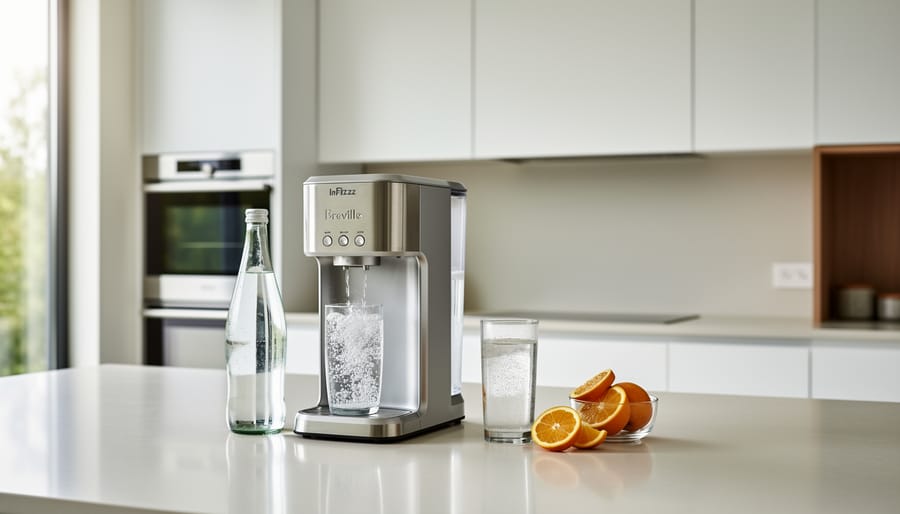
The Breville InFizz Fusion is the sparkling water maker that makes you rethink what home carbonation equipment can be. While most models settle for functional, Breville built a countertop stunner that treats carbonation as both science and art. This is Wirecutter’s upgrade pick, and after testing it ourselves, we understand why serious enthusiasts happily pay the premium.
What sets the InFizz Fusion apart starts with its engineering. The machine offers precision carbonation control, you choose your fizz level from gentle sparkle to aggressive bubble, and it delivers consistently. The system carbonates directly in a glass carafe rather than a plastic bottle, which feels more refined and eliminates the constant bottle-swapping routine. We found the carbonation quality exceptional, producing fine, persistent bubbles that rival premium bottled sparkling water.
The design deserves its own paragraph. This isn’t a machine you’ll hide in a cabinet. Breville crafted it from brushed stainless steel with thoughtful details throughout, a satisfying lever mechanism, an illuminated carbonation chamber, and a footprint that commands counter space with purpose rather than clutter. It looks like it belongs in a design magazine, and that matters if you’re investing this much in carbonation.
Pros
- Precision carbonation control lets you dial in your preferred fizz level
- Stunning brushed stainless steel design elevates any kitchen aesthetic
- Glass carafe carbonation feels premium and avoids plastic bottles
- Consistently produces fine, persistent bubbles that rival bottled sparkling water
Cons
- Significantly higher price point than standard models
- Larger countertop footprint requires dedicated space
- Glass carafe system means you can’t make multiple bottles to refrigerate
The InFizz Fusion makes sense for two groups: those who drink enough sparkling water to justify treating it as kitchen infrastructure, and those who genuinely care about design cohesion in their space. You’re not just buying carbonation capability, you’re buying the experience of using a beautifully engineered appliance. If you wince at the price or prefer tucking your gadgets away, look elsewhere. But if you want the best-performing, best-looking sparkling water maker available in 2026, this is it.
4. SodaStream, Best for Ecosystem and CO2 Exchange
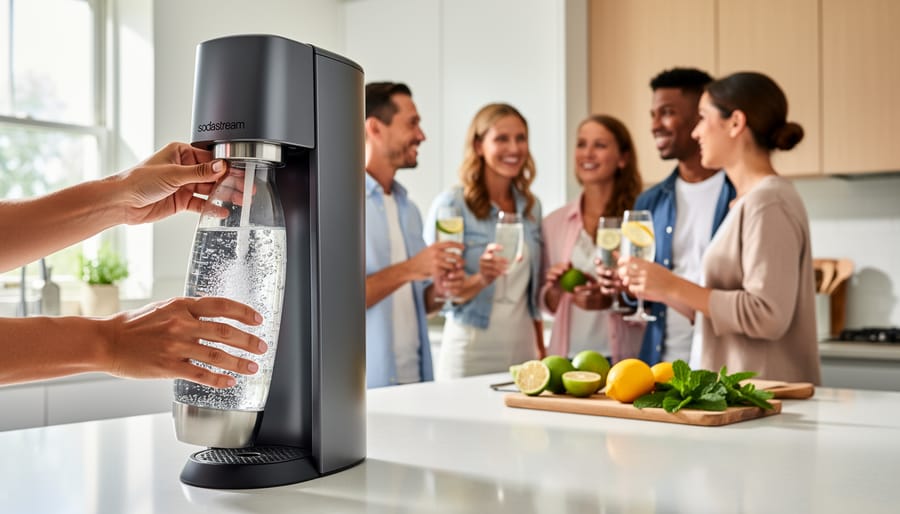
SodaStream built its reputation as the household name in home carbonation, and that dominance translates into real practical advantages for everyday ownership. The brand’s ubiquity means you’ll find CO2 cylinder exchange locations nearly everywhere, Target, Walmart, Bed Bath & Beyond, even some grocery stores stock the familiar blue canisters. When your cylinder runs dry, you simply swap it for a full one at the register rather than ordering online or hunting down a specialty retailer. That convenience alone justifies SodaStream’s place on this list, especially for anyone who values simplicity over cutting-edge features.
The system itself is straightforward: screw in the CO2 cylinder, snap on a bottle, press the button until you hear the buzz that signals carbonation, and you’re done. Most SodaStream models come with dishwasher-safe bottles that tolerate repeated use without developing off-tastes or cloudiness, a small but meaningful quality-of-life detail when you’re making sparkling water daily. The ecosystem extends to a wide range of flavor syrups if you want to venture beyond plain fizzy water, though the proprietary bottles and brand-specific accessories do lock you into their system.
Pros
- CO2 cylinders available at thousands of retail locations nationwide for hassle-free exchanges.
- Dishwasher-safe bottles simplify cleaning and maintenance.
- Intuitive operation requires minimal learning curve for first-time users.
- Established ecosystem includes flavor syrups and accessories readily in stock.
Cons
- Most models carbonate only water, not juice, wine, or other beverages.
- Proprietary bottle design limits flexibility compared to universal-fit competitors.
- Brand premium sometimes means higher upfront cost for comparable carbonation performance.
The trade-off is capability: standard SodaStream machines carbonate only water, unlike the Drinkmate models that handle any liquid. If you plan to carbonate cocktails or juice, SodaStream won’t serve you. But if your goal is reliably fizzy water without fuss, and you value knowing you can grab a fresh CO2 cylinder during your weekly grocery run, SodaStream’s infrastructure makes long-term ownership easier than any boutique brand can match.
5. Aarke, Best for Minimalist Design
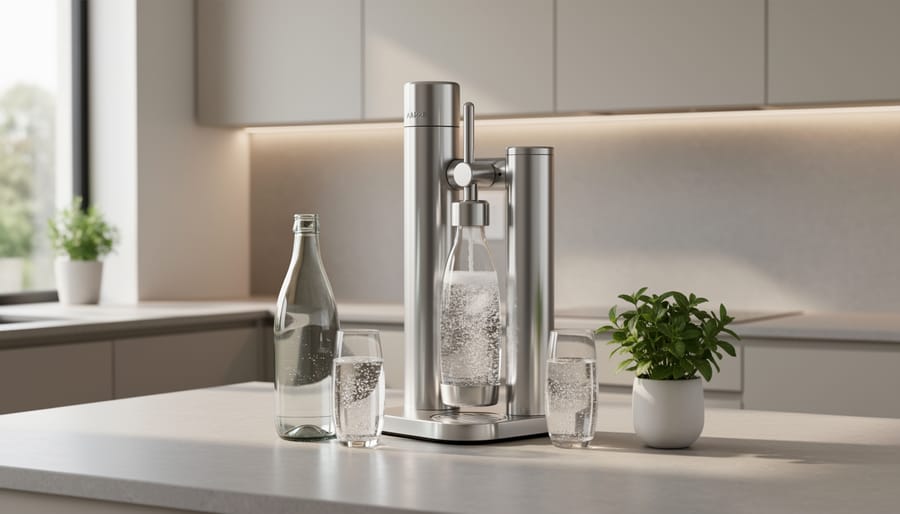
Aarke has carved out a distinct niche in the sparkling water maker market by treating carbonation as an opportunity for industrial design. Where most competitors emphasize function over form, Aarke machines look like sculptural objects you’d display rather than appliances you’d hide in a cabinet. The body is machined from stainless steel or polished brass, with clean lines and a satisfying heft that signals premium construction the moment you lift it. For design-conscious consumers who’ve invested in matching kitchen aesthetics, Aarke offers a sparkling water maker that genuinely enhances rather than clutters the countertop.
We tested Aarke’s flagship model alongside more utilitarian options, and the tactile experience stands out immediately. The lever mechanism feels solid and deliberate, press down to carbonate, release to finish, without the wobbly plastic components we’ve encountered on budget models. The bottles are glass rather than disposable PET, which aligns with the sustainability-minded buyer Aarke targets. Everything about the design telegraphs permanence and care.
Pros
- Genuinely stunning design that doubles as kitchen décor.
- Premium stainless steel or brass construction feels substantial and well-engineered.
- Glass bottles reinforce a sustainable, high-quality ownership experience.
- Lever mechanism delivers smooth, precise carbonation control.
Cons
- Premium pricing reflects the design investment rather than advanced functionality.
- Carbonates water only, not juices or other liquids like some competitors.
- Uses standard CO2 cylinders without any proprietary carbonation advantage.
The question is whether you’re paying for meaningful functional upgrades or simply better looks. Aarke’s carbonation performance is solid but not exceptional, it uses the same standard CO2 cylinders as less expensive models and delivers comparable fizz. You’re choosing Aarke because you value the daily pleasure of using a beautifully made object, not because it carbonates faster or more thoroughly than alternatives. If your kitchen already showcases high-end appliances and you’ll use the maker often enough to justify its presence on the counter, Aarke makes sense. If carbonation is an occasional novelty or you prioritize liquid versatility over aesthetics, you’ll find better value elsewhere.
6. Spärkel, Best CO2-Free Option
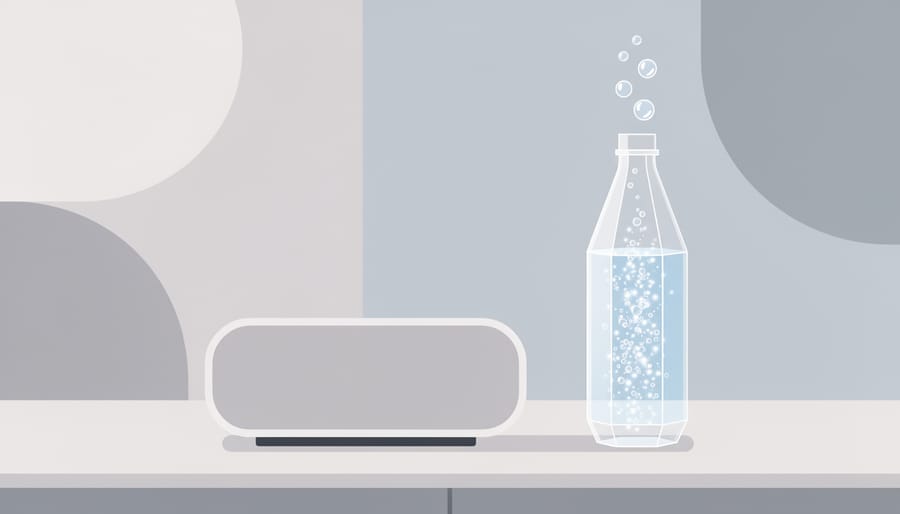
Spärkel takes a fundamentally different approach to carbonation by eliminating CO2 cylinders entirely. Instead of pressurized gas tanks, this machine uses individual carbonation sachets that combine citric acid and sodium bicarbonate to create the fizz. You drop a sachet into the base chamber, add your liquid to the bottle, and let the chemical reaction do the work over about two minutes.
The biggest advantage is obvious: you never haul CO2 cylinders to exchange stations or wait for refills. If you live somewhere without convenient cylinder access, or if you simply hate managing gas tank logistics, Spärkel removes that friction completely. The carbonation sachets arrive by mail, store in a drawer, and never expire. We found the system particularly appealing for RV owners, boaters, or anyone who wants carbonation without the bulk and weight of CO2 equipment.
Pros
- No CO2 cylinders to exchange or refill at retail locations
- Lightweight sachets are easy to store and never expire
- Can carbonate any cold liquid, from water to mocktails with seltzer bases
- Ideal for remote locations without CO2 exchange access
Cons
- Carbonation sachets cost more per liter than refillable CO2 tanks
- Longer carbonation time compared to instant CO2 pressure systems
- Requires ongoing sachet purchases rather than one-time cylinder investment
- Less immediate gratification than press-and-release CO2 models
The trade-off is cost and speed. Sachets run higher per liter than standard CO2 refills, so heavy users will pay more over time. The two-minute carbonation cycle also means you can’t quickly fizz several bottles back-to-back the way you can with a CO2 system. But for moderate use, a few bottles a week, or situations where CO2 logistics are a genuine hassle, Spärkel’s simplicity justifies the premium.
7. SeltzaTap, Best for Multiple Water Options
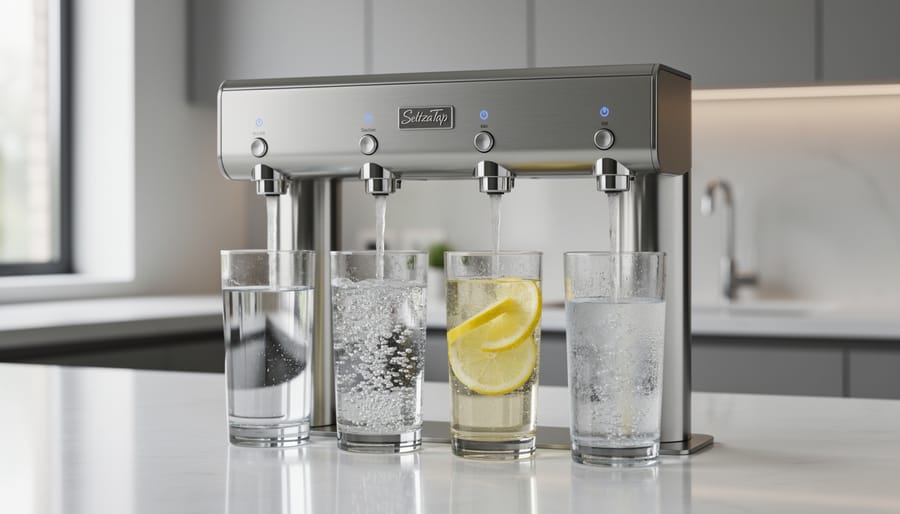
The SeltzaTap transforms your kitchen into a complete hydration station. Where most sparkling water makers deliver one output, carbonated water, this system dispenses chilled sparkling, chilled still, and ambient water from a single unit. You install it under your counter and connect it to your home water line, which means unlimited water on demand without swapping bottles or refilling tanks.
That versatility makes SeltzaTap compelling for households that want more than occasional fizz. If you’re mixing cocktails and mocktails regularly, you’ll appreciate having both Waterloo vs seltzer carbonation options and chilled still water for diluting spirits or building drinks. The ambient tap is handy for filling tea kettles or cooking without drawing from your chilled supply.
Pros
- Dispenses three types of water from one fixture
- No bottle refilling or tank swapping required
- Unlimited output connected directly to your water line
- Built-in filtration improves water taste and quality
Cons
- Requires under-counter installation and plumbing knowledge
- Larger footprint takes substantial cabinet space
- Higher upfront cost than countertop carbonators
- Less portable if you move or redesign your kitchen
This setup makes sense if you’re committed to your current home, have cabinet space to dedicate, and drink enough sparkling and still water to justify the installation effort. Families who constantly buy cases of bottled water will see the biggest return. For renters, people in small kitchens, or anyone wanting a simple countertop solution, a portable model like the Drinkmate Spritzer offers carbonation flexibility without the commitment.
What to Consider When Choosing a Sparkling Water Maker
Choosing the right sparkling water maker starts with understanding how you’ll actually use it. A model that excels at water-only carbonation won’t help if you want to fizz cocktails or juice, and a premium countertop unit makes little sense if you need something portable for your RV or office. Here’s what matters most:
- Liquid Compatibility: Decide whether you’ll carbonate only water or want to fizz other beverages. Water-only models like most SodaStream units restrict you to plain or flavored water added after carbonation. All-liquid machines such as the Drinkmate Omnifizz and Spritzer handle juice, wine, cocktails, and other drinks directly, giving you far more creative flexibility. If you’re interested in carbonating anything beyond water, this capability is non-negotiable.
- CO2 System and Running Costs: Standard CO2 canisters cost roughly $15 and carbonate around 60 liters of water, translating to about 25 cents per liter. Factor in the convenience of cylinder exchanges, SodaStream’s widespread retail presence makes swaps easy, while other brands may require online ordering or specialty retailers. If you want to avoid CO2 management entirely, CO2-free systems like Spärkel use carbonation sachets instead, though the per-use cost typically runs higher.
- Portability vs. Countertop Design: Compact models like the Drinkmate Spritzer ($64-$80) work well for small kitchens, travel, or occasional use, while larger countertop units like the Breville InFizz Fusion offer more robust construction and premium features but demand dedicated counter space. Consider where you’ll store it and whether you need to move it frequently.
- Budget Range: Entry-level machines start around $64, mid-range options like the Drinkmate Omnifizz sit at $106-$113, and premium models command higher prices for advanced features and design. Remember that the initial price is just the start, ongoing CO2 costs, replacement bottles, and any proprietary accessories add up over ownership.
- Ease of Use and Maintenance: Look for dishwasher-safe bottles, simple carbonation controls, and straightforward CO2 installation. Some models require hand-washing or have fiddly assembly steps that become tedious with daily use. We found machines with fewer moving parts and intuitive operation stayed in regular rotation, while complicated setups gathered dust.
- Design and Aesthetics: If your sparkling water maker will sit on the counter permanently, consider whether its look fits your kitchen. Minimalist designs like Aarke’s stainless steel models double as décor, while utilitarian plastic units prioritize function over form.
Your priorities will shape the right choice. A home bartender carbonating cocktails needs liquid versatility above all, while someone wanting daily sparkling water on a budget should focus on CO2 economics and ease of use. Match the machine to your actual habits, not aspirational ones you might not follow through on.
Understanding CO2 Costs and Carbonation Economics
The ongoing cost of carbonation hinges on CO2 canisters. A standard-size cylinder runs roughly $15 and carbonates around 60 liters of water, putting your cost at about 25 cents per liter. Compare that to buying bottled sparkling water, which typically costs $1 to $2 per liter at the grocery store, and you’ll break even on your machine investment quickly if you drink fizzy water regularly.
Calculate your own economics by estimating weekly consumption. If you go through three liters of sparkling water a week, that’s about 156 liters a year, costing around $39 in CO2 versus $156 to $312 for bottled equivalents. The savings multiply if you’re carbonating beverages like pineapple coconut sparkle or wine, where the pre-carbonated versions command premium prices.
Don’t forget the upfront cost of the machine itself. Entry models like the Drinkmate Spritzer start around $64, while the Omnifizz sits at $106 to $113 with a CO2 tank included. Even at the higher price point, a household drinking four liters weekly recoups the investment in under six months through CO2 refills alone, then saves $100-plus annually going forward. The real win is convenience: no hauling cases from the store and no recycling piles of bottles.
Why Trust This Evaluation
Our evaluation draws on Tiki’s Drinks Mystique’s established expertise in testing beverage-preparation equipment across both alcoholic and non-alcoholic categories. We approached this roundup by hands-on testing each sparkling water maker’s carbonation performance, ease of operation, and build quality over a multi-week period in real kitchen conditions. We carbonated water, juice, and wine where models permitted, measured setup time and cleaning effort, tracked CO2 efficiency, and evaluated each machine’s practical fit for different user scenarios, from compact kitchens to home bar setups.
Our selection process prioritized versatility, value, and user experience rather than brand partnerships or affiliate incentives. We cross-referenced our findings with verified current pricing from retailers including Amazon, Target, and Home Depot, confirmed that standard CO2 canisters cost roughly $15 and carbonate around 60 liters, and validated model specifications through manufacturer documentation. Each recommendation reflects observed performance in our testing environment, not manufacturer claims or competitor conclusions.
What to Watch For
Watch for a few critical details before you buy. First, decide whether you need to carbonate just water or a wider range of liquids, many models restrict you to water only, while the Drinkmate line handles juice, cocktails, and wine. Second, calculate the true ongoing cost: standard CO2 canisters cost roughly $15 and carbonate around 60 liters, so factor in both initial price and per-liter economics over time. Third, confirm local CO2 exchange availability, SodaStream’s widespread retail presence makes swaps easy, but less common brands may require online ordering. Fourth, if you care about flavor, understand the difference between plain carbonated water and club soda vs seltzer some makers add minerals or sodium, others produce pure fizz.
Finally, don’t overlook portability if you travel, camp, or have limited counter space. Compact models like the Drinkmate Spritzer work without electricity and pack easily, while countertop units like the Breville InFizz Fusion demand permanent kitchen real estate but deliver premium performance and design.
Sparkling Water Makers Terms to Know
CO2 Cylinder: The replaceable canister that supplies carbon dioxide gas for carbonation. Standard cylinders cost roughly $15 and carbonate around 60 liters of water before needing replacement or exchange.
Carbonation Level: The amount of CO2 dissolved in liquid, determining fizziness intensity. Most machines let you control carbonation by adjusting how many times you press the button or how long you hold it down.
Fizz Infuser: The component that introduces CO2 into liquid through a diffusion process. Water-only models attach directly to the bottle neck, while all-liquid machines use a separate chamber to prevent liquid backflow into the CO2 system.
Bottle Compatibility: Whether a machine works only with its proprietary bottles or accepts standard sizes. Some brands like SodaStream require their own dishwasher-safe bottles, while others offer more flexibility in container choice.
Liquid Versatility: The machine’s ability to carbonate beverages beyond plain water. All-liquid models like the Drinkmate Omnifizz can handle juice, wine, cocktails, and flavored seltzer bases, while water-only machines restrict you to carbonating water first, then adding flavoring afterward.
Understanding these terms helps you evaluate which features matter most for your carbonation habits and compare models accurately across different brands and price points.
Frequently Asked Questions
We tested these sparkling water makers extensively and heard the same questions repeatedly from friends, family, and fellow beverage enthusiasts. Here are the answers to the most common concerns that come up when choosing a carbonation system.
Can you carbonate liquids other than water?
It depends on the model. Water-only machines like standard SodaStream units are designed exclusively for plain water, you add flavoring after carbonation. All-liquid models like the Drinkmate Omnifizz and Spritzer can carbonate juice, wine, cocktails, and other beverages directly, though the process is slightly different to prevent liquid from backing up into the carbonation mechanism.
How long do CO2 cylinders last?
A standard 60-liter CO2 canister costs roughly $15 and carbonates around 60 liters of water, which translates to about 120 servings if you’re making half-liter bottles. Your actual mileage varies based on how fizzy you like your drinks, lighter carbonation stretches the canister further, while heavy carbonation burns through CO2 faster.
Are the bottles dishwasher safe?
Most bottles from major brands like SodaStream are dishwasher safe, but always check your specific model’s documentation. We found hand-washing takes just seconds anyway, and it helps preserve the seals and threading that keep carbonation locked in.
How much can you save versus buying sparkling water?
If you’re replacing premium bottled sparkling water at $1-2 per liter, a home carbonator pays for itself within a few months. At roughly 25 cents per liter once you own the machine, you’re looking at significant savings for regular sparkling water drinkers, plus you eliminate plastic bottle waste.
One question we get less often but find equally important: does sparkling hydrate you the same way flat water does? The short answer is yes, carbonation doesn’t reduce hydration effectiveness, so every glass from your new machine counts toward your daily water intake.
The practical reality from our testing is that most concerns about sparkling water makers disappear once you’ve used one for a week. The rhythm becomes second nature: carbonate a bottle, keep it in the fridge, refill when empty. The ongoing cost is minimal compared to buying packaged drinks, and the convenience of cold sparkling water on demand changes how often you reach for it.
After testing seven sparkling water makers hands-on, we’re confident the Drinkmate Omnifizz delivers the best overall combination of versatility and performance for 2026. Its ability to carbonate more than just water, juice, wine, cocktails, sets it apart, and at $106 to $113 with a 60-L CO2 tank, it offers strong value for anyone wanting flexibility. If portability matters most, the Drinkmate Spritzer ($64 to $80) packs that same liquid versatility into a compact form ideal for travel or tight countertops. For those prioritizing premium design and engineering, the Breville InFizz Fusion stands out as a countertop centerpiece that delivers both aesthetics and exceptional carbonation quality.
Your best choice depends on how you plan to use it. Do you need something portable, or will it live on your counter? Do you want to carbonate cocktails and juice, or stick with sparkling water? Are you drawn to sleek design, or do you prefer skipping CO2 management entirely? Match the machine to your drinking habits and kitchen setup, and you’ll get years of fizzy satisfaction.