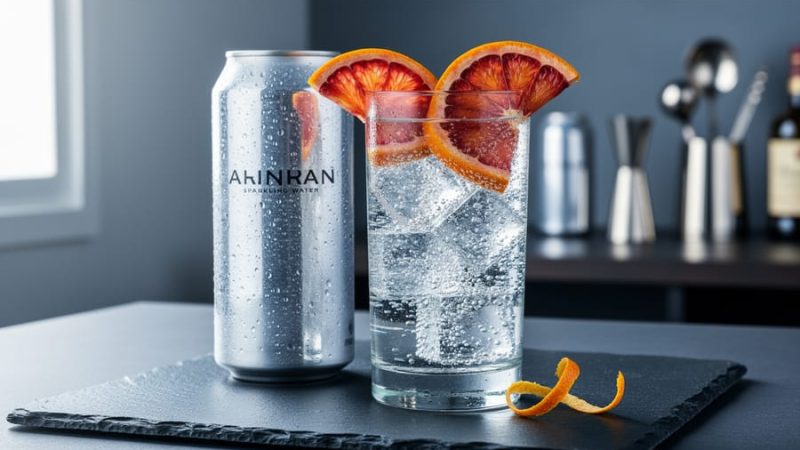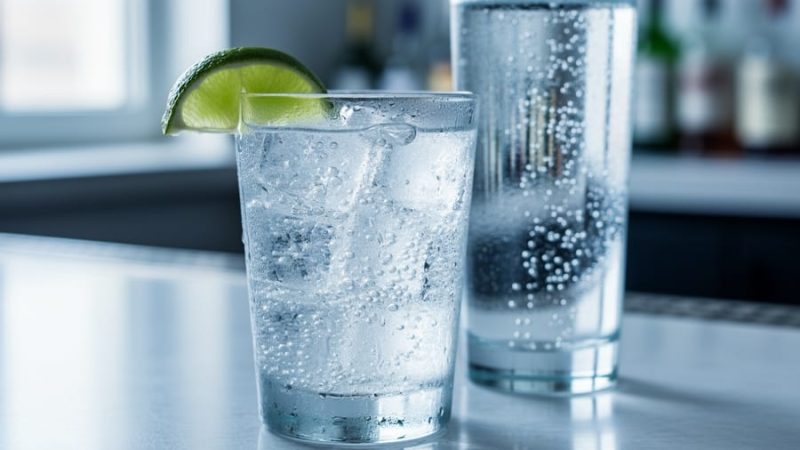
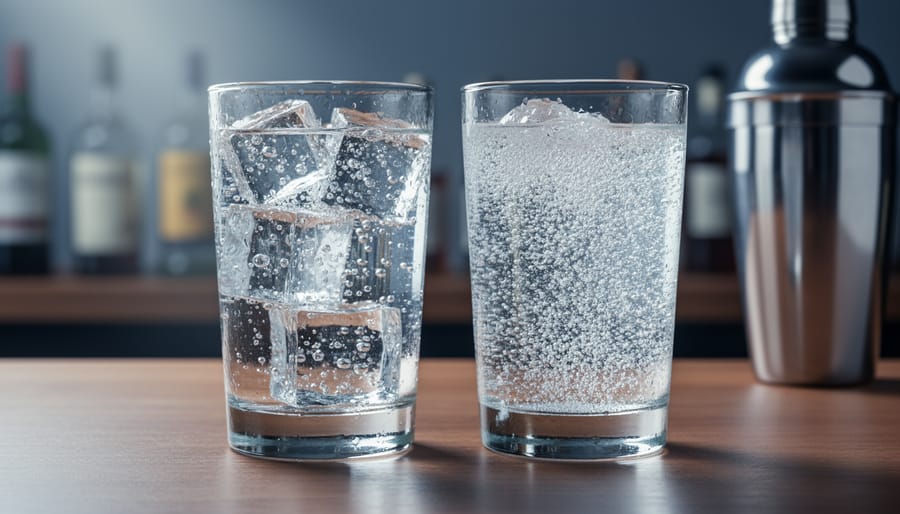
No, club soda and sparkling water are not the same, though they’re both carbonated waters. The key difference lies in what’s added after the bubbles: club soda contains mineral salts like sodium bicarbonate and potassium sulfate to enhance flavor and create a slightly alkaline taste, while sparkling water is typically just natural water with carbonation added, though it may contain naturally occurring minerals depending on the source.
This distinction matters more than you might think, especially if you’re mixing cocktails, watching your sodium intake, or simply trying to decode beverage labels at the store. The explosion of interest in this question reflects a broader shift in how we approach both hydration and mixology. As consumers become more ingredient-conscious and home bartending continues its surge in popularity, understanding what’s actually in your bubbly water has moved from trivia to practical necessity.
The confusion is understandable. Walk down any supermarket aisle and you’ll encounter sparkling water, club soda, seltzer, and tonic water, all fizzy, all clear, yet all distinctly different products with unique compositions and ideal applications. For bartenders, choosing between club soda and sparkling water can subtly alter a cocktail’s mineral balance and mouthfeel. For health-conscious drinkers, knowing which option contains added sodium or minerals informs better choices.
This guide will break down exactly how each beverage is made, what sets them apart ingredient-wise, which scenarios call for one over the other, and what these differences mean for your glass, whether you’re crafting a Tom Collins or simply seeking refreshment.
What Club Soda and Sparkling Water Actually Are
At first glance, you might think all carbonated waters are interchangeable, but the club soda vs sparkling water distinction comes down to what’s in the bottle beyond just bubbles.
- Sparkling Water
- Natural water that has been infused with carbon dioxide gas to create carbonation. It contains no added ingredients beyond the water and bubbles, though it may naturally contain trace minerals from its source.
- Club Soda
- Carbonated water that has been intentionally enhanced with mineral salts like sodium bicarbonate and potassium sulfate. These additions give it a slightly crisp, mineral taste that distinguishes it from plain sparkling water.
- Plain Seltzer
- The simplest form of carbonated water, containing only water and added carbonation with no minerals or additives whatsoever.
The core difference is processing. Sparkling water starts as natural water, gets carbonated, and stays minimally processed. You’re drinking water with gas, period. Club soda takes that same carbonated base and adds mineral salts to replicate the taste profile of naturally occurring mineral springs. Think of sparkling water as the purist’s choice and club soda as the bartender’s tool, engineered for mixing.
This isn’t just semantic hair-splitting. Those added minerals in club soda create a subtly different mouthfeel and taste that matters when you’re building cocktails or choosing what to drink straight from the can. The sodium bicarbonate and potassium sulfate give club soda a faint salty edge that sparkling water lacks entirely.
How Club Soda and Sparkling Water Are Made
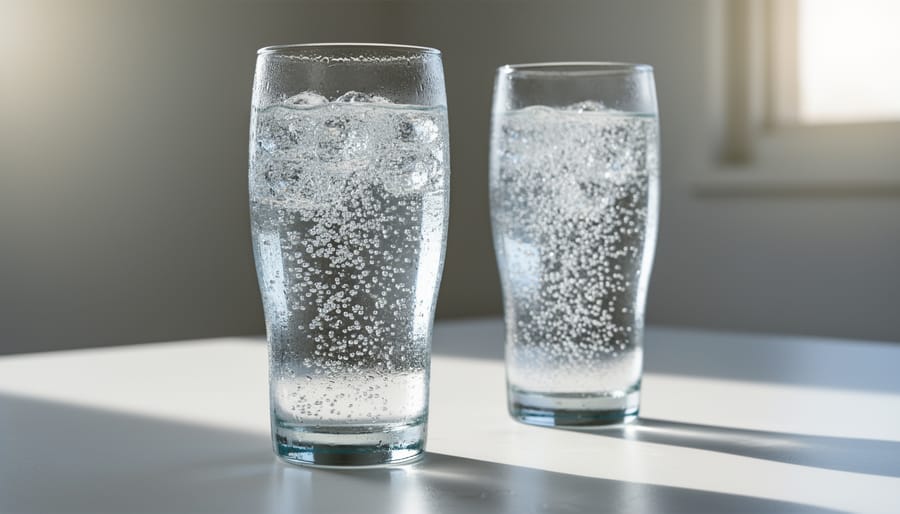
The production of sparkling water and club soda starts with the same basic process: forcing carbon dioxide gas into water under pressure. When you release that pressure by opening a bottle or can, the dissolved CO2 escapes as those familiar fizzy bubbles.
Sparkling water gets its carbonation in one of two ways. Natural sparkling water comes from underground springs where volcanic gases infuse the water with CO2 before it’s bottled, think of European mineral waters that have been naturally effervescent for centuries. More commonly, manufacturers take clean filtered water and inject carbon dioxide under high pressure in specialized carbonation equipment. You can even make sparkling water at home using countertop carbonators that work on this same pressure principle. The result is pure carbonated water with nothing added beyond the bubbles.
Club soda follows a different path after the initial carbonation step. Manufacturers start by carbonating plain water, then add a precise blend of mineral salts to the fizzy base. Sodium bicarbonate and potassium sulfate are the most common additions, though formulations vary by brand. These minerals serve a deliberate purpose: they mimic the crisp, slightly mineral taste found in natural sparkling waters, giving club soda a distinctive flavor profile that sets it apart from plain carbonated water.
The mineral additions happen post-carbonation through controlled mixing, ensuring even distribution throughout each batch. This extra step is what transforms basic carbonated water into club soda. The minerals dissolve completely, leaving no sediment but contributing a subtle salty-mineral note that bartenders value for cocktails. It’s a small production difference with a noticeable impact on taste and application.
Types of Carbonated Waters
The carbonated water category splits into four main types, each with a distinct composition and drinking purpose.
Seltzer sits at the simplest end of the spectrum. It contains only water and carbonation, nothing else. No minerals, no additives, no flavor. This makes it the purest form of fizzy water and a blank slate for anyone who wants bubbles without any interference in taste. If you’re mixing drinks at home and want complete control over the flavor profile, seltzer gives you that neutrality.
Sparkling water occupies the middle ground. It’s water with carbonation, sometimes from a natural source like a mineral spring, sometimes added mechanically. Unlike seltzer, sparkling water may contain naturally occurring minerals that survived the bottling process. These trace minerals can add a subtle taste variation between brands, though most people find the overall character crisp and clean. Some sparkling waters lean closer to seltzer in composition, while others carry a light mineral complexity.
Club soda is where intentional intervention happens. Start with plain water, carbonate it, then mix in mineral salts such as sodium bicarbonate and potassium sulfate. These additions mimic the taste of naturally mineral-rich waters and give club soda a slightly salty, crisp edge that works particularly well in cocktails. It remains a zero-calorie mixer, but that mineral profile makes it more than just fizzy water.
Tonic water stands apart as a sweetened category. While it shares carbonation with the others, a standard 12-ounce can holds roughly 124 calories and 32 grams of sugar, plus quinine for its distinctive bitter edge. This makes the tonic water vs club soda comparison less about sparkling versus still and more about sweetened versus unsweetened. Tonic functions as a flavored mixer, not a neutral base.
Each type serves a purpose. Choose based on whether you want pure bubbles, subtle mineral notes, an intentional crisp bite, or a sweetened mixer for specific cocktails.
The Key Ingredient Differences
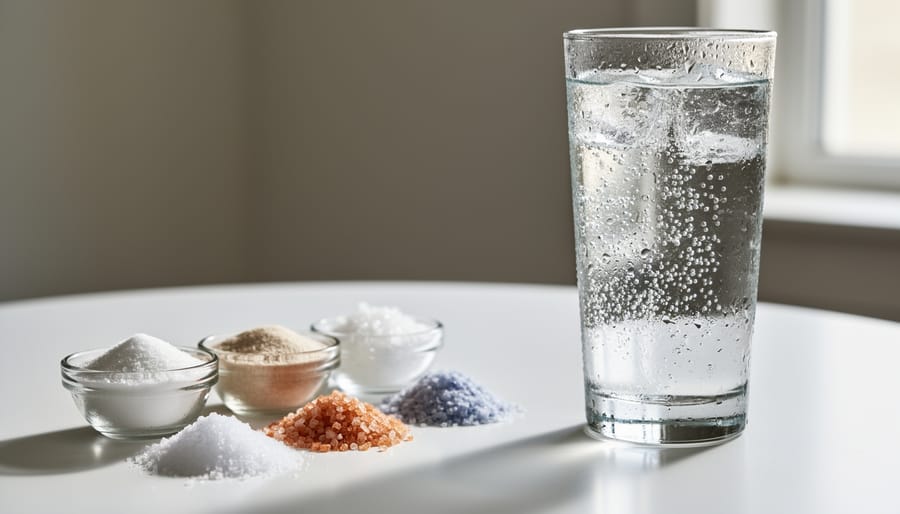
The answer to “are club soda and sparkling water the same” comes down to what’s actually in the bottle. While both deliver that satisfying fizz, club soda contains added mineral salts that give it a distinct character your taste buds will recognize once you know what to look for.
Sparkling water keeps things simple. It’s water that’s been carbonated, period. Some brands may pick up trace minerals naturally from their source, but nothing is deliberately added. The result is a crisp, clean taste that lets the bubbles do the talking. If you pour a glass, you’re tasting water with gas and very little else.
Club soda takes a different approach. Manufacturers start with plain carbonated water, then mix in mineral salts to create a specific flavor profile. The additions typically include:
- Sodium bicarbonate (baking soda) to add a subtle alkaline note and body
- Potassium sulfate for a slightly mineral-forward taste
- Sodium chloride (table salt) to enhance the crisp quality
- Disodium phosphate to help stabilize carbonation and add mouthfeel
These minerals give club soda a faintly salty, mineral-rich profile that many bartenders prefer for cocktails. It’s not dramatically different from sparkling water, but side by side, club soda has more presence on your palate.
Both beverages remain zero-calorie options with no sugar, making them vastly different from tonic water’s 124 calories and 32 grams of sugar per 12-ounce can. The main nutritional consideration is sodium content. Club soda typically contains 50 to 75 milligrams of sodium per serving due to those added mineral salts, while plain sparkling water hovers near zero unless it comes from a naturally mineral-rich spring.
For most drinkers, this sodium level won’t impact your daily intake meaningfully. But if you’re monitoring sodium closely or drinking multiple servings daily, that difference adds up.
How to Use Each in Drinks and Cocktails
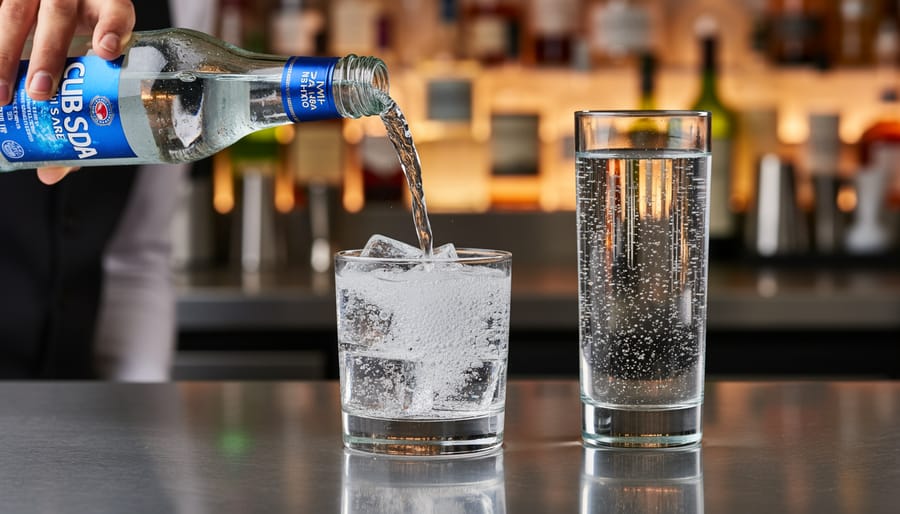
Club soda earns its place behind the bar as the go-to mixer for classic cocktails and highballs. Its subtle mineral content and clean carbonation lift spirits without masking their character, which is why bartenders reach for it when building a Tom Collins, gin and tonic substitute, or whiskey highball. The sodium bicarbonate and potassium sulfate in club soda provide a faint salinity that balances sweet liqueurs and tart citrus, creating a rounder mouthfeel in mixed drinks. Because club soda is a zero-calorie mixer with no sugar at all, it keeps cocktails light and refreshing without adding unnecessary sweetness or calories.
Sparkling water works better for occasions where you want pure, crisp carbonation without any mineral influence. Its clean taste makes it ideal for drinking straight, pairing with meals, or mixing with fresh fruit and herbs for simple spritzers. When a recipe calls for delicate flavors, muddled berries, elderflower cordial, or light white wines, sparkling water won’t compete or alter the intended profile. Some home mixologists prefer it for low-alcohol spritzes where the drink’s fruitiness should shine through untouched.
Can you substitute one for the other? In most cases, yes, though you’ll notice the difference. Swapping sparkling water into a cocktail that specifies club soda may taste slightly flatter or less integrated, while using club soda in a gentle spritz might introduce a barely perceptible minerality. For casual mixing at home, either works fine. Professional bartenders tend to stick with club soda for spirits-forward cocktails and reserve sparkling water for simpler, ingredient-driven drinks where purity matters most.
Which One Is Better for Your Health?
Both club soda and sparkling water are excellent choices if you’re watching your calorie intake. Neither contains calories or sugar, making them smart alternatives to sodas and other sweetened beverages. For comparison, a standard 12-ounce can of tonic water holds roughly 124 calories and 32 grams of sugar, which puts the zero-calorie fizzy waters in a different category entirely.
The primary distinction comes down to sodium and mineral content. Club soda contains added minerals like sodium bicarbonate, which means it has slightly more sodium than plain sparkling water. If you’re on a strict low-sodium diet, sparkling water might be the better pick. That said, the sodium levels in club soda are typically modest and unlikely to pose problems for most people.
Hydration-wise, both beverages work effectively. If you’re wondering does sparkling water hydrate you as well as still water, research suggests carbonation doesn’t impair your body’s ability to absorb water. The bubbles might make you feel full faster, but you’re still getting the hydration benefits.
For everyday drinking, choose based on taste preference and whether you want those extra minerals. Neither option is inherently “better”, they’re both clean, calorie-free ways to stay hydrated with a bit of fizz.
Common Questions About Club Soda and Sparkling Water
Are club soda and sparkling water the same?
No, they’re not the same. Club soda is carbonated water with added minerals like sodium bicarbonate and potassium sulfate, while sparkling water is natural water with gas added and may contain naturally occurring minerals but no intentional mineral additions.
What is the difference between sparkling water and club soda?
The main difference lies in mineral content. Club soda has added mineral salts to create a slightly crisp, faintly salty flavor, whereas sparkling water offers a clean, neutral taste with just carbonation and possibly natural minerals from its water source.
Can you substitute club soda for sparkling water in recipes?
Yes, in most cases you can swap them freely. The mineral additions in club soda are subtle enough that they won’t dramatically alter most cocktails or mixed drinks, though purists might notice a slight taste difference when drinking them straight.
What makes sparkling water unique compared to other carbonated drinks?
Sparkling water stands out for its simplicity, just water and carbonation, sometimes with naturally occurring minerals. Unlike tonic water, which packs 124 calories and 32 grams of sugar per 12-ounce can, sparkling water remains a zero-calorie, zero-sugar option.
These questions come up constantly because the carbonated water aisle has become crowded and confusing. When you’re standing in front of a dozen fizzy options, knowing that club soda contains added minerals while sparkling water stays closer to plain carbonated water helps you make the right choice for your needs. Both deliver bubbles without calories or sugar, making them versatile for everything from straight sipping to cocktail mixing. The mineral additions in club soda won’t ruin a drink if you grab it instead of sparkling water, but understanding the distinction means you can pick intentionally rather than by accident.
So, are club soda and sparkling water the same? No. While they share carbonation, the added minerals in club soda give it a distinct profile that sparkling water doesn’t have. Whether you’re mixing cocktails or simply refreshing your palate, understanding this difference helps you make better beverage choices. Try both side-by-side and let your taste buds guide you. When you’re ready to explore beyond the bubbles, you’ll find a whole universe of carbonated drinks worth discovering, each with its own story and place in the glass.