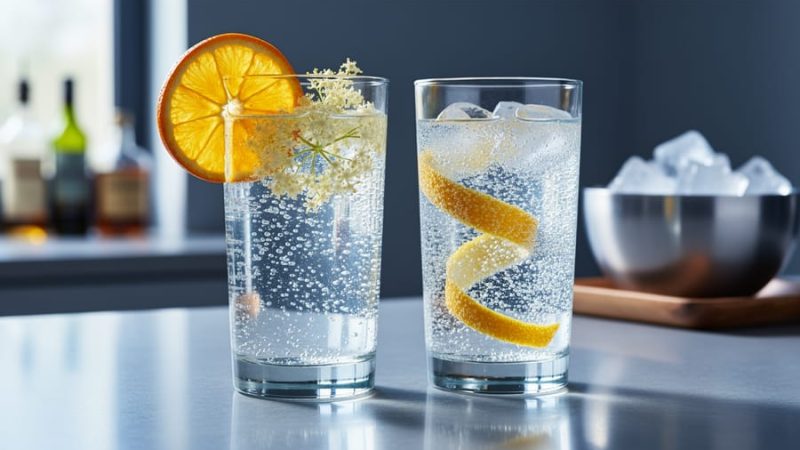
The bottom line: club soda and sparkling water are both carbonated beverages, but club soda contains added minerals like sodium bicarbonate and potassium sulfate, while sparkling water is simply water infused with carbon dioxide. This distinction matters whether you’re mixing the perfect gin and tonic or simply looking for a healthier hydration option.
For bartenders and cocktail enthusiasts, this difference transforms drink recipes. Club soda’s mineral content adds body and subtle flavor complexity that can enhance spirits without overpowering them. Health-conscious drinkers, on the other hand, gravitate toward sparkling water for its zero-sodium profile and clean taste.
The confusion between these two bubbling beverages runs deeper than most people realize. Walk down any supermarket aisle and you’ll find dozens of carbonated water options, each with slightly different labels and ingredient lists. Some brands blur the lines entirely, adding just enough minerals to create ambiguity about what category they truly belong to.
Understanding what separates club soda from sparkling water helps you make smarter choices at the store and behind the bar. The distinction impacts everything from cocktail balance to daily hydration goals, and knowing which one to reach for can elevate your drinking experience in 2026 and beyond.
At a Glance: Club Soda vs. Sparkling Water Comparison
Here’s a quick breakdown of how club soda, sparkling water, and seltzer stack up against each other. Each carbonated option brings distinct characteristics that matter for both cocktail crafting and everyday drinking.
| Type | Carbonation Source | Added Ingredients | Sodium (per serving) | Taste Profile | Best Uses |
|---|---|---|---|---|---|
| Club Soda | Added CO2 | Sodium bicarbonate, sodium chloride, potassium sulfate | 95mg per 12oz (4% DV) | Slightly salty, mineral-enhanced | Cocktails, mixed drinks, highballs |
| Sparkling Mineral Water | Natural or added CO2 | Naturally occurring minerals (calcium, magnesium, sodium) | 10-30mg per 8oz | Clean, subtle mineral notes | Pure refreshment, delicate cocktails, pairing with food |
| Seltzer | Added CO2 | None | 0mg | Neutral, crisp | Sodium-free hydration, base for flavored drinks |
The sodium content alone tells much of the story. Club soda’s 95 milligrams per 12-ounce serving represents about 4 percent of the recommended daily sodium intake, while seltzer contains zero sodium and sparkling mineral water falls somewhere between. These differences directly affect how each carbonated water performs in your glass, whether you’re building a gin and tonic or simply seeking fizzy hydration.
What Each Carbonated Water Really Is
Club Soda: The Bartender’s Carbonated Mixer
Club soda is carbonated water deliberately enhanced with minerals that give it a distinct character bartenders have relied on for decades. Unlike plain carbonated water, club soda contains sodium bicarbonate sodium chloride, and potassium sulfate, additions that transform it from simple fizzy water into a functional mixer.
These minerals aren’t arbitrary. Sodium bicarbonate softens acidity and adds a subtle alkaline quality, while sodium chloride contributes a faint salinity that enhances other flavors rather than overpowering them. Potassium sulfate rounds out the profile with a slight mineral edge. The result is a beverage with personality, a gentle salinity and mineral complexity that makes it invaluable in cocktails where it can support spirits without diluting their character.
The sodium content is worth noting: a standard 12-ounce serving delivers 95 milligrams, roughly 4% of the recommended daily intake of 2,300 milligrams. For most people, this is negligible. However, those monitoring sodium for health reasons should account for it, especially when consuming multiple servings. That slightly salty taste you detect isn’t imagination, it’s the mineral blend doing exactly what it’s designed to do.
Sparkling Water: Nature’s Effervescence
Sparkling water offers a lighter, cleaner taste than its mineral-enhanced cousin, club soda. It’s carbonated water in its purest form, either naturally effervescent from underground springs or infused with CO2 during production. The result is a crisp, refreshing drink without the salty undertone you’ll find in club soda.
The sparkling water category splits into two distinct types. True mineral water comes from natural, unpolluted underground sources and contains small amounts of minerals that occurred naturally, typically calcium, magnesium, and sodium. An 8-ounce glass of sparkling mineral water may contain between 10 to 30 milligrams of sodium, depending on the origin and brand. That’s a fraction of club soda’s 95 milligrams per 12 ounces.
The other type is simply water that’s been carbonated with CO2, without naturally occurring minerals. Both versions deliver that satisfying fizz, but mineral water brings subtle flavor complexity from its source, while plain carbonated sparkling water tastes virtually neutral. This makes sparkling water ideal when you want carbonation without altering the flavor profile of your drink, whether you’re mixing a delicate cocktail, creating a mocktail, or just seeking pure refreshment.
Seltzer: The Pure Carbonated Option
Seltzer represents the minimalist approach to carbonated water. It’s simply plain water infused with carbon dioxide under pressure, creating those familiar bubbles without any additional ingredients. Unlike club soda’s mineral additives or sparkling water’s natural minerals, seltzer has no added salt or minerals whatsoever, making it completely sodium-free. This purity gives seltzer the most neutral flavor profile of any carbonated water, just crisp carbonation and nothing else. The lack of minerals means seltzer won’t interfere with delicate flavors in drinks or add any underlying taste notes. It’s the ideal choice when you want pure bubbles, whether you’re hydrating, creating a blank canvas for flavored seltzers, or need carbonation that won’t contribute sodium to your daily intake.
Regulatory Standards and Labeling
In Canada, carbonated waters fall under strict oversight to ensure accurate labeling and consumer protection. Canada regulates prepackaged water and ice through the Safe Food for Canadians Act and Food and Drug Regulations, which require manufacturers to clearly identify whether their product is club soda (with added minerals), sparkling mineral water (from natural sources), or seltzer (plain carbonated water). These standards ensure you know exactly what’s in your bottle, particularly regarding sodium and mineral content that distinguishes these beverages from one another.
Breaking Down the Key Differences
Ingredients: What’s Actually in the Bottle
The ingredient labels reveal the fundamental split between these carbonated waters. Club soda is water plus carbonation plus minerals: sodium bicarbonate, sodium chloride, and potassium sulfate. These additives give club soda its characteristic flavor and that 95mg sodium punch per 12 ounces, making it a flavored mixer rather than a neutral base, perfect for cutting through spirits in rye whiskey cocktails or adding body to 3-ingredient drinks.
- Sodium Bicarbonate
- Also known as baking soda, this compound adds a subtle alkaline note and enhances the perception of carbonation on the palate.
- Sodium Chloride
- Common table salt that contributes the mineral, slightly salty taste and accounts for much of club soda’s sodium content.
- Potassium Sulfate
- A mineral salt that rounds out the flavor profile and adds complexity beyond simple saltiness.
Sparkling water, by contrast, keeps it minimal. True mineral water draws calcium, magnesium, and sodium naturally from underground sources, typically delivering just 10 to 30mg sodium per 8 ounces depending on origin and brand. Seltzer goes even simpler: water and CO2, period. No salts, no minerals, no sodium, just bubbles.
Sodium Content: The Health Consideration
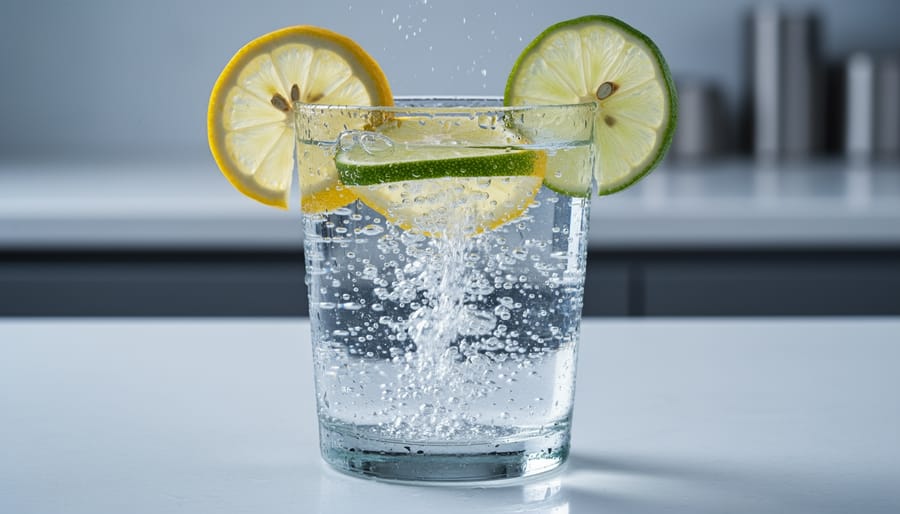
The sodium content gap between these carbonated waters creates meaningful health distinctions. A standard 12-ounce can of club soda delivers 95 milligrams of sodium, roughly 4% of the recommended 2,300-milligram daily limit for adults. That’s comparable to a slice of bread. Sparkling mineral water sits in the middle range, typically containing 10 to 30 milligrams per 8-ounce serving, depending on the source and brand. Seltzer contains zero sodium, making it the clear winner for salt-conscious drinkers.
If you’re monitoring blood pressure, managing kidney function, or following a low-sodium diet prescribed by your doctor, these differences matter. Drinking several cans of club soda daily adds up quickly, three cans hit 285 milligrams, about 12% of your daily allowance before you’ve eaten anything. For most healthy adults enjoying an occasional cocktail or two, club soda’s sodium contribution stays negligible. But if you’re reaching for carbonated water throughout the day as your primary hydration source, seltzer or low-sodium sparkling water makes the smarter choice. Check labels carefully, as sodium content varies significantly across sparkling mineral water brands based on their underground source composition.
Carbonation Source and Intensity
The way bubbles get into your glass tells a fascinating story about what you’re drinking. Sparkling water draws carbonation either from natural underground springs, where geological pressure infuses water with CO2 over centuries, or from controlled CO2 injection during bottling. This process creates fine, delicate bubbles that feel crisp and light on the tongue. Club soda always relies on added CO2, but its mineral additives (sodium bicarbonate, sodium chloride, potassium sulfate) interact with the carbonation to produce slightly larger, more robust bubbles that create a fuller mouthfeel and help maintain fizz longer in mixed drinks.
Seltzer sits between them: pure water carbonated with CO2, yielding medium-sized bubbles without mineral interference. The practical difference shows up clearly in cocktails. Club soda’s enhanced carbonation holds up better when shaken with spirits and ice, which is why bartenders favor it for highballs and fizzes. Sparkling water’s gentler effervescence works beautifully in delicate applications like a whiskey sour slushy where you want refreshment without overpowering the drink’s balance. The mineral content in club soda actually stabilizes bubbles chemically, extending carbonation life by up to 20% compared to plain sparkling water once opened.
Taste Profile: From Crisp to Mineral
Taste stands as the most immediately noticeable difference between these carbonated waters. Club soda delivers a slightly salty, mineral-forward flavor thanks to its sodium bicarbonate, sodium chloride, and potassium sulfate additions. That faint salinity gives it a fuller mouthfeel and a hint of complexity that can either enhance or compete with other ingredients, depending on the application.
Sparkling water offers a cleaner, lighter taste. True mineral water from natural underground sources carries subtle mineral notes from its calcium, magnesium, and sodium content, between 10 to 30 milligrams per 8 ounces depending on origin and brand, but these remain delicate rather than pronounced. Artificially carbonated sparkling water tastes even crisper, with carbonation being the primary sensation.
Seltzer sits at the neutral end of the spectrum. It’s plain carbonated water with no added salts, delivering pure effervescence without any flavor overlay. That makes it a blank canvas for mixers or flavoring.
In cocktails, club soda’s mineral taste can complement gin or vodka, adding subtle depth. Sparkling water works better when you want carbonation without competing with delicate botanicals or fruit notes. For pure refreshment or health-focused hydration, seltzer’s complete neutrality lets you taste nothing but clean water and bubbles.
Who Should Choose Which: Matching Carbonated Water to Your Needs
For Mixologists and Cocktail Enthusiasts
Club soda’s 95mg of sodium per 12 ounces isn’t a drawback in cocktails, it’s an asset. Those added minerals (sodium bicarbonate, sodium chloride, potassium sulfate) enhance spirits rather than dilute them, creating a fuller mouthfeel that stands up to bold flavors in whiskey highballs, gin and tonics, or even a bracing pickleback chaser. The subtle salinity rounds out harsh edges and amplifies aromatic compounds, which is why bartenders reach for it instinctively when building classic mixed drinks.
Sparkling water’s cleaner profile, however, serves a different purpose. When you’re crafting delicate spritzers, showcasing floral liqueurs, or mixing fruit-forward mocktails where you want the primary ingredients to shine through unaltered, sparkling water’s mineral-light composition (typically 10-30mg sodium per 8 ounces) won’t compete. It adds effervescence without imposing character, making it ideal for showcasing nuanced flavors that club soda’s mineral content might overshadow.
For Health-Conscious Hydration
For daily hydration, sodium content becomes the deciding factor. If you’re watching your sodium intake, whether for blood pressure management, heart health, or general dietary guidelines, club soda’s 95mg per 12 ounces (roughly 4% of the 2,300mg daily limit) can add up quickly across multiple servings. Seltzer offers zero sodium, making it the cleanest choice for regular consumption without impacting your daily allowance.
Sparkling mineral water sits in the middle, typically delivering 10-30mg per 8 ounces depending on its source and brand. This modest amount won’t derail most health goals while providing trace minerals like calcium and magnesium that support bone health and hydration. Choose seltzer when you want purely neutral carbonated water for all-day sipping, or opt for low-sodium sparkling water when you appreciate a hint of natural minerality without the salt kick club soda brings to cocktails.
For Culinary and Non-Alcoholic Applications
In the kitchen and at the coffee bar, carbonated water selection hinges on whether you want the bubbles to blend into the background or contribute their own character. Seltzer works best when pure carbonation is the goal, think spritzed over fresh fruit juice, added to pancake batter for extra lift, or mixed into iced coffee where any mineral taste would clash with delicate brew notes. Its complete neutrality lets other ingredients shine.
Club soda brings subtle mineral enhancement that can elevate certain applications. In mocktails, its slight salinity adds body and complexity that mimics the mouthfeel of spirits-based drinks, making alcohol-free versions feel more substantial. Try it in a virgin mojito or mocktail spritz where that mineral backbone supports citrus and herbs. For cooking, club soda’s minerals can tenderize tempura batter or add depth to savory carbonated sauces.
Sparkling mineral water splits the difference, offering gentle minerality without club soda’s 95mg sodium load. It excels in sophisticated mocktails where you want a hint of terroir, pairing beautifully with botanical flavors like cucumber, elderflower, or rosemary. The 10-30mg sodium per 8 ounces provides just enough mineral interest to support complex flavor profiles without overwhelming them.
Common Questions About Club Soda and Sparkling Water
Can you substitute club soda for sparkling water in cocktails?
Yes, in most cases you can swap them, but expect a different result. Club soda’s 95 milligrams of sodium per 12 ounces adds a subtle minerality that enhances certain spirits, while sparkling water delivers a cleaner, more neutral backdrop that won’t alter delicate flavor profiles.
Is club soda bad for you because of the sodium?
Not for most people, a 12-ounce can contains about 4% of the recommended daily sodium intake of 2,300 mg. If you’re watching your sodium for medical reasons or drink several cans daily, consider switching to seltzer or low-sodium sparkling water instead.
Does sparkling water hydrate as well as still water?
Yes, carbonated water hydrates just as effectively as still water. The bubbles don’t diminish hydration, though some people find the carbonation makes them feel fuller faster, which might mean they drink slightly less volume in one sitting.
Why does club soda taste different from seltzer?
Club soda contains added minerals, sodium bicarbonate, sodium chloride, and potassium sulfate, that create a slightly salty, mineral taste, while seltzer is just plain carbonated water with no additives, giving it a completely neutral flavor.
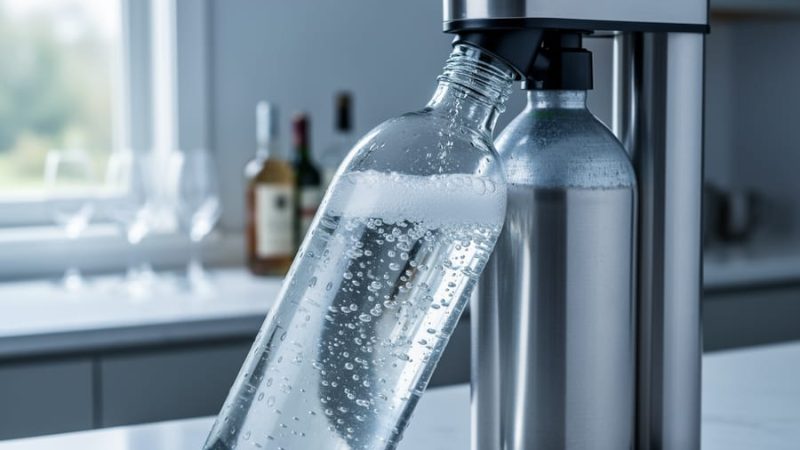
Beyond these common questions, many enthusiasts wonder whether they can make sparkling water at home and customize the carbonation level to their preference. The answer is yes, home carbonation systems let you control bubble intensity and avoid the guesswork of choosing between commercial options, though you’ll typically produce seltzer rather than mineral-enhanced club soda unless you add your own mineral blend.
Another practical concern revolves around shelf life once opened. Both club soda and sparkling water lose carbonation at similar rates after you break the seal, typically going flat within one to three days even when refrigerated and tightly capped. Store opened bottles in the coldest part of your fridge and minimize air exposure to preserve the fizz longer.
What Each Option Is
Before diving into what separates club soda from sparkling water, it helps to know exactly what you’re drinking when you crack open each bottle.
Club soda is carbonated water enhanced with specific minerals: sodium bicarbonate, sodium chloride, and potassium sulfate. These additives give it a slightly salty, mineral-forward taste that many bartenders prize in cocktails. A 12-ounce serving contains 95 milligrams of sodium, about 4% of your daily recommended intake.
Sparkling water is either naturally carbonated from underground springs or plain water infused with CO2. It delivers a lighter, cleaner taste than club soda. When it’s true mineral water from a natural source, it contains small amounts of calcium, magnesium, and sodium, typically 10 to 30 milligrams of sodium per 8-ounce glass, depending on the origin and brand.
Seltzer is the simplest of the three: plain water with added carbonation and nothing else. No salts, no minerals. It’s completely sodium-free and offers the most neutral flavor profile, making it a blank canvas for whatever you’re mixing or drinking straight.
Understanding the difference between club soda and sparkling water ultimately comes down to three factors: sodium content, mineral enhancement, and what you’re mixing or sipping. Club soda, with its 95 milligrams of sodium per 12 ounces and added minerals like sodium bicarbonate and potassium sulfate, brings body and a subtle salty edge that complements spirits beautifully, making it the go-to for classic cocktails and mixed drinks. Sparkling water, whether naturally carbonated or CO2-infused, offers a cleaner, lighter taste with minimal sodium (10-30mg per 8 ounces for mineral varieties), perfect for straight drinking or when you want carbonation without interfering with delicate flavors.
Neither option is universally superior. Your best choice depends on whether you’re building a gin and tonic, crafting a sophisticated mocktail, or simply reaching for refreshment after a workout. Stock both in your home bar and refrigerator, experiment with each in different contexts, and pay attention to how the mineral content shifts the character of your drinks. You’ll quickly discover which carbonated water fits your palate, your sodium considerations, and the specific role you need it to play in your glass.