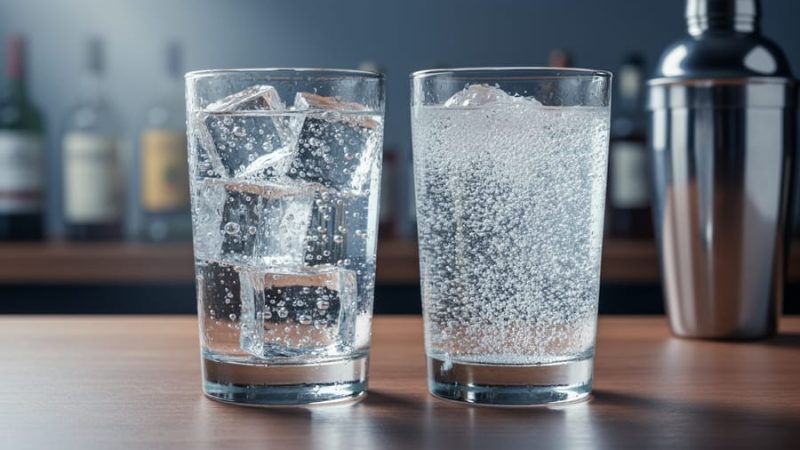
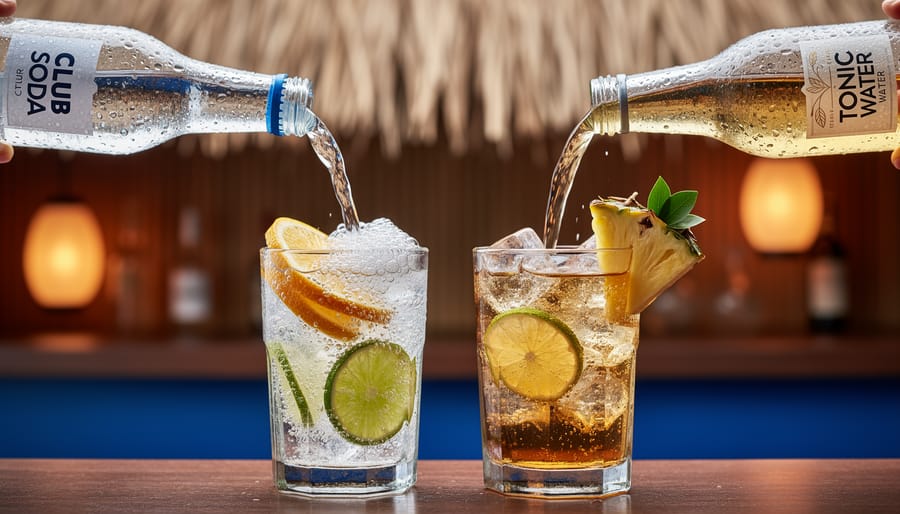
For tiki cocktails, club soda is your go-to mixer when you want clean carbonation that won’t compete with complex rum blends and tropical syrups, while tonic water’s bitter quinine profile rarely belongs in the tiki canon. We’ve tested both in dozens of tropical drinks, and the verdict is clear: tonic water’s 22 grams of sugar per serving and distinctive medicinal bite clash with the balanced sweetness and layered flavors that define proper tiki cocktails like Mai Tais, Zombies, and Navy Grogs.
Club soda brings zero calories and a neutral mineral sparkle that lifts citrus-forward drinks without adding flavor baggage. That sodium bicarbonate and potassium sulfate blend we’re tasting? It adds body and effervescence that complements orgeat, falernum, and fresh lime juice beautifully. Tonic water, on the other hand, delivers 83 calories and 20-80 mg of quinine per serving, creating a bitter backbone designed for gin, not rum. The moment you add tonic to a Painkiller or Hurricane, that quinine note bulldozes the pineapple, orange, and passion fruit flavors you’ve carefully balanced.
If you’re building a home tiki bar in 2026 or refining your tropical cocktail program, understanding when to reach for each mixer transforms your drinks from muddled approximations into crisp, authentic tiki experiences. Club soda lengthens punch-style serves and adds refreshing lift to swizzles. Tonic water works only in the rare crossover highball where you specifically want that bitter counterpoint, but those drinks fall outside classic tiki territory. Let’s break down exactly what sets these mixers apart and why your rum drinks demand the right choice.
Tonic Water and Club Soda at a Glance
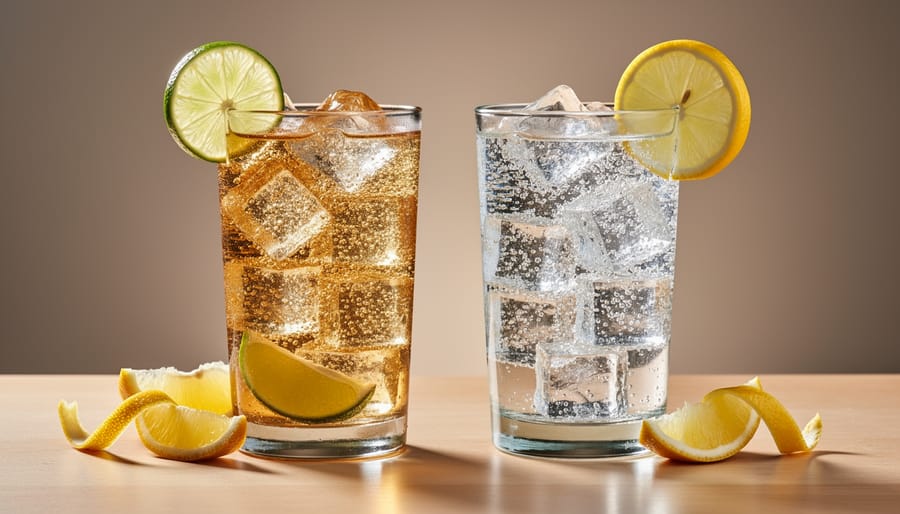
Before you stock your home tiki bar or build your next tropical cocktail, understanding these two mixers saves you from flavor missteps. We’ve tested both extensively in classic and modern tiki drinks, and the differences matter more than you might expect when working with rum, tropical fruits, and complex tiki syrups.
| Factor | Club Soda | Tonic Water |
|---|---|---|
| Calories (per 8 oz) | 0 kcal | 83 kcal |
| Sugar Content | 0 g | 22 g |
| Quinine | None | 20-80 mg |
| Taste Profile | Clean, subtly mineral | Bitter-sweet, botanical |
| Best Tiki Uses | Swizzles, tropical spritzes, lengthened punches | Modern tiki-tonics, rum drinks with strong spice notes |
Club soda acts as the neutral workhorse in your tiki arsenal, letting the orgeat, passion fruit, and aged rum shine without interference. Tonic water, with its quinine backbone and substantial sweetness, plays a more specialized role in contemporary tiki variations where you want that distinctive bitter edge. The 22-gram sugar difference isn’t trivial when your Mai Tai already carries multiple sweeteners, and that quinine bite either complements or competes with the Angostura and Peychaud’s bitters common in tiki recipes. We’ll break down exactly when each mixer elevates your tropical drinks and when it falls flat.
What Club Soda and Tonic Water Actually Are
Club Soda: The Neutral Mixer
Club soda is carbonated water enhanced with club soda added minerals such as sodium bicarbonate and potassium sulfate. These minerals give it a faintly saline taste, subtle enough that most drinkers perceive it as neutral rather than flavored. In our tiki bar testing, we found this neutrality essential: club soda lifts and aerates tropical cocktails without competing with rum, orgeat, citrus, or spice layers.
The zero-calorie, zero-sugar profile makes it a practical base for already-sweet tiki recipes. When you’re building a cocktail with cane syrup, passion fruit, and falernum, the last thing you need is another 22 grams of sugar from your mixer. Club soda provides effervescence and mouthfeel while letting the drink’s carefully balanced flavors shine.
Understanding the club soda vs sparkling water distinction matters here: plain sparkling water lacks those minerals, making club soda’s slight savory edge ideal for cocktails that need structural support. We use it in Queen’s Park Swizzles, tropical Collins variations, and lengthened punch bowls where its clean carbonation preserves the complexity that defines serious tiki craft.
Tonic Water: The Botanical Player
Tonic water starts with carbonated water but transforms into something entirely different through botanical infusion. The defining ingredient is quinine, a bitter compound originally derived from cinchona bark, present at 20-80 mg per serving. This gives tonic its characteristic bitter-sweet profile that sets it apart from neutral club soda.
The sweetness isn’t subtle. A standard 8 oz serving packs 22g of sugar and 83 calories, making tonic water a flavor-forward mixer rather than a blank canvas. When we tested various brands in tiki drinks, that sweetness became immediately apparent, it adds another layer to already syrup-heavy tropical recipes, which can either enhance complexity or tip the balance toward cloying depending on the cocktail’s structure.
For tiki applications, understanding the tonic water quinine amount matters because that botanical bitterness interacts with rum’s spice notes, orgeat’s almond undertones, and the citrus-forward nature of classic tiki builds. It’s not a neutral lengthener, it’s an active ingredient that brings its own agenda to your Mai Tai variation or tropical Collins.
How They Stack Up in Your Tiki Bar
Taste and Flavor Impact in Tropical Drinks
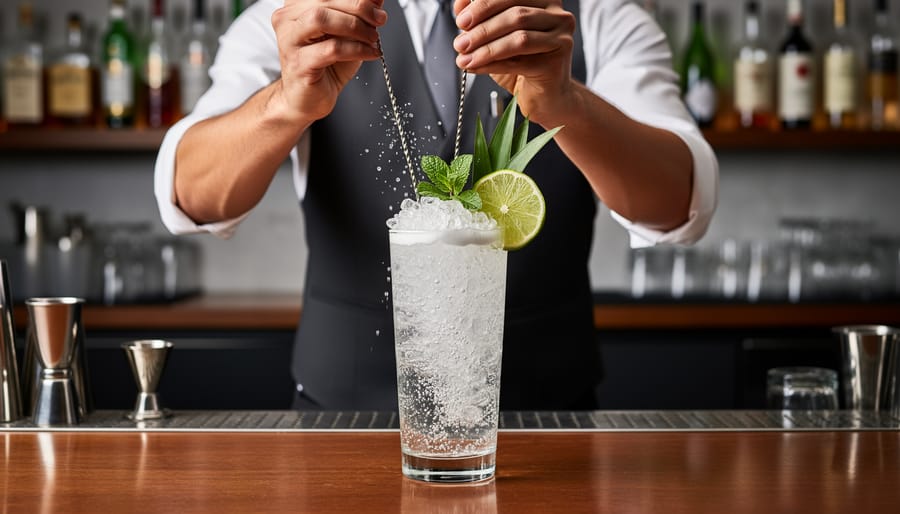
In our testing across dozens of tiki builds, club soda’s mineral subtlety proved essential for preserving the intricate layering that defines tropical drinks. Its trace sodium bicarbonate and potassium sulfate add texture without competing against the complex interplay of aged rum, fresh lime, orgeat, and tropical syrups that make a Mai Tai or Zombie sing. When we lengthened a Queen’s Park Swizzle with club soda, the mint, lime, and Demerara rum flavors remained front and center, the carbonation lifted them without adding a competing voice.
Tonic water’s quinine bitterness, by contrast, fundamentally alters the flavor equation. At 20-80 mg per serving, that botanical bite clashes with the sweet-tart balance tiki drinks rely on. We found tonic overwhelmed the delicate almond notes in orgeat and competed awkwardly with Angostura bitters in a Jungle Bird. The 22 g sugar per serving further muddies already-sweet tiki recipes built around passion fruit, pineapple, or falernum.
That said, tonic water carves out a niche in modern tiki-botanical crossovers. When we paired it with funky Jamaican rum, ginger syrup, and lime in a tropical highball, the quinine’s bitterness complemented the rum’s hogo and the ginger’s heat, creating a drier, more sophisticated profile than classic tiki permits. For experimenting with rum-and-tonic variations using tiki aromatics, cinnamon, allspice, star anise, that quinine backbone adds welcome structure.
Sugar, Calories, and the Tiki Balance

Tiki cocktails already bring serious sweetness to the table through orgeat, falernum, passion fruit syrup, and pineapple juice. Adding tonic water’s 22g of sugar per 8 oz serving can tip well-balanced recipes into cloying territory. We’ve found that a classic Mai Tai or Zombie gains nothing from tonic’s additional sweetness, it competes with the syrups and citrus rather than supporting them. Club soda’s zero calories and zero sugar let the carefully balanced tiki flavors shine without adding another sweetener to manage.
That said, tonic’s sugar load isn’t inherently problematic when you’re building lighter tiki variations or tropical spritzes where reduced syrup quantities leave room for that botanical sweetness. Modern tiki bartenders sometimes cut back on orgeat or reduce cane syrup specifically to accommodate tonic water’s contribution. For home mixing, club soda gives you complete control over your cocktail’s sweetness, you add exactly what your recipe demands, nothing more. When you’re already working with rum punch containing multiple fruit juices and sweeteners, those 83 tonic calories per serving can push a refreshing tropical drink toward dessert. Club soda keeps tiki cocktails crisp and balanced, especially in lengthened drinks where the mixer volume matters most.
Quinine: The Defining Difference
Quinine sets tonic water apart with its distinctive bitter botanical punch, 20 to 80 milligrams per serving that gives the mixer its signature edge. Originally extracted from cinchona bark for medicinal purposes, quinine now defines tonic water’s character in ways that matter deeply for tiki cocktails. In our tiki bar testing, we found this bitterness creates fascinating tension with classic tiki spices and bitters.
When mixing rum drinks loaded with Angostura bitters, allspice dram, or ginger, tonic water’s quinine can either layer complexity or overwhelm nuance. In a modified Queen’s Park Swizzle, the quinine competed with the bitters we’d carefully balanced. Club soda, with its mineral-only profile from sodium bicarbonate and potassium sulfate, let those tiki spices shine without interference.
That said, quinine brings depth to rum cocktails where you want a botanical backbone, particularly with lighter rums and citrus-forward builds. The bitter note cuts through orgeat’s sweetness and amplifies lime in ways club soda’s neutrality can’t match. We’ve successfully used tonic in tropical gin-and-tonic riffs with tiki aromatics, where quinine’s bitterness complements rather than competes.
Mixing Properties and Carbonation
Both mixers share similar carbonation levels, but their ingredient bases behave differently under tiki mixing techniques. We’ve found club soda maintains its fizz better during aggressive swizzling, critical for drinks like the Queen’s Park Swizzle where you’re churning ice and ingredients for 10-15 seconds. Its mineral-only composition creates stable bubbles that survive the mechanical action without going flat prematurely.
Tonic water’s sugar content changes the physics. When shaken hard with rum and citrus for tropical Collins variations, those 22 grams of sugar per serving create a slightly thicker mouthfeel but lose carbonation faster than club soda under the same conditions. In our testing with Navy Grog variations, tonic went flat within 20 minutes compared to club soda’s hour-plus carbonation retention.
For punch bowls serving 8-10 guests, club soda is the clear winner. Its neutral profile doesn’t oxidize or change flavor as ice melts, and you can add it just before serving to preserve maximum fizz. Tonic water in large-format tiki punches turns syrupy as the quinine compounds settle and sweetness intensifies, fine for immediate consumption, problematic for extended parties. The sugar also accelerates ice dilution, throwing off your carefully balanced Scorpion Bowl ratios after 30 minutes.
Classic Tiki Cocktails: Which Mixer Goes Where
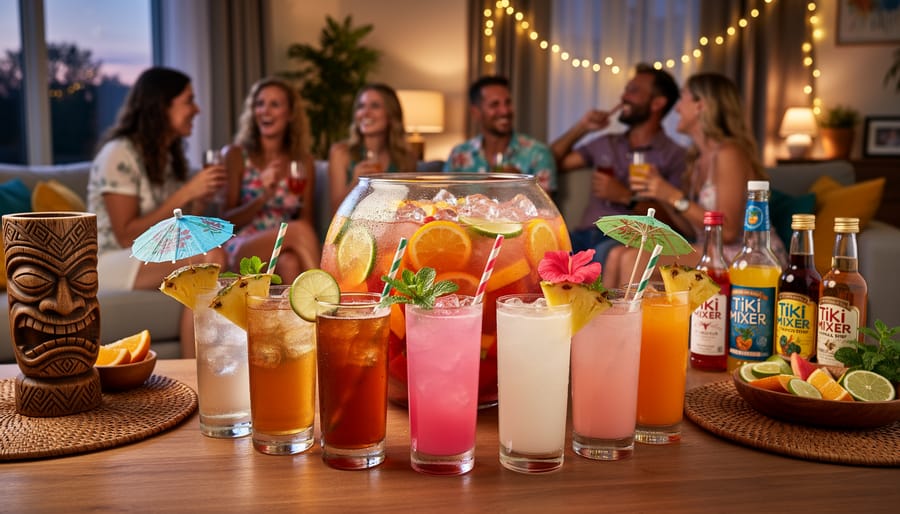
When Club Soda Wins in Tiki
Club soda shines in tiki applications where you want carbonation without competing with the drink’s carefully orchestrated tropical flavors. We’ve found it indispensable for classic Queen’s Park Swizzles, where the zero-calorie, zero-sugar profile lets crushed ice, demerara rum, fresh mint, and lime do all the talking. The subtle mineral character from sodium bicarbonate and potassium sulfate adds a whisper of depth without masking the drink’s signature coolness.
Lengthened rum punches benefit enormously from club soda’s neutrality. When you’re working with layered flavors like overproof Jamaican rum, fresh pineapple, passion fruit, and aromatic bitters, the last thing you need is tonic water’s 22g of sugar and quinine bitterness throwing off the balance. Club soda stretches the punch while preserving its tropical complexity, making it sessionable without diluting the character.
Tropical Collins variations and lighter rum highballs follow the same logic. A Rum Collins built with club soda showcases the spirit’s molasses notes and citrus brightness cleanly. Tiki highballs featuring aged rhum agricole or pot-still Barbados rum gain effervescence and refreshment from club soda without the 83 calories and botanical interference that tonic water would introduce.
The key advantage: club soda respects tiki’s existing flavor architecture instead of imposing its own agenda. When your recipe already includes orgeat, falernum, multiple rums, and fresh juices, neutral carbonation keeps the spotlight where it belongs.
When Tonic Water Elevates Your Tiki Game
Tonic water finds its place in the tiki bar when you’re ready to venture beyond the classics into modern tropical territory. We’ve found that quinine’s bitter backbone works brilliantly in drinks that already lean into bold spice profiles, think recipes built around ginger beer’s heat or allspice dram’s warming punch. When those flavors meet tonic’s botanical character, the result is a drink with unexpected depth rather than the one-note sweetness that can plague tropical cocktails.
The most successful tiki-tonic crossover we’ve tested is the tropical gin-and-tonic variation, where navy-strength gin meets tiki aromatics like passion fruit, falernum, and lime. The 20-80 mg of quinine per serving cuts through the fruit’s natural sugar while complementing the spice notes in falernum. We’ve also experimented with tonic in rum drinks that feature aggressive ginger or Angostura-forward builds, where the mixer’s bitterness balances rather than competes.
Consider tonic water for a riff on the Frozen Jungle Bird adding a tonic float to echo Campari’s bitter edge while stretching the drink with carbonation. The quinine reinforces the aperitif character without diluting the rum-pineapple foundation. Similarly, tonic works in tiki highballs where you want botanical complexity, pairing with Jamaican rum’s funky esters and a dash of Pernod creates a refreshing, layered sipper.
The trade-off is commitment: tonic’s 22g sugar and distinct flavor means it reshapes the entire drink rather than simply lengthening it. Use it when that transformation serves your vision, not as a default mixer.
Pros and Cons for the Tiki Mixologist
We’ve tested both mixers across dozens of classic and modern tiki drinks, and the trade-offs for each are clear once you understand how they interact with rum, citrus, and tropical syrups.
Pros
- Zero calories and sugar lets you control sweetness in already-rich tiki recipes.
- Neutral mineral profile preserves the complexity of layered orgeat, falernum, and exotic fruit flavors.
- Widely available and inexpensive, typically under half the cost of premium tonic waters.
- Works seamlessly in swizzles, punches, and tropical highballs without competing with rum character.
- Carbonation holds up well in large-format punch bowls for extended service.
Cons
- Offers no flavor contribution beyond bubbles, which can feel one-dimensional in simple two-ingredient builds.
- Mineral additions from sodium bicarbonate and potassium sulfate occasionally clash with delicate floral tiki syrups.
- Provides no botanical counterpoint to balance syrup-heavy or overly sweet tropical drinks.
- Limited ability to add depth to experimental tiki variations that need bitter or aromatic complexity.
Pros
- Quinine’s 20-80 mg per serving adds botanical bitterness that complements ginger, allspice, and Angostura in spice-forward tiki drinks.
- Opens creative territory for modern tiki-gin crossovers and tropical tonics with aromatic rums.
- Built-in sweetness can simplify recipes when you want a quick, approachable tropical highball.
- Bitter edge cuts through heavy coconut cream or rich pineapple in ways club soda cannot.
Cons
- 83 calories and 22 g sugar per serving overwhelm balanced tiki recipes already loaded with syrups and liqueurs.
- Quinine’s assertive bitterness fights with citrus and orgeat in classic Mai Tais, Zombies, and Navy Grogs.
- Costs significantly more than club soda, often double or triple per liter for quality brands.
- Sweetener base limits flexibility for bartenders who prefer to dial in sugar levels themselves.
- Not appropriate for traditional tiki swizzles or punches where neutral carbonation is the standard.
For most tiki applications, club soda’s versatility and zero-sugar profile make it the practical choice. We reach for tonic water only when building modern tropical drinks where quinine’s bitterness serves a specific flavor goal, not as a default mixer for rum-based tiki classics.
Which Mixer Should Your Tiki Bar Stock?
Stock club soda first if you’re building a tiki bar from scratch. Its zero-calorie, zero-sugar profile and neutral carbonation make it the foundational mixer for authentic tiki cocktails, from swizzles to tropical Collins variations. Since classic tiki recipes already incorporate 22g of sugar per serving through orgeat, falernum, and fresh juices, adding tonic water’s additional 22g would throw off the carefully calibrated sweet-sour-spirit balance that defines proper tropical drinks. We’ve found that club soda extends tiki punches and lengthens rum highballs without competing with the complex spice layers of aged Jamaican rums or the grassy notes of rhum agricole.
Tonic water earns its spot as your secondary mixer if you’re exploring contemporary tiki variations. The 20-80mg quinine per serving adds botanical depth to rum drinks with strong ginger or allspice components, creating modern tiki-tonic hybrids that bridge tropical and botanical worlds. This works particularly well when you’re riffing on classic recipes rather than replicating them faithfully.
For the health-conscious home mixer, club soda’s zero-calorie advantage matters when you’re already consuming the substantial sugar content inherent in tiki’s traditional syrups and liqueurs. You can make sparkling water at home as a cost-effective club soda alternative, letting you control mineral content while maintaining the neutral carbonation tiki drinks require.
Professional tiki bar operators should stock both but prioritize club soda by volume. Our testing across dozens of classic recipes confirms that 80 percent of traditional tiki cocktails calling for a carbonated mixer perform better with club soda’s neutral base. Reserve tonic water for specialty menu items and guests specifically requesting gin-based tropical drinks where quinine’s botanical bitterness complements rather than clashes with the flavor profile.
What Each Option Is
Club soda and tonic water sit side by side at any well-stocked bar, but they’re as different as orgeat and simple syrup when you’re building tiki cocktails. Both start as carbonated water, yet what happens next determines whether you’re adding neutral lift or bold botanical character to your Mai Tai or Queen’s Park Swizzle.
Club soda is pure carbonated water enhanced with minerals such as sodium bicarbonate and potassium sulfate. These additions give it a subtle, clean taste that won’t compete with your rum, citrus, or tropical fruit flavors. It contains zero calories and zero sugar, making it the invisible workhorse behind lengthened tiki punches and swizzles where you want effervescence without shifting the cocktail’s carefully balanced profile.
Tonic water takes a different path entirely. Quinine, the distinctive bitter botanical compound, defines its character with 20-80 mg per serving alongside sweeteners that bring 22 grams of sugar and 83 calories to every 8-ounce pour. That quinine bite and sweetness combination creates an assertive flavor that can either clash with or complement the complex layers in tiki drinks, depending on how you deploy it.
Understanding these fundamental differences helps you choose wisely when experimenting with sparkling water flavor options in tropical cocktails, where every ingredient either elevates or muddles the final sip.
Common Questions About Tonic Water and Club Soda in Tiki Cocktails
Can I substitute tonic water for club soda in classic tiki cocktails?
No, the substitution rarely works in traditional tiki recipes because tonic water’s quinine bitterness and 22 grams of sugar per 8-ounce serving will clash with the carefully balanced tropical flavors in drinks like Mai Tais, Zombies, and Navy Grogs. These cocktails already incorporate sweetness from orgeat, falernum, and fruit syrups, adding tonic water’s 83 calories and botanical bitterness will throw off the entire flavor profile that tiki pioneers spent decades perfecting.
Does tonic water ever work in tiki drinks?
Tonic water shines in modern tiki-botanical crossovers where you want that quinine bitterness to complement spiced rum or Jamaican funk, think of it as a supporting player in contemporary tropical highballs with ginger, allspice dram, or Angostura bitters. We’ve found success using tonic water in rum-forward drinks that deliberately lean into bitter-sweet contrasts, but these are experimental variations rather than classic tiki formulas.
How does plain sparkling water differ from club soda and tonic water for tiki mixing?
Plain sparkling water is just carbonated water with no added minerals or flavoring, while club soda contains sodium bicarbonate and potassium sulfate for subtle minerality, and tonic water packs quinine plus sweeteners for that distinctive bitter-sweet punch. For tiki cocktails, we prefer club soda’s zero-calorie mineral touch over plain sparkling water’s completely neutral profile, that hint of salinity enhances citrus and tropical fruit flavors without competing with your carefully chosen rums and syrups.
What brands work best for tiki bar stocking?
We keep Topo Chico or Q Club Soda on hand for their assertive carbonation that stands up to swizzling and crushed ice, both delivering clean mineral character without the aggressive salinity some brands carry. If you’re stocking tonic water for experimental tiki-tonic variations, Fever-Tree Mediterranean or Q Tonic offer quinine levels (20-80 milligrams per serving) that won’t overpower rum’s complexity, just remember those 83 calories per serving when you’re building drinks that already lean sweet.
The substitution question comes up constantly at our tiki bar, usually from guests who assume all fizzy mixers are interchangeable. They’re not. A Queen’s Park Swizzle built with tonic water instead of club soda becomes a muddy, overly sweet mess because you’re layering quinine bitterness onto demerara rum, mint, lime, and simple syrup, flavors that need club soda’s neutral carbonation to breathe. The same logic applies to lengthening tiki punches: club soda preserves the punch’s carefully orchestrated layers of rum, citrus, and spice, while tonic water introduces a competing botanical agenda.
Flavored versions of both mixers present their own challenges in tiki applications. Lime-flavored club soda might seem logical for tropical drinks, but we’ve found these flavored varieties add artificial citrus notes that clash with fresh lime juice and compete with the complexity of rhum agricole or aged Jamaican rum. Similarly, flavored tonic waters, elderflower, cucumber, or aromatic editions, work better in gin-based tropical drinks than rum-forward tiki classics where they distract from the spirit’s character rather than enhancing it.
For home tiki enthusiasts building their first bar setup, start with club soda as your everyday workhorse and add a bottle of quality tonic water only after you’ve mastered the classics and want to experiment with modern tiki-botanical hybrids. The reality is that ninety percent of traditional tiki cocktails call for club soda’s neutral lift or no carbonation at all, tonic water remains a specialty ingredient for the adventurous ten percent.
After testing both mixers across classic and modern tiki cocktails, we’ve confirmed that club soda earns its place as the essential tiki bar staple. Its zero-calorie, mineral-enhanced carbonation preserves the delicate balance of rum, citrus, orgeat, and tropical fruit that defines great tiki drinks, from swizzles to punches. Tonic water, with its 83 calories and 20-80 mg quinine per serving, plays a more specialized role in contemporary tiki-botanical crossovers where that bitter edge complements ginger beer, Angostura bitters, or spiced rum.
We recommend stocking both. Use club soda as your default for authentic tropical cocktails that already carry complex flavor layers. Reach for tonic water when you’re experimenting with modern tiki variations that benefit from quinine’s botanical depth, particularly drinks with strong spice profiles or gin-rum hybrids.
Understanding how these mixers interact with tiki’s signature ingredients transforms you from following recipes to crafting balanced tropical cocktails. The difference between a flat, sweet highball and a refreshing, nuanced tiki drink often comes down to choosing the right carbonated base. Stock your bar with confidence, experiment with both, and let your palate guide which mixer elevates each individual cocktail.