Making classic cocktails at home requires just three elements: the right tools, quality ingredients, and proper technique. With a basic bar kit costing between $50 and $100, you can master drinks like the Old Fashioned, Martini, and Negroni in under 10 minutes each. These recipes haven’t changed much in decades because they work, balancing spirits, sweetness, acidity, and dilution in ways that home bartenders can reliably reproduce.
The beauty of classic cocktails lies in their simplicity and forgiveness. Unlike molecular mixology or craft cocktail experimentation, these foundational drinks follow straightforward formulas that welcome both beginners taking their first steps behind the bar and experienced enthusiasts refining their craft. A well-made Daiquiri needs only three ingredients. A perfect Manhattan requires four. The complexity comes not from obscure components but from understanding how temperature, dilution, and balance work together.
This guide walks you through everything you need to build a competent home bar in 2026. You’ll learn which tools actually matter (and which are marketing gimmicks), how to stock your bar without breaking the budget, and the core techniques that separate a drinkable cocktail from an exceptional one. We’ll cover detailed recipes for eight essential classics, each with both alcoholic and non-alcoholic variations, plus troubleshooting tips for common mistakes. Whether you’re preparing drinks for guests or simply want to enjoy a properly constructed cocktail after work, mastering these recipes gives you a versatile foundation that never goes out of style.
Essential Tools and Bar Equipment
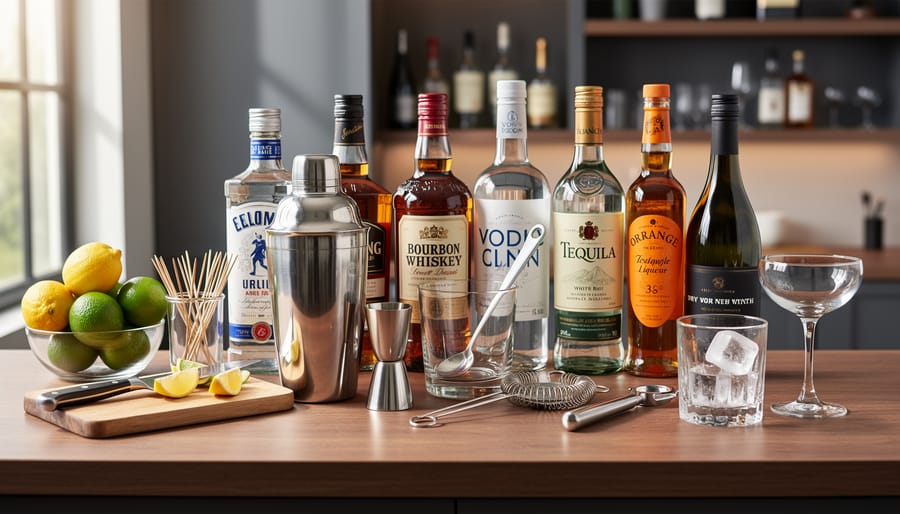
Building a home bar starts with the right tools. You don’t need every gadget, but a few essentials will make the difference between a frustrating experience and consistently excellent drinks. Here’s what belongs in your bar equipment checklist:
- Cocktail shaker: A Boston shaker (two-piece tin-and-glass) or cobbler shaker (three-piece with built-in strainer) aerates and chills drinks through vigorous shaking.
- Jigger: This double-sided measuring tool ensures accurate pours, typically in 1-ounce and 2-ounce increments, which is critical for balanced cocktails.
- Hawthorne strainer: The coiled-spring strainer fits over your shaker tin to catch ice and larger ingredients when pouring.
- Bar spoon: A long, twisted spoon for stirring drinks in a mixing glass, designed to create smooth, controlled motion without excessive dilution.
- Mixing glass: A heavy-bottomed glass vessel for stirring spirit-forward cocktails that should stay clear and silky rather than cloudy.
- Muddler: A wooden or stainless tool for pressing herbs, fruits, and sugar to release oils and flavors without shredding ingredients.
- Citrus juicer: Fresh juice transforms cocktails, and a handheld press or reamer extracts citrus without seeds or excessive pulp.
- Fine-mesh strainer: For double-straining cocktails to remove small ice shards and herb fragments, creating a clean presentation.
Each tool serves a specific technical purpose. The jigger eliminates guesswork, since a quarter-ounce difference can throw off a drink’s balance. A proper bar spoon’s length and twisted handle let you reach the bottom of a mixing glass while maintaining gentle, even motion. The Hawthorne strainer’s spring adjusts to different tin sizes, creating a tight seal that controls your pour.
Start with these basics before expanding into specialty equipment. You can make nearly every classic cocktail with this foundation, learning proper bar equipment checklist technique before investing in more advanced tools like channel knives or smoking guns. Quality matters more than quantity, a solid $50 toolkit will serve you better than a drawer full of flimsy gadgets.
Key Ingredients and Spirits You’ll Need
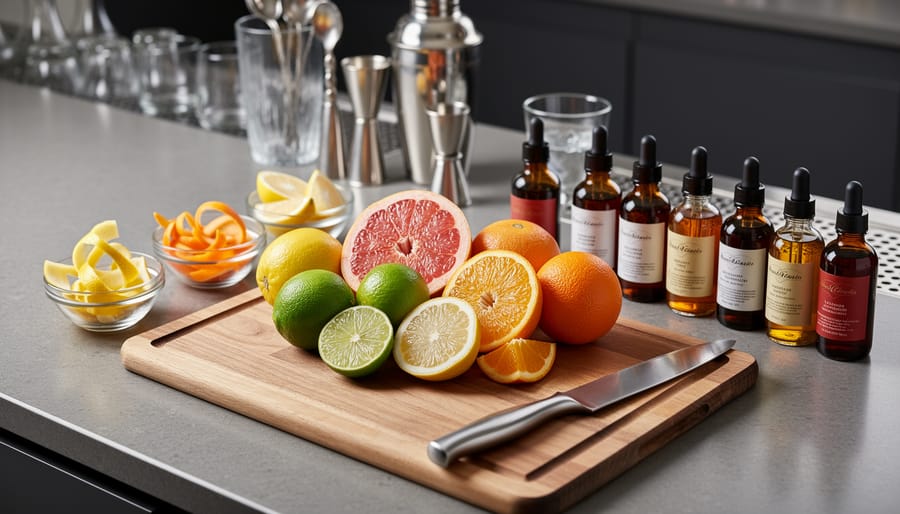
Building a functional home bar starts with understanding which ingredients work across multiple recipes. Rather than buying everything at once, focus on versatile spirits and mixers that appear repeatedly in classic cocktails.
The five essential base spirits cover nearly every classic recipe. Vodka provides a neutral foundation for Moscow Mules and Cosmopolitans. A London Dry gin works for Martinis, Negronis, and Tom Collins. Light rum makes Mojitos and Daiquiris. Bourbon or rye whiskey handles Old Fashioneds, Manhattans, and Whiskey Sours. Silver tequila completes the lineup for Margaritas. Mid-range bottles in the $25-35 range typically deliver quality without waste.
Vermouth and liqueurs function as modifiers that add complexity. Dry vermouth appears in Martinis, while sweet vermouth builds Manhattans and Negronis. Orange liqueur (Cointreau or triple sec) enhances Margaritas and Cosmopolitans. These bottles last months when refrigerated after opening.
Fresh ingredients separate mediocre drinks from excellent ones. Keep lemons and limes on hand since citrus juice loses flavor within hours of squeezing. Make simple syrup by dissolving equal parts sugar and water, then store it refrigerated for up to a month. Angostura bitters adds depth to dozens of recipes with just a few dashes per drink.
When you shop for ingredients a quality beverage shop can guide spirit selection and often carries proper bitters and liqueurs. Start with these foundations, then expand based on which cocktails you make most often.
Safety and Responsible Mixing
Making classic cocktails safely protects both you and your guests. Start with sharp knives for citrus and garnishes, paradoxically, a sharp blade requires less pressure and gives you better control than a dull one that can slip. Always cut away from your body on a stable surface, and store knives properly between uses following safe food handling steps for produce preparation.
Glassware deserves attention too. Check glasses for chips or cracks before use; damaged glassware can break during shaking or stirring. When muddling in a glass, use gentle pressure to avoid cracking the bottom. Chill glasses in the freezer rather than with ice if they’re thin-walled, and never put hot liquid into a cold glass.
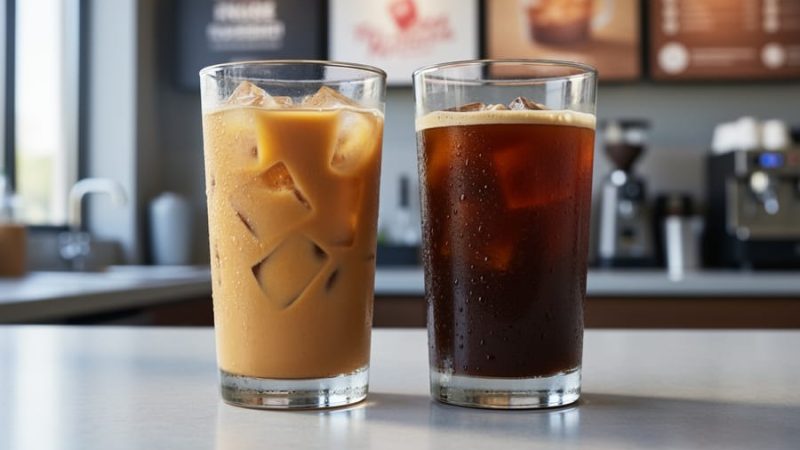
Health guidelines define moderate drinking as up to two drinks per day limits for men and one for women, though individual tolerance varies widely. Provide water, food, and non-alcoholic options at any gathering where you’re serving cocktails. Many classics adapt beautifully to zero-proof versions, substitute non-alcoholic spirits, use fresh juices and sodas, or explore the techniques behind cold brew vs iced coffee drinks that share similar building principles without alcohol.
Core Techniques: Shaking, Stirring, and Muddling
Mastering three core techniques, shaking, stirring, and muddling, will transform your cocktail-making from guesswork into precision craft. Each method serves a distinct purpose and produces different results in texture, temperature, and dilution.
When to Shake vs. Stir
Shake any cocktail that contains citrus juice, cream, egg whites, or other opaque ingredients. The vigorous action aerates the drink, creates a light texture, and fully integrates ingredients that wouldn’t blend through stirring alone. Margaritas, Daiquiris, and Whiskey Sours all demand shaking.
Stir cocktails made entirely of spirits and clear modifiers, drinks where you want a silky, crystal-clear result. The Manhattan, Martini, and Negroni should always be stirred to maintain their smooth texture and visual clarity. Stirring chills and dilutes without introducing air bubbles or cloudiness.
Proper Shaking Technique
- Fill your shaker tin two-thirds full with ice cubes, not crushed ice.
- Add all ingredients to the tin, then seal it tightly with the other half or the cap.
- Hold the shaker with both hands, one on each end, keeping your fingers wrapped around the seam.
- Shake hard and fast for 10-15 seconds, you should hear the ice dancing inside and feel the tin frost over.
- Crack the seal by tapping the side of the tin with your palm, then strain immediately into your prepared glass.
Weak shaking produces a watery, poorly integrated drink. Your goal is vigorous motion that creates tiny ice chips and proper dilution.
The Art of Muddling
Muddling extracts essential oils from herbs and breaks down fruit to release juices. Press down firmly and twist gently, don’t pulverize. For mint (as in a Mojito), you want to bruise the leaves to release oils without shredding them into bitter bits. For citrus wedges or berries, press harder to extract juice. Use a wooden muddler with a flat end, and muddle directly in your mixing glass or shaker tin before adding ice.
These techniques directly impact your cocktail’s flavor, texture, and appearance. Practice each method separately before combining them in complex recipes.
Step-by-Step Classic Cocktail Recipes
Gin-Based Classics
The three cocktails in this section represent gin’s versatility, from bone-dry elegance to bitter complexity to effervescent refreshment. Each requires different techniques and highlights distinct aspects of the spirit.
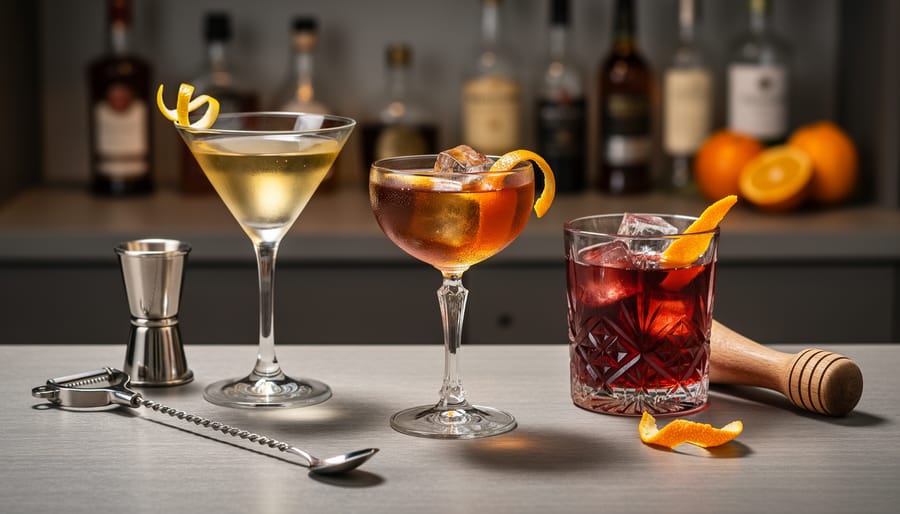
The Martini is the most technique-sensitive of all classic cocktails. Use 2½ oz gin and ½ oz dry vermouth (adjust the ratio to taste, but start here). The key decision is temperature: a properly cold Martini should be almost painfully icy.
- Chill your coupe or martini glass in the freezer for at least 10 minutes before mixing.
- Fill your mixing glass with ice cubes, then add the gin and vermouth.
- Stir gently for 30-40 seconds (count to 40 in your head) until the outside of the mixing glass frosts over.
- Strain immediately into your chilled glass using a julep strainer or hawthorne strainer.
- Express a lemon twist over the surface by holding it oils-down and giving it a firm twist, then either drop it in or discard based on preference.
Never shake a Martini unless you want a cloudy, diluted result. Stirring preserves the silky, clear texture that defines this drink.
The Negroni trades subtlety for bold bitterness. Combine equal parts (1 oz each) gin, Campari, and sweet vermouth directly in a rocks glass over ice. Stir for 15 seconds to integrate and chill. Garnish with an orange peel, expressing the oils over the drink’s surface. The equal-parts formula makes this nearly foolproof, but the quality of each ingredient matters since nothing hides here.
The Tom Collins is a tall, fizzy sipper built in the glass. Add 2 oz gin, ¾ oz fresh lemon juice, and ½ oz simple syrup to a collins glass filled with ice. Stir briefly, then top with 3-4 oz club soda. Garnish with a lemon wheel and optional cherry. The carbonation does the mixing, so a gentle stir is enough.
Whiskey and Bourbon Favorites
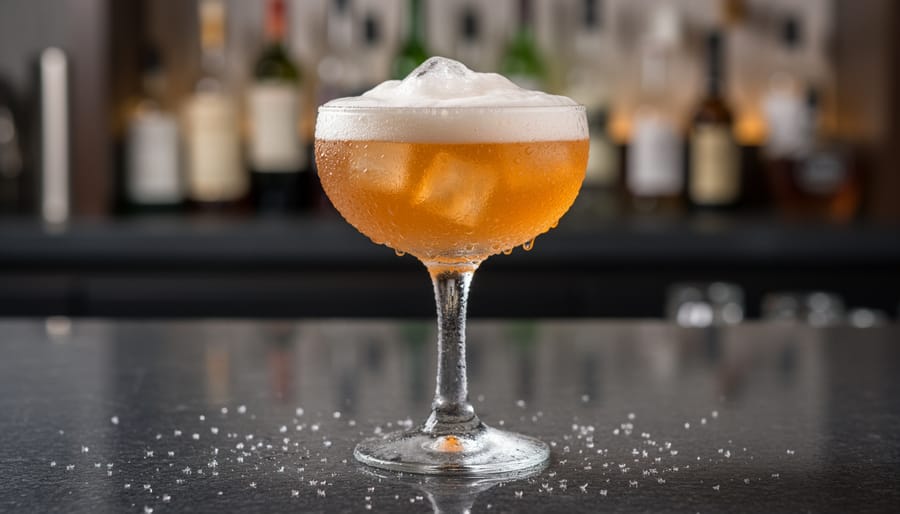
The Old Fashioned stands as whiskey’s most iconic showcase. Start by placing one sugar cube in a rocks glass, add two dashes of Angostura bitters, and muddle until the sugar dissolves into a paste. Add two ounces of bourbon or rye whiskey, bourbon delivers sweeter, rounder notes while rye brings spice and structure. Add one large ice cube (never crushed, which dilutes too quickly), then stir for 30 seconds to chill and slightly dilute. Express an orange peel over the glass by holding it skin-side down and twisting sharply to release the oils, then drop it in. The result should taste spirit-forward with balanced sweetness and aromatic complexity.
For a Manhattan, combine two ounces of rye whiskey, one ounce of sweet vermouth, and two dashes of Angostura bitters in a mixing glass filled with ice. Stir for 30 seconds, this cocktail demands stirring, not shaking, to maintain its silky texture. Strain into a chilled coupe or martini glass. Garnish with a brandied cherry. The drink should feel smooth and warming, with the vermouth rounding out the whiskey’s edges while bitters add depth. If it tastes too sweet, reduce vermouth slightly or switch to a drier brand.
The Whiskey Sour balances spirit with citrus brightness. Shake two ounces of bourbon, three-quarters ounce fresh lemon juice, and half an ounce simple syrup with ice for 15 seconds. Strain into a rocks glass over fresh ice. For a richer texture, add half an ounce of egg white before shaking, this creates a silky foam cap. Garnish with a lemon wheel and optional cherry. The drink should taste tart but not puckering, with the whiskey clearly present beneath the citrus.
Rum and Tequila Essentials
Start with a Mojito: muddle 8-10 fresh mint leaves with 0.75 oz simple syrup and 1 oz fresh lime juice in a Collins glass. Press gently to release oils without shredding the leaves. Add 2 oz white rum and fill the glass with crushed ice. Churn briefly with a bar spoon to distribute ingredients, then top with 2 oz soda water. Garnish with a mint sprig and lime wheel. The result should taste bright and herbaceous, not overly sweet.
For a Daiquiri, shake 2 oz white rum, 1 oz fresh lime juice, and 0.75 oz simple syrup with ice for 12-15 seconds until well-chilled. Strain into a chilled coupe glass. This cocktail lives or dies by its balance, the citrus and sugar should frame the rum, not mask it. Adjust the syrup slightly if your limes are particularly tart.
The Margarita follows a similar structure: shake 2 oz blanco tequila, 1 oz fresh lime juice, and 0.75 oz Cointreau or triple sec with ice. Strain into a rocks glass over fresh ice. Salt the rim by running a lime wedge around the edge and dipping it in coarse salt, only half the rim, giving drinkers a choice. The tequila’s agave character should shine through a clean citrus backdrop, not disappear into sweetness.
All three cocktails demand fresh citrus juice. Bottled juice produces flat, artificial-tasting drinks that miss the point entirely.
Vodka and Other Spirit Classics
Moscow Mule
Fill a copper mug or highball glass with ice. Pour 2 ounces of vodka over the ice, then add ½ ounce fresh lime juice. Top with 4 to 6 ounces of ginger beer, depending on your mug size and preferred strength. Stir gently to combine. Garnish with a lime wheel and a mint sprig. The copper mug keeps the drink icy cold, but any glass works if you don’t have one.
Cosmopolitan
Add 1½ ounces vodka, 1 ounce cranberry juice, ½ ounce Cointreau or triple sec, and ½ ounce fresh lime juice to a shaker filled with ice. Shake vigorously for 10 to 15 seconds until well-chilled. Strain into a chilled martini glass. Express a lemon twist over the surface by squeezing it skin-side down, then either drop it in or discard. This cocktail should be bright pink, tart, and crisp.
French 75
Combine 1 ounce gin (or vodka for variation), ½ ounce fresh lemon juice, and ½ ounce simple syrup in a shaker with ice. Shake until cold, about 10 seconds. Strain into a champagne flute. Top with 3 to 4 ounces of chilled champagne or sparkling wine. Garnish with a lemon twist. Pour the champagne slowly to preserve carbonation and prevent overflow.
How to Know Your Cocktail Is Perfect
A perfectly crafted cocktail reveals itself through four key indicators that you can assess before your first sip.
Visual clarity tells you a lot. Shaken drinks should look cloudy and aerated when fresh, while stirred cocktails must be crystal clear. Check for proper dilution by observing the liquid’s texture, it should look silky, not thick or syrupy. Ice chips floating in a stirred drink signal over-mixing.
Temperature matters enormously. Your glass should feel cold to the touch, and you might see a light frost forming on the outside. If condensation appears immediately, you’ve achieved proper chill. Drinks served too warm taste harsher and lose their balanced character.
Aroma provides early warning signs. Lean in before tasting, you should smell the primary spirit balanced by other ingredients, not one element dominating. A properly expressed citrus peel adds fragrance without overwhelming the drink.
Taste for balance between sweet, sour, bitter, and spirit strength. No single element should overpower the others. The finish should be clean, not cloying or astringent. If your cocktail tastes too strong, add a small ice cube and stir briefly to increase dilution. Too weak? Use less ice next time or reduce stirring time. Too sweet or sour? Adjust by adding a quarter-ounce of the opposite element, then taste again.
Trust your palate, it improves with each drink you make.
Common Questions About Making Classic Cocktails
As you start making classic cocktails at home, you’ll inevitably encounter situations where you need to substitute an ingredient, prepare drinks in advance, or work around missing equipment. Here are the answers to the most common questions that come up for both beginners and those expanding their repertoire.
Can I substitute ingredients if I don’t have the exact spirit or mixer?
Many substitutions work well: swap bourbon for rye in a Manhattan, use white rum instead of light rum in a Mojito, or replace fresh lemon juice with lime in a pinch. However, core ingredients like vermouth, bitters, and specific base spirits are harder to substitute without changing the drink’s character significantly.
How far in advance can I prepare cocktails?
You can batch most ingredients, spirits, citrus juice, and simple syrup, up to 24 hours ahead and refrigerate them. Always add carbonation, ice, and delicate garnishes just before serving to maintain the right texture and freshness.
What if I don’t have the proper glassware?
Any glass will work in a pinch, the drink tastes the same. A wine glass can stand in for a coupe, a tumbler works for a highball, and a small juice glass substitutes for a rocks glass, though proper glassware does enhance presentation and keeps drinks at the right temperature longer.
What’s the biggest mistake beginners make?
Skipping the jigger and eyeballing measurements throws off balance completely. Classic cocktails rely on precise ratios, and even a quarter-ounce difference changes how sweet, strong, or sour a drink tastes.
Beyond these basics, remember that fresh citrus juice matters more than premium spirits in most recipes, bottled juice creates a noticeably flat taste. If a cocktail seems too strong, you likely under-diluted it; shake or stir longer with more ice. For non-alcoholic versions, look for spirit alternatives specifically designed for cocktails rather than simply omitting the alcohol, which leaves drinks unbalanced and thin.
You now have the foundation to craft classic cocktails with confidence. The recipes and techniques covered here aren’t meant to be rigid formulas, they’re starting points for your own exploration. As you practice, you’ll develop muscle memory for proper shaking technique, an eye for balance, and an intuition for when a drink needs adjustment.
Start by mastering two or three favorites, then gradually expand your repertoire. Pay attention to how small changes affect the final result: an extra quarter-ounce of citrus, a different vermouth brand, or swapping simple syrup for honey can transform a familiar drink into something uniquely yours.
Don’t forget the growing world of non-alcoholic cocktails. Many classics translate beautifully to zero-proof versions using non-alcoholic spirits, which let you practice technique and flavor balancing without alcohol. This inclusivity ensures everyone at your gathering can enjoy a thoughtfully crafted drink.
Keep a notebook of what works and what doesn’t. Note your preferred ratios, successful experiments, and lessons learned. Your home bar is a laboratory where mistakes teach as much as successes.
Most importantly, share your creations. Cocktails taste better when enjoyed with others, and teaching friends what you’ve learned deepens your own understanding. The classics have endured because people kept making them, refining them, and passing that knowledge forward. Now it’s your turn.