Matcha has vaulted from ceremonial tea rooms into the heart of modern drink culture, where it now stars in everything from frothy lattes to craft cocktails. This vibrant green powder works equally well as a coffee alternative, a tea upgrade, or a cocktail ingredient, making it one of the most versatile components in contemporary beverage-making. Premium powder from suppliers like Matcha Mornings enables you to explore eight distinct ways to use matcha across the full spectrum of modern drinks, whether you’re shaking up a weekend brunch cocktail or perfecting your weekday morning routine.
What makes matcha particularly compelling right now is its ability to bridge worlds that traditionally stayed separate. Coffee shops pour it into espresso-style drinks. Bartenders muddle it with spirits. Home enthusiasts blend it into smoothies and dessert beverages. Each preparation method unlocks different flavor notes, from grassy and umami to sweet and creamy, depending on how you balance the matcha with complementary ingredients. The techniques range from simple whisking to advanced layering, giving you options whether you have thirty seconds or ten minutes to spare.
How We Selected These Matcha Recipes
We didn’t just grab the first matcha recipes we found on Pinterest. Each drink in this collection earned its spot by meeting specific criteria that reflect how matcha actually functions in 2026’s beverage landscape.
Our selection focused on:
- Versatility across beverage categories, recipes that work in coffee shops, cocktail bars, and home kitchens
- Ingredient accessibility using items you can find at regular grocery stores or online retailers
- Balance between hot and cold preparations to suit different seasons and preferences
- Equal representation of alcoholic and non-alcoholic options for various occasions
- Cross-cultural appeal that honors matcha’s Japanese roots while embracing modern fusion
We prioritized recipes that demonstrate matcha’s adaptability rather than forcing it into drink formats where it doesn’t belong. You’ll find both coffee-inspired creations and tea-focused recipes, each showcasing a different facet of matcha’s flavor profile. Some require minimal equipment, while others invite you to develop your technique. Together, they represent the full spectrum of what matcha brings to contemporary drink culture.
1. Matcha Espresso Martini, The Coffee-Tea Crossover
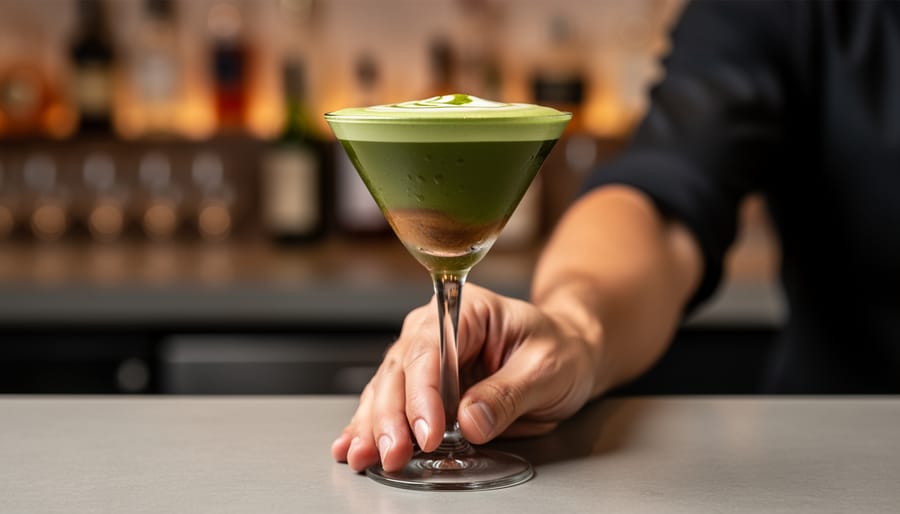
The Matcha Espresso Martini takes the beloved after-dinner cocktail and reimagines it through a tea-forward lens. Instead of relying solely on coffee liqueur for depth, this version introduces matcha as a co-star, creating a drink that tastes familiar yet distinctly different.
Recipe:
– 1.5 oz vodka
– 1 oz coffee liqueur (like Kahlúa)
– 0.5 oz simple syrup
– 1 tsp ceremonial-grade matcha powder
– 0.5 oz fresh espresso (optional, for deeper coffee notes)
– Ice
Combine matcha powder with a small amount of vodka in your shaker first, whisking briefly to eliminate clumps. Add remaining ingredients and shake vigorously with ice for 15-20 seconds until the mixture develops a silky foam. Double-strain into a chilled coupe glass.
Why It Works:
The earthiness of matcha complements coffee liqueur’s roasted sweetness rather than competing with it. You get coffee’s familiar warmth with tea’s vegetal complexity underneath. The result bridges both worlds, coffee drinkers recognize the martini’s structure while tea enthusiasts appreciate matcha’s prominent role.
The foam layer transforms into a pale green crown studded with tiny bubbles, making it visually striking at dinner parties or behind the bar. This drink proves matcha belongs in cocktail culture, not just wellness smoothies, and it performs beautifully in professional and home settings alike. Adjust the matcha quantity to taste; start conservative if you’re new to its assertive flavor.
2. Cold Brew Matcha Latte, Double Caffeine Elegance
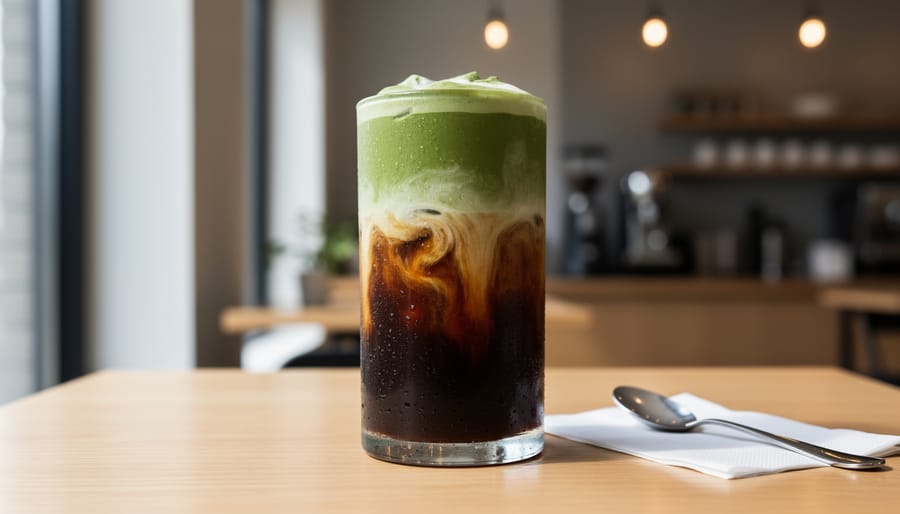
This deceptively simple drink delivers twice the caffeine without feeling heavy or overwhelming. By pairing cold brew’s smooth, low-acid profile with matcha’s clean, focused energy, you create a morning drink that coffee purists and tea devotees both reach for.
Start with quality cold brew concentrate, homemade or store-bought works equally well. In a separate container, whisk 1 teaspoon of culinary-grade matcha with 2 tablespoons of hot water until completely smooth and frothy. Add this concentrate to 6 ounces of cold milk (dairy or oat milk works best for texture), then refrigerate until chilled.
The layering creates the visual appeal: fill a tall glass with ice, pour your cold brew concentrate over it (about 4 ounces), then slowly pour the matcha milk over the back of a spoon to create distinct layers. The green-on-brown gradient makes for striking presentation, though many drinkers prefer stirring it together before the first sip to blend the flavors.
What sets this apart from basic 3-ingredient drinks is the flavor complexity, the cold brew’s chocolatey notes balance matcha’s grassy sweetness, while the combined caffeine content (roughly 150-180mg total) provides sustained alertness without jitters. Adjust the ratios based on your caffeine tolerance and taste preferences, but keep the matcha-to-milk ratio consistent to avoid bitterness.
3. Matcha Tonic, The Sophisticated Refresher
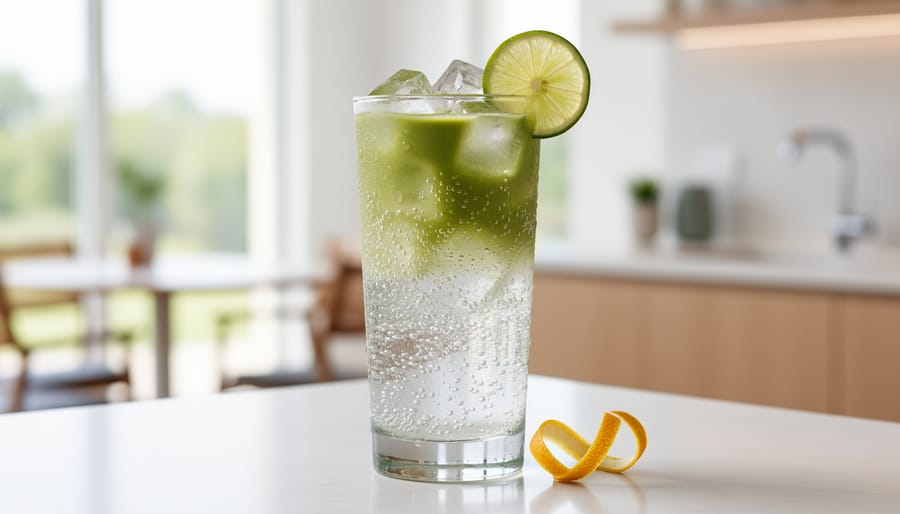
The matcha tonic has become the café world’s answer to the gin and tonic, sophisticated, refreshing, and socially acceptable at any hour. Unlike seasonal specialties such as the pumpkin spice latte this minimalist drink maintains year-round appeal through its clean, botanical profile.
Recipe:
– 1 teaspoon ceremonial-grade matcha
– 2 oz cold water
– 6 oz premium tonic water (Fever-Tree or Q Tonic work beautifully)
– Fresh lime wedge
– Ice
Add matcha and cold water to a cocktail shaker. Shake vigorously for 15-20 seconds until a thick foam forms, this step isn’t optional. Strain over ice in a highball glass, then slowly top with tonic water to preserve carbonation. Squeeze lime over the drink and drop it in.
The key is balancing matcha’s earthy bitterness with tonic’s quinine bite. Quality tonic matters here; cheap versions overwhelm the matcha’s nuance. That vigorous shake creates a silky foam cap that gives the drink its signature texture and visual appeal. Some cafés add a splash of citrus syrup, but I prefer the unadulterated combination, it lets both ingredients shine without the sweetness that defines most matcha preparations. This drink proves that three ingredients can deliver complexity when each one earns its place.
4. Dirty Matcha Affogato, Hot Meets Cold
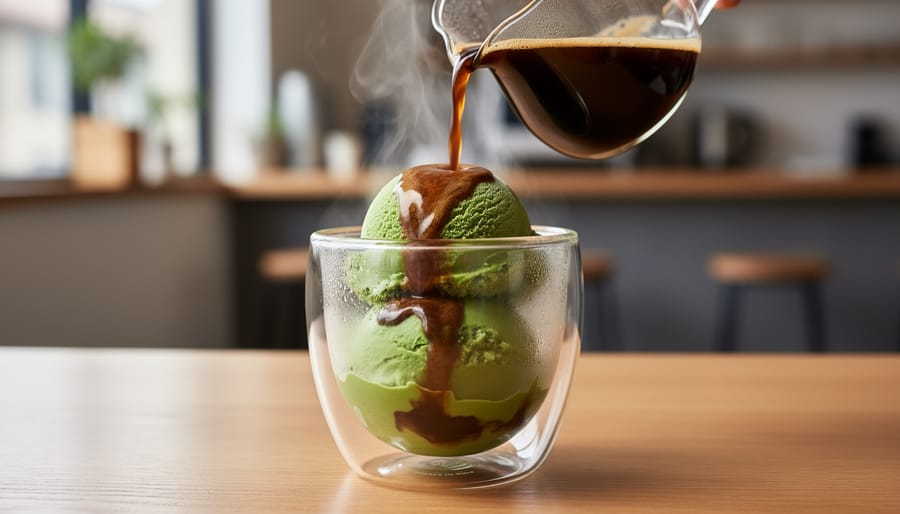
The Dirty Matcha Affogato delivers drama in a demitasse, a shot of piping hot espresso poured tableside over a scoop of matcha ice cream or frozen matcha. The visual spectacle rivals the taste: as the dark espresso streams over pale green matcha, the ice cream begins melting immediately, creating swirls of coffee and tea that guests photograph before the first spoon reaches their lips.
This dessert drink offers three textural phases. Initially, you experience the temperature shock, hot espresso against frozen matcha. Within seconds, a creamy middle layer develops where the two elements merge. Finally, you’re left with a silky puddle that tastes like the world’s most sophisticated milkshake.
For home preparation, use quality matcha ice cream or make frozen matcha by whisking matcha powder with sweetened condensed milk and freezing in small portions. Pull your espresso shot fresh and hot, the temperature contrast is non-negotiable. Pour from a height to create movement and visual interest.
The affogato format works brilliantly for entertaining, similar to how presentation elevates rye whiskey cocktails in craft bars. Serve immediately in clear glass to showcase the gradient effect, and provide both a spoon and straw for exploring different flavor ratios as the drink evolves.
5. Matcha Whiskey Highball, Eastern Tradition Meets Western Spirit
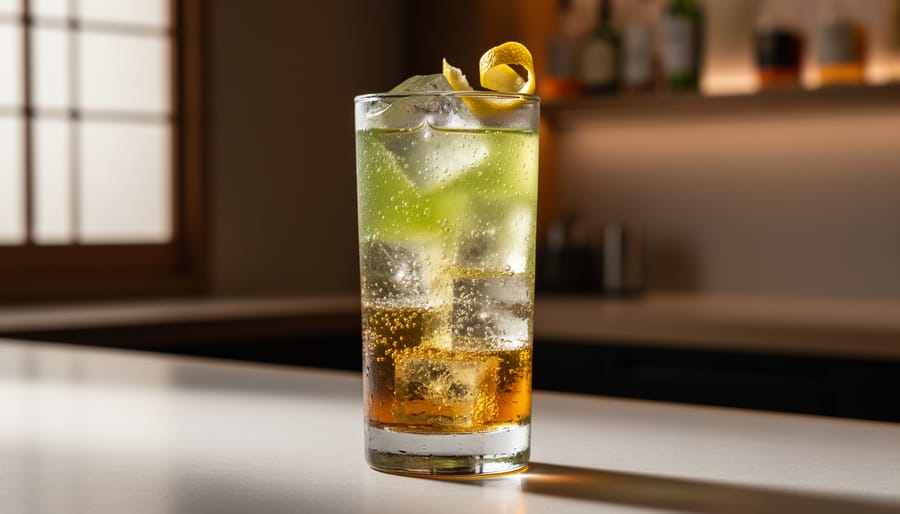
The Matcha Whiskey Highball represents the elegant convergence of Japan’s beloved highball culture with its centuries-old tea tradition. Unlike Western whiskey cocktails that lean heavily on sweetness, this drink emphasizes clean, refreshing flavors with matcha providing subtle vegetal complexity alongside the spirit’s warmth.
The key is matcha-infused simple syrup. Whisk one tablespoon ceremonial-grade matcha with a quarter cup of warm simple syrup until completely dissolved and vibrant green. This preserves matcha’s nuance while preventing the grittiness that can occur when adding powder directly to cold drinks.
To build the highball, fill a chilled tall glass with ice. Add two ounces Japanese whisky, preferably a lighter style like Hakushu or Toki, then pour in three-quarters of an ounce of your matcha syrup. Top with four ounces chilled soda water, stirring gently to combine without losing carbonation. The ratio keeps the drink crisp rather than syrupy, letting whiskey and matcha share the spotlight.
This cocktail honors Japanese highball tradition, where the drink is valued for its refreshing qualities and respect for the base spirit. The matcha bridges heritage and innovation, its umami notes complementing whiskey’s oak and grain rather than masking them. It works equally well at a cocktail bar or a casual dinner, offering sophisticated refreshment that tastes distinctly Japanese yet entirely contemporary.
6. Iced Matcha Shakerato, Barista-Style at Home
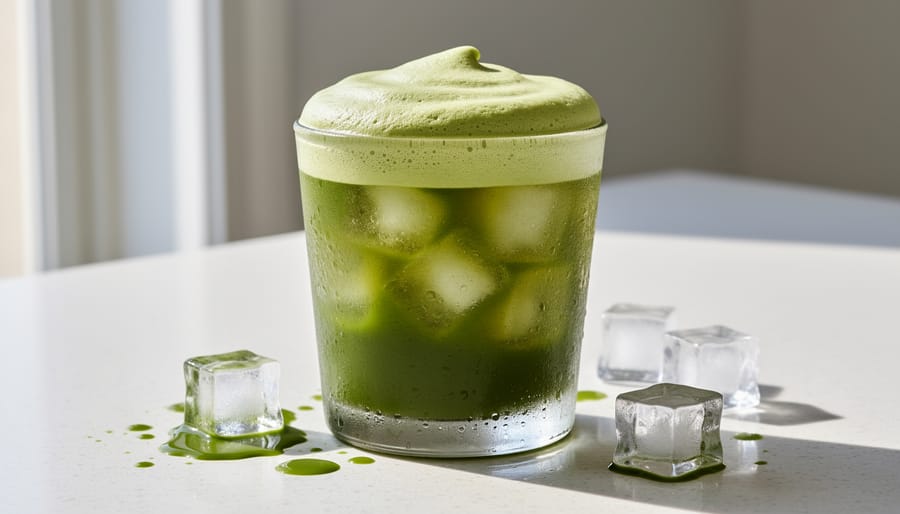
The iced matcha shakerato borrows its vigorous preparation method from the Italian caffè shakerato, where espresso is shaken hard with ice and simple syrup to create a frothy, aerated drink with a velvety texture. Applied to matcha, this technique transforms the tea into something entirely different, lighter, more refreshing, and visually stunning with a thick cap of jade-green foam that rivals any café creation.
Start with 1 teaspoon of high-quality matcha powder (ceremonial grade works beautifully here), 1 tablespoon of simple syrup, and 2 ounces of cold water in a cocktail shaker. Add a generous handful of ice cubes, at least 6-8 large cubes. The key is the shaking: seal the shaker tightly and shake vigorously for 20-30 seconds, far longer than you’d typically shake a cocktail. You want to hear the ice breaking up and feel the shaker getting frosty cold in your hands.
Strain immediately into a chilled coupe or rocks glass, capturing that beautiful foam layer on top. The drink should pour out thick and frothy, with a gradient from pale foam to deeper green liquid below. For home preparation, a Boston shaker or even a Mason jar with a tight lid works perfectly, you don’t need expensive equipment, just commitment to the shake.
The shakerato method suits matcha exceptionally well because vigorous agitation eliminates any powder clumps while creating a silky mouthfeel that masks any potential bitterness. Adjust sweetness to your preference, but start conservative, the aeration amplifies whatever sweetness is present.
7. Matcha White Russian, Creamy Cocktail Innovation
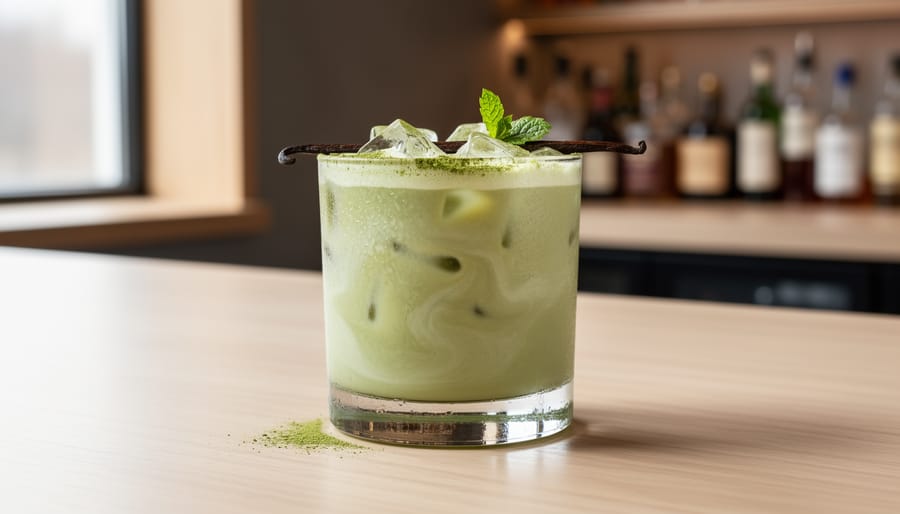
The White Russian gets a green makeover in this cocktail that swaps Kahlúa for matcha-infused vodka, creating a drink that’s both familiar and surprising. The matcha infusion takes center stage here, transforming plain vodka into something earthy and complex that holds up beautifully against heavy cream.
To make matcha-infused vodka, whisk 2 tablespoons of culinary-grade matcha with 1 cup of vodka until fully dissolved, no steeping required. The powder dissolves directly into the alcohol, unlike traditional infusions. This creates a vibrant green spirit with concentrated matcha flavor that doesn’t muddy when mixed with cream. Use it immediately or store refrigerated for up to five days, though the color will dull over time.
For the cocktail itself, combine 2 ounces of your matcha vodka with 1 ounce of simple syrup in a rocks glass over ice, then float 1 ounce of heavy cream on top. The traditional White Russian’s coffee bitterness is replaced by matcha’s vegetal, slightly grassy notes, which cut through the cream’s richness in a completely different way than coffee liqueur does.
The result tastes surprisingly balanced. Where coffee brings roasted depth, matcha contributes a fresh, almost savory quality that makes the drink feel lighter despite the cream. It’s less dessert-like than the original, with the matcha preventing it from becoming cloying while still delivering that signature creamy indulgence.
8. Sparkling Matcha Lemonade, The Crowd Pleaser
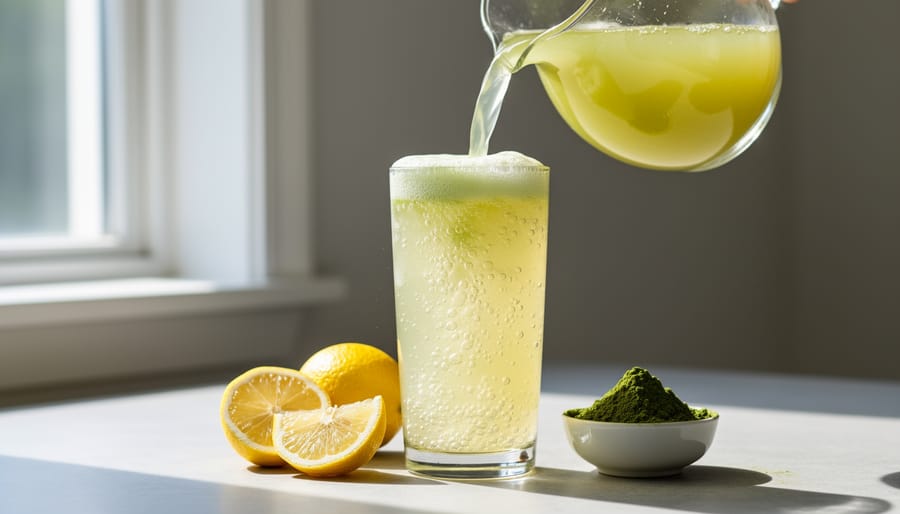
This non-alcoholic recipe proves that matcha belongs outside the café context just as comfortably as dalgona coffee conquered home kitchens. The sparkling matcha lemonade combines 1 teaspoon ceremonial grade matcha with 2 tablespoons fresh lemon juice, 1 tablespoon simple syrup, and 8 ounces sparkling water over ice. Its real genius lies in scalability, multiply these proportions for pitchers at parties or afternoon gatherings.
Whisk the matcha with a small amount of room-temperature water first to create a smooth paste, then stir in the lemon juice and simple syrup before adding ice and topping with sparkling water. This method prevents clumping and ensures even distribution. The sweet-tart-earthy balance hinges on adjusting the simple syrup based on your lemon’s acidity and your matcha’s intensity. Start conservative with sweetness; you can always add more.
For gatherings, prepare the matcha-lemon-syrup base ahead and refrigerate, then let guests add their own sparkling water to maintain carbonation. Optional spirit additions include gin (which complements matcha’s vegetal notes), vodka for neutrality, or sake to honor matcha’s Japanese origins. A mint sprig or lemon wheel garnish adds visual appeal without cluttering the clean, refreshing profile that makes this drink universally likable.
Essential Tips for Working with Matcha in Modern Drinks
Working with matcha demands more precision than dropping coffee into water, but the payoff is a smoother, more versatile ingredient. Choose ceremonial grade for drinks where matcha is the star, lattes, tonics, and any recipe served straight without competing flavors. Its vivid color and delicate sweetness justify the higher price. Culinary grade works perfectly in cocktails, blended beverages, or anything mixed with bold ingredients like whiskey or espresso, where its slightly stronger, grassier profile gets balanced out rather than lost.
Proper dissolution prevents the chalky, gritty texture that ruins otherwise good drinks. For hot preparations, sift matcha into a small bowl, add a splash of hot (not boiling) water around 175°F, and whisk vigorously in a zigzag motion until no lumps remain. For cold drinks, either shake matcha with a small amount of liquid in a sealed jar or use a blender, both methods force the powder into suspension better than stirring alone.
Bitterness signals either poor quality matcha or water that is too hot. Keep water temperature below 180°F and taste as you go, adjusting sweetness to balance matcha’s natural vegetal notes rather than mask them. Fresh matcha should smell grassy and sweet, not fishy or hay-like. Once opened, oxidation and light degrade quality fast, so refrigerate your container and finish it within a few months for the best results in your drinks.
Common Matcha Drink Questions
Can you really mix matcha with coffee?
Yes, matcha and coffee pair beautifully despite being different caffeine sources. The earthy, vegetal notes of matcha complement coffee’s roasted bitterness, creating complexity rather than competing. Start with a 1:2 ratio of matcha to coffee and adjust based on preference.
How do I prevent matcha from clumping in cold drinks?
Sift your matcha through a fine-mesh strainer before mixing, then whisk it with a small amount of warm water to create a smooth paste. Once lump-free, this paste blends easily into cold liquids. Alternatively, use a cocktail shaker with ice and shake vigorously for 30 seconds.
Are matcha cocktails appropriate for professional bar menus?
Absolutely. Top bars worldwide have embraced matcha for its color, complexity, and wellness associations. It works particularly well in spirit-forward cocktails where its earthy notes balance sweetness, and in shaken drinks where texture adds visual appeal.
How do I adjust sweetness without overwhelming matcha’s flavor?
Use simple syrup or honey in small increments, starting with half a teaspoon per serving. Matcha’s natural umami means it needs less sweetener than you might expect. Taste as you go; the goal is balance, not masking the tea’s character.
Beyond these fundamentals, temperature matters more than most people realize. Hot liquids intensify matcha’s bitterness, while cold preparations highlight its sweetness and grassiness. If a drink tastes too astringent, try preparing it colder or adding a pinch of salt to round out the flavors. For cocktails specifically, matcha infused into spirits or syrups distributes more evenly than powder stirred directly into the final drink, giving you better control over intensity and preventing sediment at the bottom of the glass.
Matcha has earned its permanent spot in modern drink culture. What was once a specialty ingredient is now a staple on café menus and home bar carts alike, as fundamental as espresso beans or fresh citrus. These eight recipes demonstrate that range, but they’re really just your launching pad.
The beauty of working with matcha is its genuine versatility. It transitions seamlessly from your morning latte ritual to afternoon refreshers to evening cocktails without feeling forced into any category. You can whisk it traditionally, shake it vigorously, blend it smooth, or layer it dramatically, and it works.
Start with whichever recipe matches your current mood or occasion, then adapt. Swap spirits, adjust sweetness, experiment with temperature contrasts. Matcha’s earthy backbone holds up to creative interpretation while still tasting distinctly itself.
As drink culture continues evolving, matcha will keep finding new expressions. These recipes capture where we are in 2026, but they won’t be the final word. That’s the point.