Yes, sparkling water is mildly acidic. When carbon dioxide dissolves in water under pressure, it reacts to form carbonic acid, a weak acid that gives the drink its gentle bite and lands plain sparkling water at roughly pH 3.5 to 5. Still water sits at a neutral 7.0, while soda drops to somewhere between 2.5 and 3.5. So the bubbles do lower the pH, but nowhere near as far as a cola does.
That gap matters more than the label “acidic” suggests. Plenty of everyday drinks sit on the acidic side of the scale, and the real question is how much, and what else is in the glass. Plain carbonated water is a very different animal from a sugar-loaded soda, and understanding why helps you make smarter choices, whether you’re sipping a lime and soda at lunch or building a highball at the home bar.
Below, we break down the chemistry in plain language, line up sparkling water against still water and soda, address the usual worries about teeth and body chemistry in measured terms, and look at how that carbonic edge behaves in cocktails and mocktails. Think of it as the fizz explained, minus the fuss.
What ‘Acidic’ Actually Means for Your Glass of Fizz
So what does “acidic” actually mean? In everyday terms, it describes how much acid a liquid carries, and chemists measure that on the pH scale. The scale runs from 0 to 14. Pure still water sits right in the middle at a neutral 7.0, anything lower is acidic, and anything higher is alkaline. Lemon juice and soda land low on the scale; baking soda solutions land high.
Here’s the direct answer: yes, sparkling water is mildly acidic. Carbonated water is simply water that’s been infused with carbon dioxide gas under pressure. Once that gas dissolves, some of it reacts with the water to form carbonic acid. Plain sparkling water typically lands around pH 5, though figures between roughly 3.5 and 6 get cited depending on the product and how much fizz it carries.
That number may sound alarming, but “acid” covers a huge range. Carbonic acid is a weak acid, nothing like the harsh, burning strong acids most of us picture from a chemistry lab. Sodas, for comparison, run lower at about 2.5 to 3.5.
A few terms worth keeping straight:
- pH
- A number from 0 to 14 that tells you how acidic or alkaline a liquid is, with 7 being neutral.
- Acid
- A substance that pushes a liquid’s pH below 7.
- Weak acid
- An acid that only partly breaks apart in water, so its effect is gentle.
- Carbonic acid
- The weak acid formed when carbon dioxide and water react.
- Carbonation
- The process of dissolving carbon dioxide gas into a liquid under pressure to create bubbles.
With those basics in hand, the chemistry behind the fizz is easy to follow.
How the Bubbles Become Acid: The Chemistry Behind the Fizz
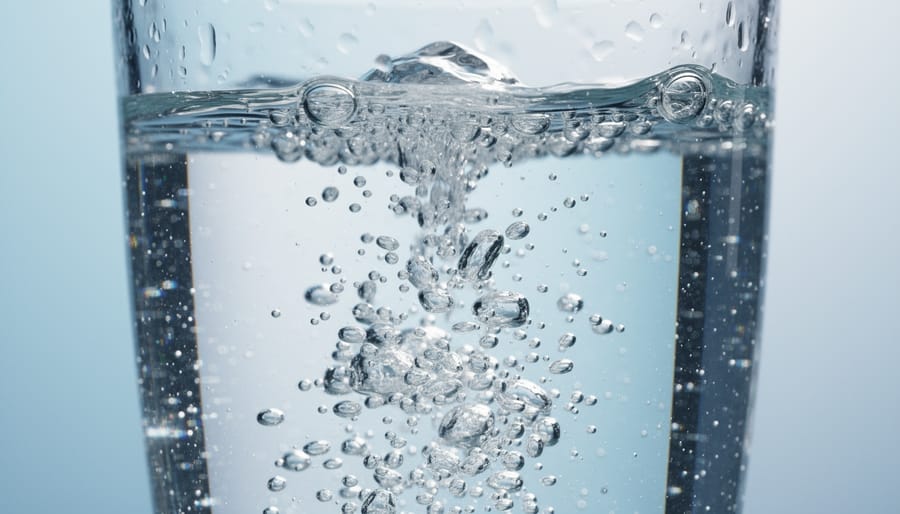
When you carbonate a drink, you’re forcing carbon dioxide gas into water under pressure. The gas has nowhere to go, so it dissolves and stays tucked inside the liquid, like a crowd squeezed into an elevator.
Here’s where the acid comes in. A small portion of that dissolved CO2 reacts with the water and becomes carbonic acid. Notice the word “small.” Most of the gas just hangs around as plain dissolved CO2, and only a sliver converts. That’s why carbonic acid is called a weak acid, and why plain sparkling water lands at a pH of roughly 3.5 to 5 instead of down where sodas sit. It’s a tug-of-war that the carbonic acid equilibrium keeps balanced: CO2 and water form carbonic acid, and carbonic acid slides right back into CO2 and water.
That reversibility explains everything you see in the glass. Pop the cap and the pressure drops, so the dissolved gas starts escaping as bubbles. As the CO2 leaves, the reaction runs in reverse, the carbonic acid breaks down, and the water drifts back toward neutral. A glass left on the counter goes flat for exactly this reason: the fizz and the mild acidity fade together.
Bartenders run into this all the time. Colder water holds dissolved gas better, which is why a chilled soda gun or a well-iced shaker keeps bubbles livelier. Pour too aggressively, or stir a spritz like you’re mixing paint, and you knock the CO2 out of solution early. Go gently, keep things cold, and the fizz (along with its gentle bite) sticks around much longer.
Sparkling Water pH Compared With Other Drinks
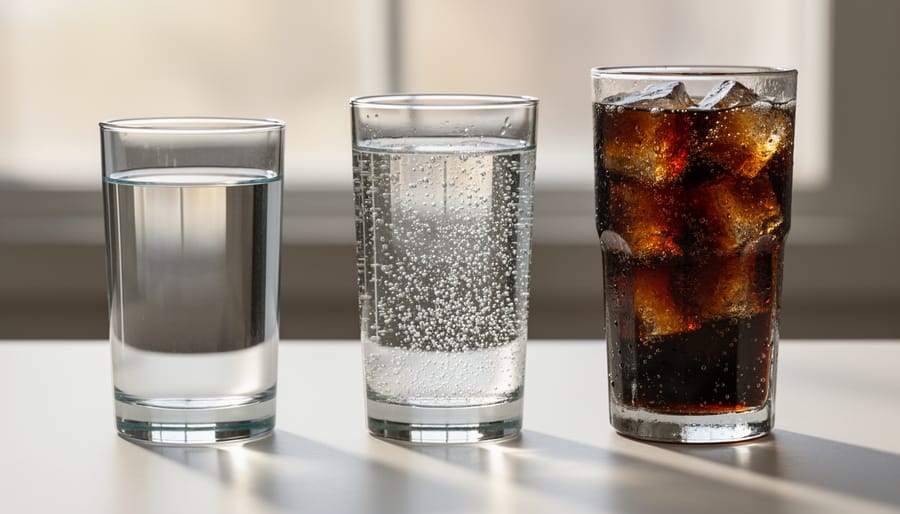
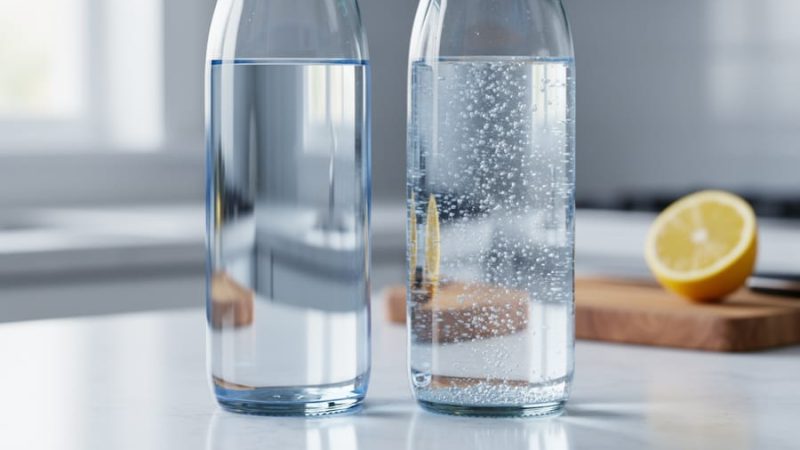
Plain still water sits at a neutral 7.0 on the pH scale, and sodas land way down at 2.5 to 3.5. Sparkling water falls in between, and it’s a lot closer to the gentle end of that gap than most people expect.
Plain sparkling water is generally put at roughly 3.5 to 5, and many sources place it right around pH 5. Others peg carbonated water a touch higher, with sparkling water pH 5-6 showing up in some references. Why the spread? It comes down to how much carbon dioxide is dissolved and which product is in the glass. A heavily carbonated bottle holds more carbonic acid than a softly fizzy one, so the number shifts accordingly.
Here’s the picture in plain terms:
– Still water: neutral, 7.0
– Plain sparkling water: about 3.5 to 5 (some sources say 5 to 6)
– Sodas: 2.5 to 3.5
Notice that the bubbly stuff and soda don’t overlap much. Soda sits at the sharply acidic end, while sparkling water stays mild and, at the upper end of its range, only slightly below neutral. If you’re weighing sparkling vs regular water for everyday sipping, the pH gap between them is real but modest.
Think of these as general ranges rather than exact readings for every bottle. Treat the numbers as a guide, not a guarantee.
Types of Sparkling Water and Why Acidity Can Vary
Not every bottle of fizz is built the same, and that’s the first reason acidity can drift from one drink to the next. Plain carbonated water is simply water infused with carbon dioxide under pressure, which is where the mild acidity comes from. From there, the options branch out.
- Plain sparkling water: just water and dissolved CO2, so its acidity comes from carbonic acid and sits in the mildly acidic range.
- Flavored sparkling water: may include added flavorings or fruit essences, which can nudge the acidity up or down depending on what’s in them.
- Citrus-leaning versions: citrus ingredients bring their own acids, so these can taste sharper and may read as more acidic than plain.
- Home-carbonated water: the fizz level is up to you, and more carbonation generally means more dissolved CO2 and a bit more carbonic acid.
Why the spread? Carbonation level matters, and so does anything beyond water and gas. A lightly bubbly drink and a fiercely fizzy one won’t behave the same, and an added flavoring can change the profile in ways the bubbles alone don’t.
That’s why reading the label pays off. Look at what’s listed after “carbonated water,” because that short ingredient list tells you more than the front of the bottle ever will. I won’t put specific pH numbers on flavored products here, since they vary too much to pin down fairly.
If you like control over the ingredients, you can make sparkling water at home and decide exactly how much fizz or flavor goes in. And if you’re weighing it against other bubbly options, our look at club soda differences is a handy next stop.
Does Sparkling Water Harm Your Teeth or Make Your Body Acidic?
Two worries come up more than any others when people ask whether fizzy water is acidic: what it does to tooth enamel, and whether it changes the acidity of your body. Both deserve a calm, honest answer.
Start with your teeth. Plain sparkling water is mildly acidic, with a pH around 5, while sodas fall in the 2.5 to 3.5 range. Since lower numbers mean stronger acidity, a glass of plain bubbly water is a far gentler experience for your enamel than a cola. Flavored versions can be a different story, because added citrus or flavorings may shift the profile, so it’s worth glancing at the label. Habits matter too. Sipping any acidic drink slowly over many hours keeps your mouth exposed longer than finishing a glass with a meal, and a quick rinse with still water afterward is an easy, low-effort habit.
Now the body. The idea that a mildly acidic drink turns you acidic doesn’t hold up, because the acid in your glass and the acid-base balance inside your body are two separate things. Your body regulates its internal balance tightly and carries on doing so whatever you pour into a glass. The carbonic acid in sparkling water is a weak acid, and it fades as the bubbles escape.
For most of us, a crisp glass of fizz, whether plain or in a spritz or mocktail, sits comfortably in a balanced routine.
How Sparkling Water’s Acidity Plays Out in Cocktails, Mocktails, and Everyday Sipping
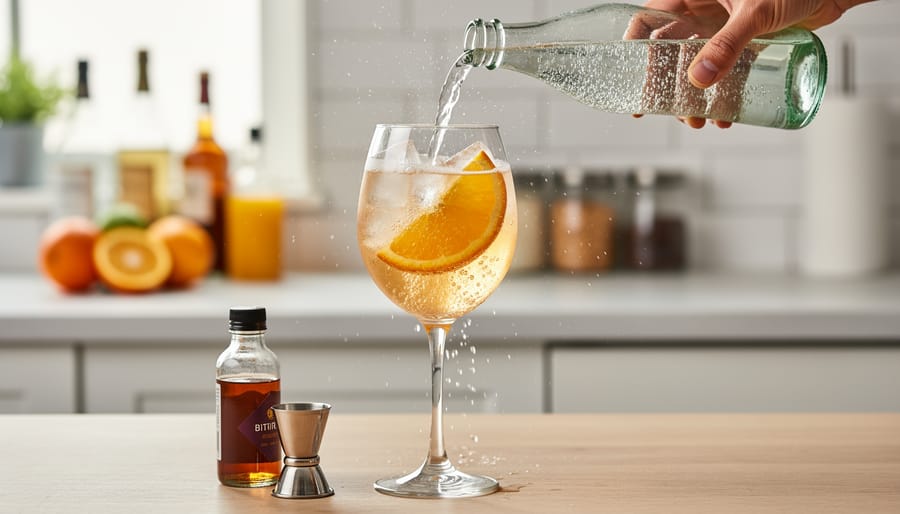
A little acidity is exactly why sparkling water works so well behind the bar. That gentle bite, the tingle you feel on your tongue, adds lift and freshness that flat water simply can’t, and it keeps sweet or rich ingredients from feeling heavy.
In alcoholic drinks, that crispness is the whole point of a good highball or spritz. A splash of fizz stretches the spirit, softens its edges, and carries aromatics up to your nose. It’s also why Negroni-style long drinks feel so refreshing when topped with bubbles instead of served short. If you’re choosing between mixers, our guide on tonic vs club soda breaks down how each one shapes a drink.
The same logic carries into non-alcoholic sipping. Mocktails, fruit- and herb-infused waters, and tea or coffee tonics all benefit from that light tang, which gives them structure you’d otherwise expect from alcohol.
A few technique tips:
– Pair with citrus or herbs. Lemon, lime, mint, and basil echo the natural brightness of the fizz rather than fighting it.
– Keep everything cold. Chilled glasses, ice, and well-chilled water hold carbonation longer, so the bubbles last.
– Pour gently. Add the sparkling water last, down the side of the glass or along a spoon, and stir only once.
– Balance as you go. Because the acidity is mild, taste before adding more sweetener or citrus; the drink may already be brighter than you think.
Treat the fizz as an ingredient, not an afterthought, and both your cocktails and mocktails will taste more finished.
Sparkling Water Acidity: Quick Answers
Is sparkling water acidic?
Yes, but only mildly. Carbon dioxide dissolved in water forms carbonic acid, a weak acid, which puts plain sparkling water at roughly pH 3.5 to 5, compared with a neutral 7.0 for still water and 2.5 to 3.5 for sodas.
Does sparkling water harm dental enamel?
Plain sparkling water is far gentler than soda, so it is generally not a big concern. Flavored versions with added acids or citrus can be more acidic, and if you have specific dental worries, your dentist is the best person to ask.
Does drinking carbonated water make your body more acidic?
No. A mildly acidic drink is not the same as changing your body’s internal acid balance, which your body regulates tightly on its own.
Does sparkling water lose its acidity when it goes flat?
Largely, yes. The carbonic acid reaction is weak and reversible, so as the dissolved carbon dioxide escapes and the bubbles fade, the water drifts back toward neutral.
Those four answers cover most of what people wonder when they pick up a can of fizz. If you mix drinks, the takeaway is simple: the gentle acidity in plain sparkling water is part of its crisp bite, and it plays nicely with both cocktails and mocktails.
So, is sparkling water acidic? Yes, but only mildly. The dissolved carbon dioxide forms carbonic acid, a weak acid, which puts plain sparkling water at roughly pH 3.5 to 5. That’s a long way from the 2.5 to 3.5 range of sodas, and the acidity fades as the bubbles escape.
That means you can sip it without any fuss, whether it’s a simple glass over ice, a crisp highball, a bright spritz, or a mocktail built around fresh citrus and herbs. If you have a specific concern about your teeth or your health, a dentist or doctor is the right person to ask.
Otherwise, keep experimenting. Try different fizzy bases, play with garnishes, and mix both alcoholic and non-alcoholic drinks. The bubbles are there to make the next glass more interesting.