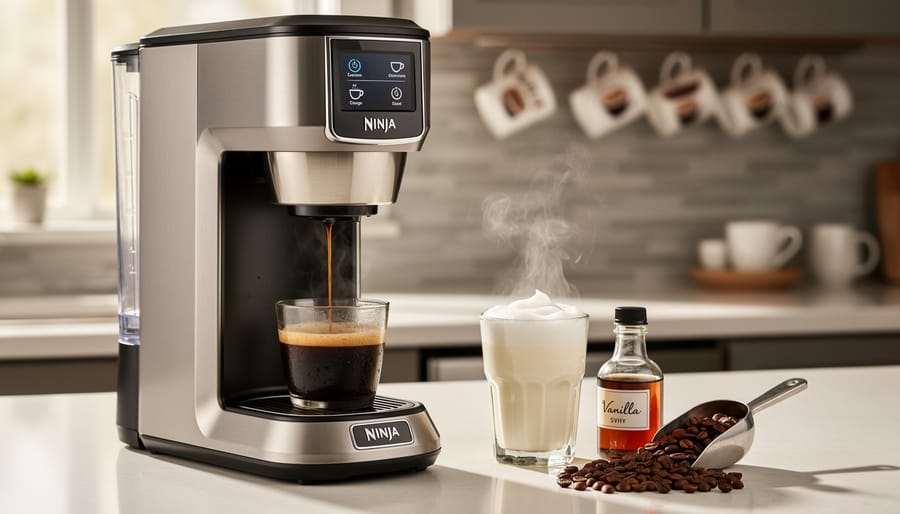
You can make café-style drinks with a Ninja specialty coffee maker in about five minutes, and the method is simpler than most people expect. Brew a small, concentrated batch using the machine’s specialty setting, then pair that coffee with frothed milk, flavored syrups, or ice. That’s the whole foundation. A concentrated brew has the intensity of espresso-style coffee without the pressure, which is why it holds up in lattes, iced drinks, and even dessert-style creations instead of tasting watered down.
The difficulty level is beginner-friendly. What you need is a few basic tools, a decent bag of ground coffee, and a willingness to adjust the ratios until the cup tastes like yours. Most home baristas get a drink they’d happily pay for within two or three tries.
Below, we cover the gear and ingredients, the safety basics, a clear step-by-step brewing method, and how to check and fix a brew that’s gone sideways. Then come the recipes themselves: hot, iced, and alcohol-free drinks, plus a few spirited options for the home mixologist. Let’s get brewing.
What You Need Before You Brew: Tools, Ingredients, and Setup
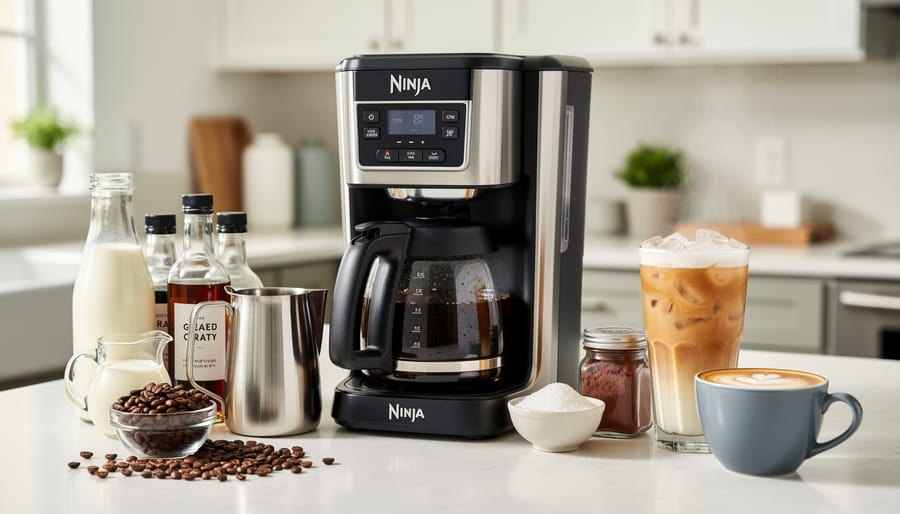
Choosing the Right Beans and Grind for Specialty Brews
Start with roast level, because it shapes how a concentrate tastes more than almost anything else. Medium and medium-dark roasts are the sweet spot for specialty brews. They hold up against milk and syrup without turning harsh. Light roasts can taste sharp or sour once concentrated, while very dark, oily roasts tend to go bitter and can gum up the basket over time.
For grind, aim for medium to medium-fine, a bit finer than you’d use for a standard drip pot but never powdery. Too coarse and the water races through, giving you a thin, watery brew. Too fine and it clogs the filter, slows the flow, and over-extracts into bitterness. If you’re using pre-ground coffee, a standard drip grind usually works fine. Cold Brew is the exception, so grind coarser for that setting.
Freshness matters more than people expect. Beans lose aroma and punch within a few weeks of roasting, and a concentrate made from stale coffee tastes flat no matter how much you scoop. Grind right before brewing when you can.
Decaf works beautifully here, but it can taste milder, so add a touch more coffee per brew. Flavored beans are fun for lattes, though go easy on added syrup since the beans already bring sweetness.
Matching Brew Settings to the Drink You Want
Think of the brew settings as a menu: each one is built to deliver a different result, so picking the right one matters more than any recipe tweak. Since options vary by Ninja model, check yours for the exact names and sizes, but the general logic holds across most machines.
Specialty is your go-to for lattes, cappuccino-style drinks, and mochas. It brews a concentrated, espresso-like coffee that stands up to milk and syrup without disappearing. Because it’s strong by design, it’s meant to be diluted or mixed, not sipped straight from a big mug.
Over Ice brews a stronger batch that anticipates melting ice. If you pour regular coffee over cubes, you get a watery disappointment. This setting compensates, so your iced coffee keeps its backbone even after the ice softens.
Cold Brew is the slow, gentle option. It pulls out flavor without much heat, which means a smoother, lower-acid cup that’s easy on the stomach. It’s ideal for sipping plain, pairing with tonic, or building into a zero-proof sparkler.
Rich sits closer to classic drip coffee, just bolder. Reach for it when you want a hearty mug with breakfast and don’t plan to add much milk.
A quick rule of thumb: milk-based drinks get Specialty, cold drinks get Over Ice or Cold Brew, and everyday bold coffee gets Rich.
Safety and Common Mistakes to Avoid Before You Start
Before you brew a single cup, a few habits will keep you safe and your drinks tasting clean. Hot coffee and steam don’t forgive carelessness, and most mishaps come from rushing.
Start with the carafe. It holds near-boiling coffee, so always make sure it’s seated properly with the lid in the right position before you press brew. A crooked carafe is the classic cause of drips and spills. Fill the reservoir only to the max line, never past it, because overfilling can overflow onto your counter or the heating element.
Frothing needs its own caution. Never froth boiling-hot liquid in a sealed container, since trapped steam builds pressure and can pop the lid. Warm your milk, don’t scorch it, and handle it carefully because hot milk scalds fast.
Maintenance matters too. Unplug the machine and let it cool before you wipe or rinse anything. When it signals that it needs descaling, do it, because mineral buildup dulls flavor and strains the brewer.
Finally, think about who’s drinking. Oat, almond, soy, and dairy milks, along with flavored syrups, can contain common allergens, so check labels and ask guests before you serve.
Step-by-Step: Brewing and Building Your First Specialty Coffee Drink
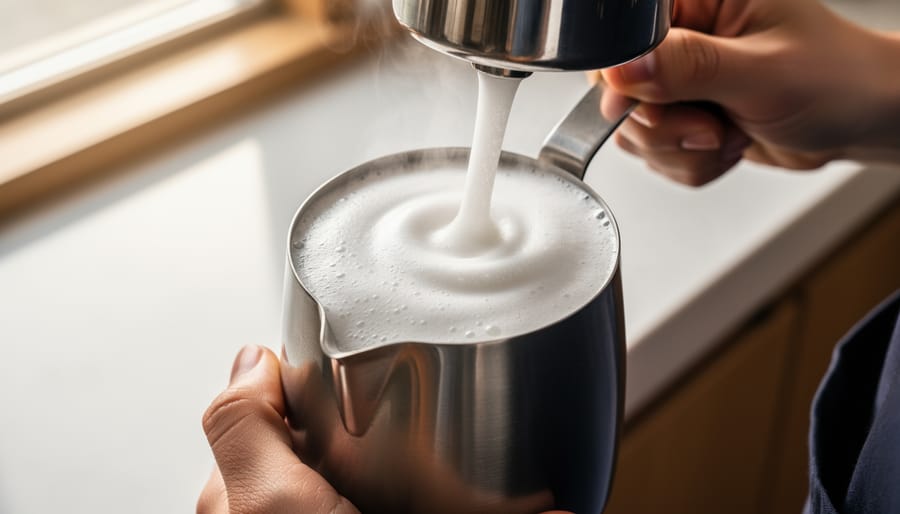
Here’s the base method that works for nearly every drink in this guide. Learn it once, and each recipe becomes a small variation on the same routine.
- Rinse and fill. Rinse the carafe and basket, then fill the reservoir to the line for the size you want. Fresh, filtered water keeps the flavor clean.
- Measure your grounds. Start with roughly two tablespoons of medium-ground coffee per six ounces of water, then adjust. For a concentrate, lean toward the stronger end, since it gets diluted later.
- Select the brew style. Pick Specialty for lattes and cappuccino-style drinks, Over Ice for iced coffee, or Cold Brew for slow, smooth sipping.
- Brew the concentrate. Let the machine run, usually a few minutes for hot styles. Cold Brew takes far longer, so plan ahead.
- Froth your milk. Warm it until steamy but not boiling, then froth until it’s glossy and thick. Cold milk won’t foam well, and scalded milk tastes flat.
- Combine and finish. Add syrup to the mug first, pour in the concentrate, then top with milk or ice. Stir gently and taste.
Each step does a specific job, which makes troubleshooting easier. Water volume and grounds set the strength. The brew style decides the intensity and temperature. Frothing handles texture, and the final combine is where you balance sweetness against bitterness.
If you’re unsure which brew style fits your mood, it helps to understand cold brew vs iced before choosing, because the two taste quite different. Cold brew is smoother and lower in acidity, while iced coffee is brewed hot and chilled quickly, so it keeps more brightness.
Change one variable at a time so you can tell what made the difference.
Ninja Specialty Coffee Recipes to Try at Home
Classic Vanilla Latte
This is the one that makes your kitchen smell like a café. Brew a Specialty-style concentrate, aiming for roughly 4 to 6 ounces, and pour it into a large mug. Stir in 1 to 2 tablespoons of vanilla syrup while the coffee is still hot so it dissolves fully.
Warm about 6 ounces of milk and froth it until it’s thick and glossy, then pour it over the top, holding back the foam with a spoon before spooning it over the finish.
For a dairy-free version, oat milk froths the creamiest, while barista-style almond or soy blends also work well.
Start with one tablespoon of syrup. Store-bought brands vary a lot in sweetness, so taste first and add more only if you want it dessert-sweet. Decaf grounds work here too.
Iced Brown Sugar Cinnamon Coffee
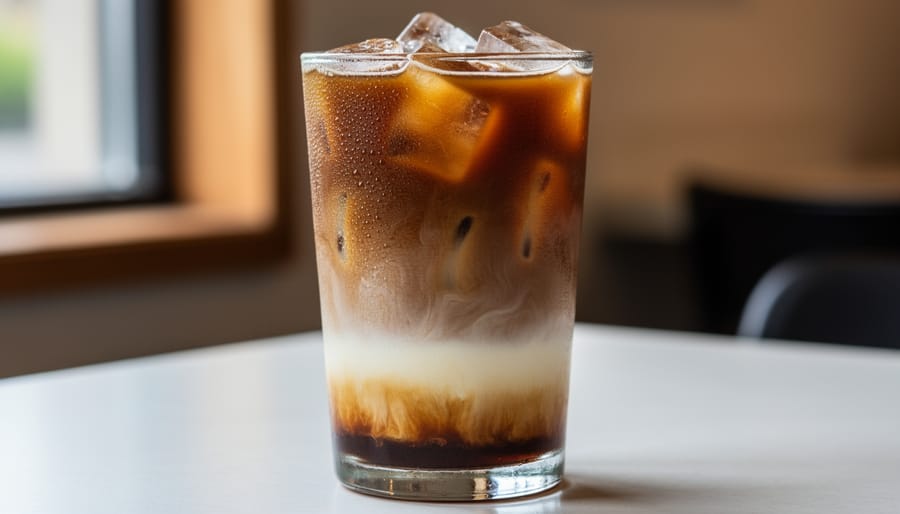
Start with the syrup, since it needs a few minutes to cool. Simmer 1/2 cup water, 1/2 cup brown sugar and one cinnamon stick (or a pinch of ground cinnamon) in a small pot for about five minutes, stirring until the sugar dissolves. Let it cool, then pull out the stick. Stored in a jar in the fridge, it keeps for a couple of weeks.
Fill a tall glass with ice, add one to two tablespoons of syrup, and brew your Ninja’s Over Ice setting straight onto the cubes. The brew is made stronger on purpose, so the melting ice dilutes it to a balanced sip instead of a watery one. Finish with a splash of milk or oat milk, stir, and taste.
Too sweet? Use less syrup next time. Want it creamier? Pour in a little more milk.
Cold Brew Coffee Tonic (A Zero-Proof Sparkler)

Think of this as the grown-up cousin of iced coffee. Fill a tall glass with ice, add about 3 ounces of chilled cold brew, then slowly pour in 4 to 5 ounces of tonic water so the bubbles stay lively. Squeeze in a wedge of orange or grapefruit and drop the peel in for aroma. Don’t stir hard; a gentle lift with a spoon keeps the fizz intact.
The bitter quinine in tonic and the roasty coffee play off each other surprisingly well, while citrus brightens the whole thing. Want a sweeter version? A teaspoon of simple syrup does the trick.
The same cold brew base also works in an espresso martini-style cocktail with vodka and coffee liqueur. If you go that route, remember it still carries caffeine, so drink responsibly.
Spiced Mocha Cappuccino-Style Drink
Think of this one as a café mocha with a cappuccino’s airy, foam-heavy top. Start by brewing a Specialty-style concentrate, about four to six ounces, or use decaf beans if you’re drinking it later in the evening. The decaf version tastes just as rich.
While it brews, whisk one tablespoon of unsweetened cocoa powder and one to two teaspoons of sugar into a splash of hot water in your mug until smooth. Stir in a pinch of cinnamon plus a tiny dash of cayenne or nutmeg if you like a gentle warmth. Pour the hot concentrate over the cocoa paste and stir well.
Now froth about half a cup of milk until it’s thick and spoonable, then pile the foam on top, holding back the liquid milk with a spoon. Dust with a little extra cocoa or cinnamon. Oat milk froths especially well here if you want a dairy-free route.
Troubleshooting and Checking Your Results: Is Your Drink Café-Quality?
Quick Fixes for Weak, Bitter, or Sour Coffee
When a drink misses the mark, the fix is usually small. Change one thing at a time so you can tell what actually helped.
- Tastes weak or watery: use more grounds per cup, or choose a smaller brew size so the concentrate isn’t stretched thin.
- Tastes bitter or harsh: grind a little coarser, or shorten the brew size, since over-extraction pulls out the sharp, drying flavors.
- Tastes sour or thin: grind a bit finer or try a darker roast, because under-extracted coffee leans bright and acidic.
- Tastes flat after adding milk: brew a stronger concentrate, since milk and syrup dilute the coffee.
- Tastes stale or muddy: switch to fresher beans and run a cleaning or descale cycle if the machine is due.
Most of these problems come down to the balance between grind size, coffee amount, and brew volume. Nudge one variable, brew again, and taste. After two or three tries, you’ll know exactly where your setup sits.
Ninja Coffee Maker Recipe FAQs
Got questions about your Ninja? You’re not alone. These are the ones that come up most, answered in plain terms so you can get back to brewing.
Does the Ninja make real espresso?
Not in the strict sense. Real espresso is forced through finely ground coffee under high pressure, and a drip-style Ninja doesn’t do that. Specialty mode makes a concentrated, espresso-style brew that works well as a base for lattes and cappuccino-style drinks.
Can I use pre-ground coffee?
Absolutely. Pick a medium grind suited to a flat-bottom basket, and use fresh bags when you can, since stale grounds make a flat, weak concentrate. If you’re after a stronger cup, nudge your scoop up slightly rather than grinding finer.
Can I make decaf or non-dairy lattes?
Yes to both. Decaf beans brew just like regular ones, and oat, soy, or almond milk all froth, though barista-style blends tend to give the thickest foam. Always check labels on syrups and milk alternatives if allergies are a concern.
How do I make iced coffee that isn’t watery?
Use the Over Ice setting, which brews stronger to account for melting, and fill your glass with plenty of ice before brewing. For extra insurance, here’s how to avoid watery iced coffee with a few simple tweaks.
As for descaling, follow the prompt on your machine and the schedule in your manual, since it varies by model and how hard your water is. If you want to keep experimenting once you’ve mastered these drinks, there are plenty of more coffee recipes to try.
Once you’ve got the base method down, your Ninja turns into a surprisingly capable little café. The same specialty brew that powers a vanilla latte also anchors an iced brown sugar cinnamon coffee, a zero-proof coffee tonic, and a spiced mocha cappuccino-style drink. That’s a lot of range from one counter-top machine.
Treat the recipes here as starting points. Nudge the syrup, swap the milk, try a darker roast, or go decaf for an evening cup. Each small tweak teaches you what your palate likes, and that’s how café-quality drinks start landing in your mug every morning.
When you’re ready for the next experiment, browse more Specialty Coffee Recipes and coffee-inspired drinks on the site. Brew boldly, taste as you go, and enjoy every sip.