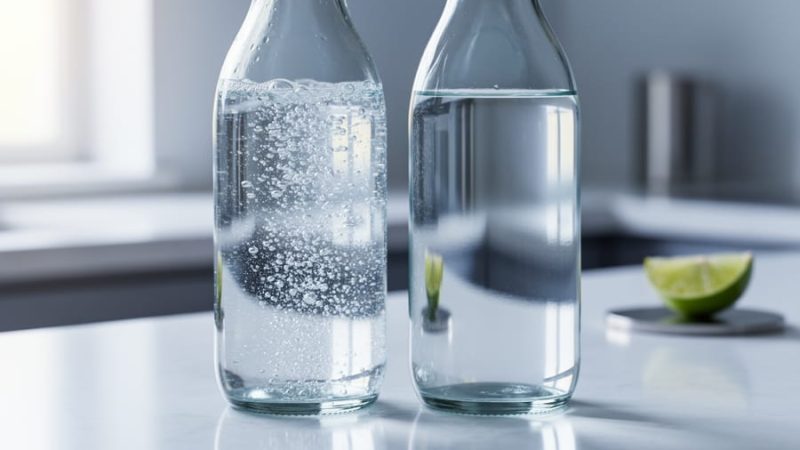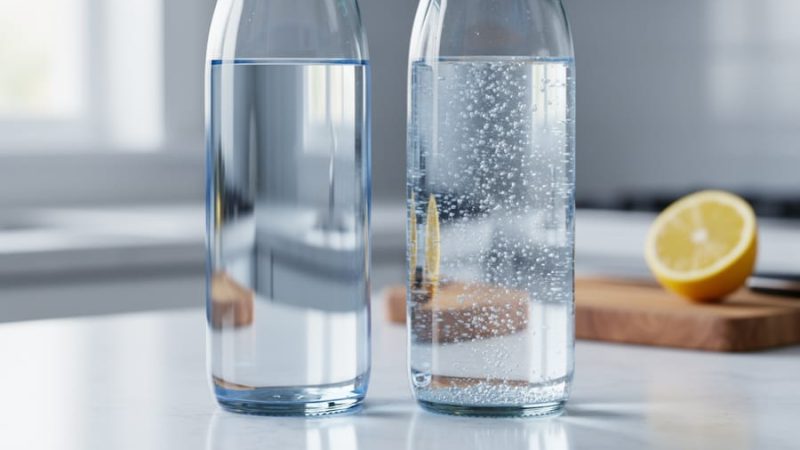
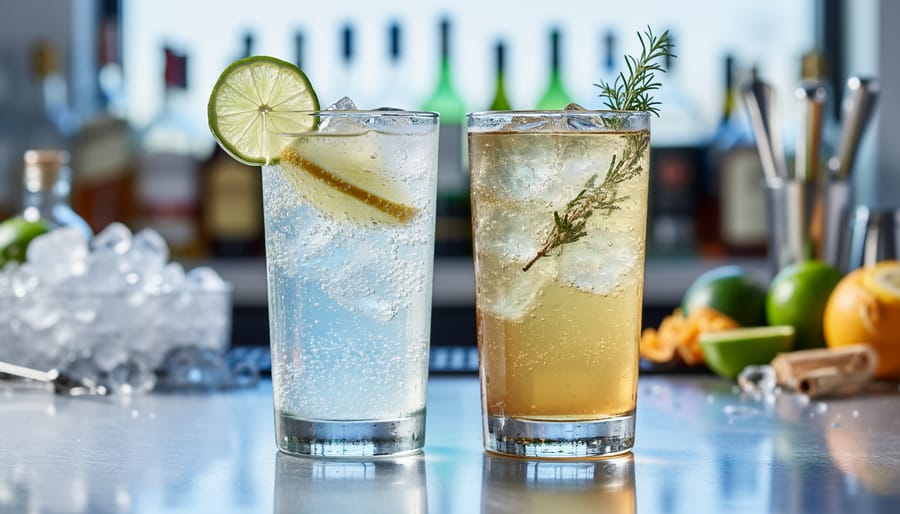
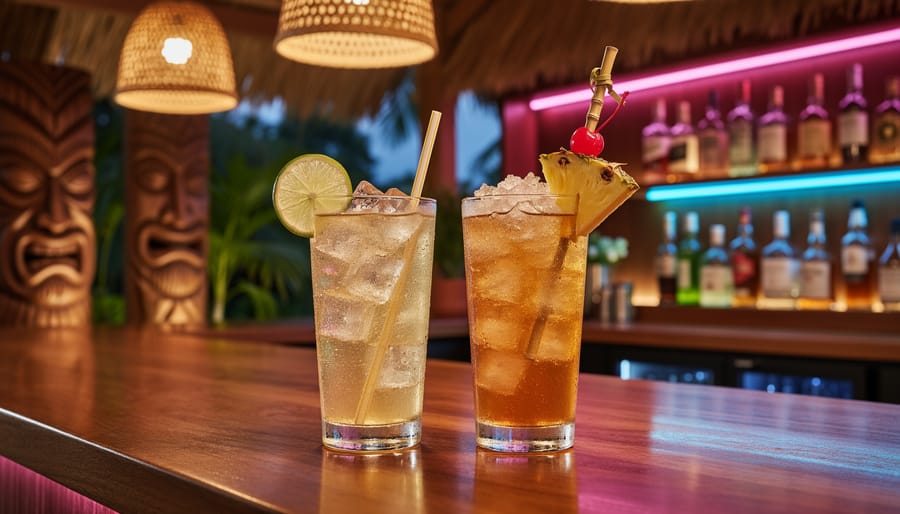
No, tonic water and sparkling water aren’t interchangeable, and for tiki and tropical drinks the call comes down to one thing: sugar and bitterness. Plain sparkling water adds fizz and nothing else, which lets rum, fruit and spice carry the glass. Tonic water brings quinine bitterness and sweetness of its own, so it works best when you want a bittersweet backbone, as in a gin and tonic, and it can quietly crowd out a delicate tropical blend.
In the interest of transparency, we earn a commission on some purchases made through links on this site. As an Amazon Associate I earn from qualifying purchases.
We found this out by swapping one for the other in the same drinks. A regular tonic, like Canada Dry Tonic Water tastes noticeably sweeter and sharper, and a standard 12-ounce can runs roughly 124 calories and 32 grams of sugar. A plain sparkling option such as Amazon Grocery sparkling water stays clean, crisp and calorie-free, so the pineapple, lime or passion fruit in your glass stays in front.
Below, we break down taste, bitterness, sweetness, sugar and calories, then match each mixer to the drink you’re actually making, alcoholic or not.
Tonic Water vs. Sparkling Water at a Glance
What Each Mixer Actually Is
Tonic Water: The Bittersweet Soda
Tonic water isn’t a neutral fizz. It’s a carbonated soft drink built around quinine, the compound that gives it that sharp, slightly medicinal bite. Regular tonic also carries a sweetener to soften the bitterness, and many versions add acids plus citrus or botanical flavorings for brightness and aroma. That’s why a splash of tonic tastes like a drink in its own right, not just bubbles.
Plain sparkling water sits at the opposite end. It’s unsweetened and lets your rum, juice and syrups do the talking. Here’s how the two compare for tropical drinks:
| Mixer | Flavor and sweetness | Sugar and calories | Best tropical use |
|---|---|---|---|
| Tonic water | Bittersweet, with citrus or botanical notes; usually sweetened | Roughly 124 calories and 32 grams of sugar per 12-ounce can | Long drinks that welcome a bitter counterpoint |
| Sparkling water (seltzer/club soda) | Clean and crisp; unsweetened | Zero calories, no sugar | Juice-forward and syrup-rich builds that need lift, not extra flavor |
In practice, the sugar in tonic is the detail that catches people out. Tiki recipes already lean on juice and syrup, so tonic can tip a drink from balanced to heavy if you pour it without thinking. Treat it as an ingredient you add on purpose, not a filler.
Sparkling Water, Seltzer and Club Soda: The Clean Fizz
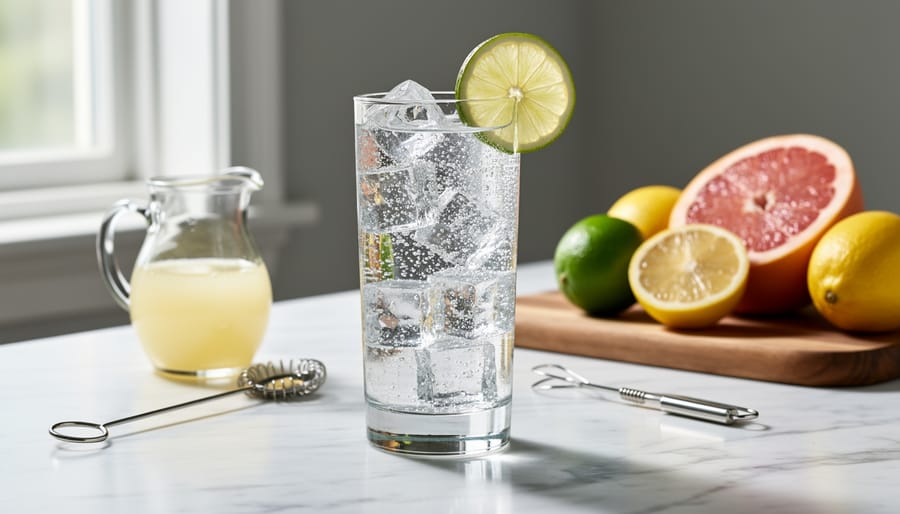
Not every bubbly bottle is a mixer with a personality, and that’s the point of this family. Plain carbonated water, sold as seltzer, is just water and fizz. Club soda adds club soda mineral salts such as sodium bicarbonate and potassium sulfate, which can lend a subtle crispness on the tongue. It’s a clean, zero-calorie mixer with no sugar at all.
If you’re weighing club soda vs sparkling it helps to understand how they’re made. And if the seltzer question nags at you, our seltzer vs sparkling breakdown keeps it practical for tiki drinks. For mixing, the differences are small, so any of them lifts a rum and juice build without muddying the flavor.
- Tonic water
- A carbonated soft drink flavored with quinine, usually sweetened and often brightened with acids and citrus or botanical notes.
- Seltzer
- Plain water that’s been carbonated, with nothing added.
- Sparkling water
- An unsweetened bubbly water, sometimes naturally effervescent, that works as a neutral fizz.
- Club soda
- Carbonated water with added mineral salts for a slightly crisp finish.
- Quinine
- The bitter compound that gives tonic water its signature edge.
Think of this group as the blank canvas, with tonic as the bolder brush.
Tonic vs. Sparkling Water, Dimension by Dimension
Taste, Bitterness and Sweetness
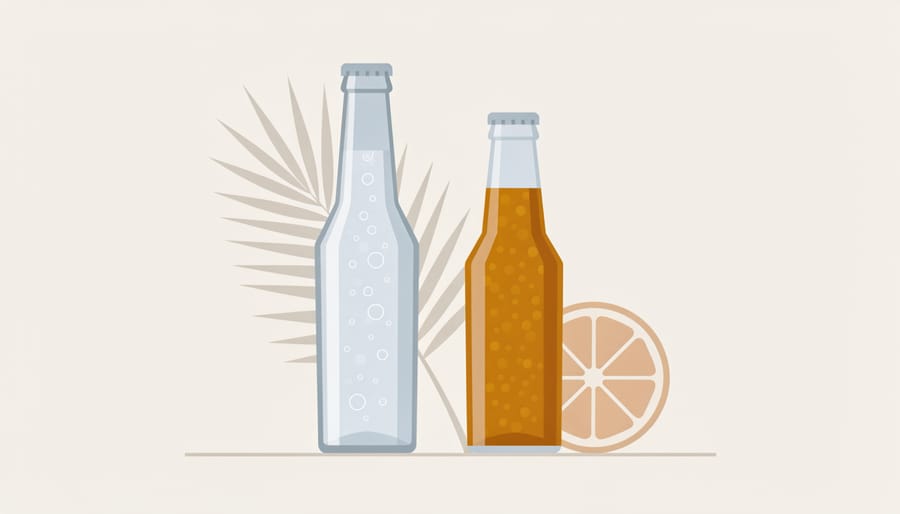
Tonic is the flavor-forward mixer. The quinine gives it a bitter edge, and because regular tonic usually carries a sweetener plus acids and citrus or botanical notes, the first sip lands sweet and the finish turns dry and bitter. Sparkling water has none of that. It’s clean and crisp, a pure lift of bubbles that leaves the rest of the glass in charge.
In our testing, that difference shows up fastest in tropical builds. Pineapple and passion fruit already bring plenty of sweetness and tang, so tonic’s sugar can pile onto them and make a long drink feel heavy. Its bitterness helps in the right spot, though, cutting through that sugar and giving the fruit some backbone. Lime is the natural partner here, since its sharp acidity and tonic’s bitter edge reinforce each other nicely.
Coconut is trickier. Its creamy richness softens bitterness, so a splash of tonic can read as a pleasant dry counterpoint, but too much turns the drink muddy. Spiced rum sits in the middle. Its vanilla and baking-spice sweetness tolerates tonic well, though sparkling water keeps those spices front and center.
Our rule of thumb: reach for sparkling water when you want the recipe’s flavors untouched, and tonic when you want a deliberate bittersweet twist.
Sugar and Calories: What Is Really in Your Glass
Here’s where the two mixers really part ways. Tonic water is a sweetened soft drink, and a standard 12-ounce can holds roughly 124 calories and 32 grams of sugar. Club soda, which is plain carbonated water with mineral salts like sodium bicarbonate and potassium sulfate, brings zero calories and no sugar at all. Same bubbles, very different glass.
That gap matters more in tropical drinks than almost anywhere else. A rum-forward highball already carries sugar from pineapple or passion fruit juice, plus whatever syrup the recipe calls for. Stack a sweetened tonic on top and the drink can tip from balanced to cloying fast. In our hands-on mixing, sparkling water stretched a long drink without adding any extra sweetness, so the fruit and spirit stayed in charge.
The same logic applies to mocktails. If you’re building a non-alcoholic tropical cooler, you’ve already lost the structure alcohol provides, so sugar from the mixer can flatten the whole thing. Unsweetened bubbles keep it bright and refreshing.
Tonic still has its place when you want that bittersweet edge on purpose, just count it as an ingredient, not a neutral filler. And if you’re curious how plain fizz compares to still water for everyday sipping, our rundown on sparkling vs regular covers that side of the story.
Best Mixer Use: Where Each One Earns Its Place in Tropical Drinks
Think of the mixer as a decision about structure. Tiki drinks already lean on juice, syrup and rum for body, so the question is whether the fizz should stay out of the way or add something of its own. In our testing, that framing sorted the choices quickly.
Here is how we’d match mixer to drink style:
- Sparkling water suits tall highballs where rum and fresh citrus should lead, since it lifts without adding sweetness.
- Sparkling water also works for spritz-style coolers, keeping them light and refreshing instead of heavy.
- Sparkling water is the safer top-up for juice-forward builds with pineapple, passion fruit or coconut, which are already sweet.
- Tonic earns its spot in drinks that welcome a bitter counterpoint, such as a spiced or aged rum with lime.
- Tonic also helps a long drink that tastes flat or one-note, because its bitterness gives the sip a backbone.
Remember that regular tonic brings quinine, a sweetener and often citrus or botanical notes. A standard 12-ounce can runs roughly 124 calories and 32 grams of sugar, so it stacks on top of whatever the juice and syrup already provide. If you want the fizz without more sweetness, club soda is the cleaner pick, and our breakdown of tonic vs club soda goes deeper on that trade-off.
For mocktails, the same logic holds: sparkling water for fruity, sweet bases, tonic when you want a grown-up bitter edge.
Canada Dry Tonic Water: A Familiar Tonic for Tropical Highballs

Canada Dry is about as recognizable as tonic gets, and the 10-ounce plastic bottles in this 6-pack are a handy format for home mixing. Each bottle is sized for roughly one or two highballs, so you open only what you plan to pour and the rest of the carbonation stays sealed. That’s useful when you’re testing a tropical build on a Tuesday night rather than serving a crowd.
In our testing, it behaved like a regular tonic should: a sweet, bittersweet fizz that adds a quinine edge, not a clean lift. Tonic is a flavored soft drink, and a standard 12-ounce can runs roughly 124 calories and 32 grams of sugar, so we poured with a lighter hand when juice or syrup was already in the glass. It rated 4.7 out of 5 from 379 customer ratings, and it’s currently in stock.
Pros
- Single-serve bottles keep fizz intact for small batches and one-off drinks.
- The bitter edge gives rum and citrus builds a deliberate counterpoint.
- A familiar tonic profile makes results easy to predict.
- The 6-pack suits mocktails when you want more flavor than plain bubbles.
Cons
- Added sweetness stacks on top of juice and syrups in tropical recipes.
- Bitterness can clash with delicate coconut or pineapple flavors.
- Not a neutral swap if a recipe calls for plain sparkling water.
My rule of thumb: pair it with tart, spirit-forward highballs where bitterness helps, and skip it in sugary tiki drinks that need a clean finish.
Amazon Grocery Tonic Water: A Large-Format Option for Batch Mixing

If you’re mixing for a crowd, the Amazon Grocery Tonic Water in the 33.8-ounce bottle is the kind of format that makes sense. One big bottle covers a round of highballs or a punch-style build without cracking a pile of small cans, which keeps the bar setup simple. It currently shows as in stock and carries a 4.4 out of 5 rating from 2,905 customer ratings, so plenty of shoppers have weighed in.
We’d treat it like any tonic: a flavored, sweetened soft drink, not a neutral fizz. That means it brings its own sweetness and bitterness to the glass, so go easy on added syrup in tropical recipes.
Pros
- One large bottle covers several servings for parties and batch builds.
- Fewer containers to open and recycle at a gathering.
- Works well for punch-style drinks where you pour in stages.
Cons
- Fizz fades faster once the bottle is opened and sits.
- Tonic’s sweetness stacks on top of juice and syrup in tiki drinks.
- It’s less convenient than single-serve bottles for one or two drinks.
The practical catch is carbonation. Reseal the cap tightly after every pour, keep the bottle cold, and add tonic last so the bubbles stay lively. If you won’t finish it in one sitting, smaller formats are the smarter pick.
Which Mixer Should You Choose?
Your answer depends on who’s holding the shaker, but the quick rule of thumb is simple: if the drink already carries plenty of juice and syrup, reach for sparkling water. If it needs a bitter backbone, reach for tonic.
- Home mixologist building classic tiki drinks: choose sparkling water or club soda, so the rum, citrus and spices stay front and center.
- Bartender balancing a menu: keep club soda on hand as the clean default, and pick tonic only for drinks that want a deliberate bitter counterpoint.
- Host making non-alcoholic tropical drinks: go with sparkling water to lengthen fruit juices without piling on extra sweetness.
- Sugar-conscious drinker: choose club soda, which is zero-calorie with no sugar, over regular tonic.
- Anyone chasing a bittersweet, quinine edge: choose tonic and treat it as a flavor, not just fizz.
Remember that regular tonic can add about 32 grams of sugar per 12-ounce can, so it’s best treated as an ingredient you plan around, not a neutral top-up. If you’re unsure, start with sparkling water, taste the drink, and only then ask whether it wants tonic’s extra sweetness and bite.
Tonic Water vs. Sparkling Water: Common Questions
Is tonic water the same as sparkling water?
No. Tonic water is a carbonated soft drink flavored with quinine, and it usually contains a sweetener plus acids and citrus or botanical flavorings. Sparkling water is simply carbonated water, so it stays unsweetened and neutral.
Is tonic water sweeter than club soda?
Yes, by a wide margin. Regular tonic is sweetened, while club soda is plain carbonated water with mineral salts, with no sugar at all.
Does tonic water have sugar?
Regular tonic does, and it can add a lot. A standard 12-ounce can holds roughly 124 calories and 32 grams of sugar, whereas club soda is zero-calorie.
What is the difference between seltzer and sparkling water?
Seltzer is plain carbonated water, and club soda adds mineral salts such as sodium bicarbonate and potassium sulfate for a subtle crispness. For mixing, both give you clean fizz without sweetness, so the difference is slight.
Can you swap sparkling water for tonic in a cocktail? You can, but expect a different drink. Sparkling water lets the rum, juice and syrups lead, while tonic layers in sweetness and a bitter edge, so you may want to ease back on the sugar elsewhere in the glass. In our testing, the swap worked best in long, juice-forward builds, where tonic’s bitterness added a pleasant counterpoint rather than clashing.
Here’s the short version to carry behind the bar: keep a bottle of unsweetened sparkling water on hand as your dependable default. In juice-forward, rum-heavy, syrup-rich tiki drinks, a clean fizz lifts the flavors without piling on extra sweetness. Tonic is the purposeful pick, the one you reach for when you actually want its bitter edge and sweetness to play against pineapple, lime or spiced rum.
So don’t treat this as a one-or-the-other choice. In your next round, pour the same drink two ways and taste them side by side. You’ll learn more in one sitting than from any chart.
The same logic holds for mocktails, where a splash of either can turn fruit and syrup into something that feels finished. For more mixer guides and recipe ideas, explore our newsletters, podcasts and magazines.