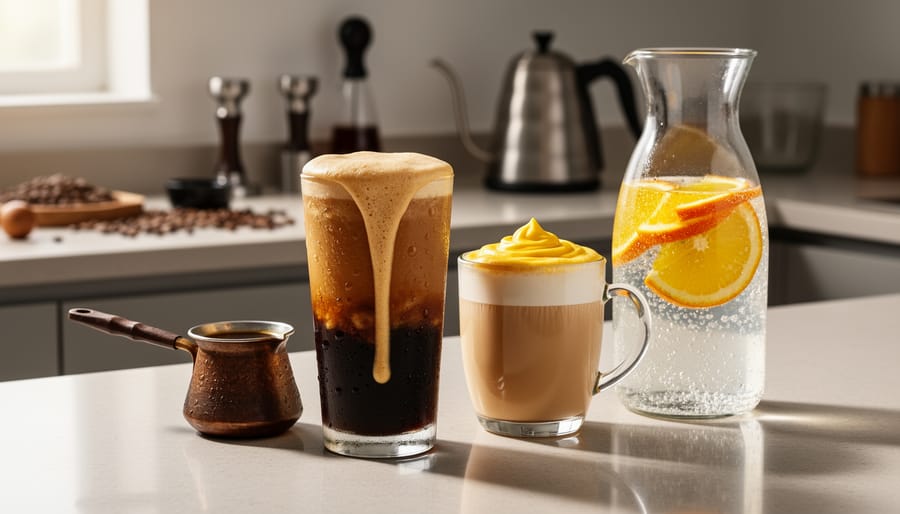
Your coffee routine deserves more than the same tired latte. Unique coffee recipes transform your daily cup into an adventure, combining global brewing traditions with modern innovations to deliver café-quality drinks you can master at home. We’ve curated 12 distinctive preparations that span continents and centuries, from the spiced intensity of Moroccan Qahwa to the smooth sophistication of Japanese cold-drip coffee, alongside contemporary creations like nitro cold brew and coffee tonic that are redefining what belongs in your mug.
The beauty of exploring unconventional coffee recipes lies in their accessibility. Most require nothing more than your standard brewing equipment and a willingness to experiment with unexpected ingredients. Vietnamese egg coffee, for instance, whips sweetened egg yolk into a creamy cloud that floats atop robust dark roast, creating a dessert-like experience from pantry staples. Turkish coffee demands only finely ground beans and a small pot, yet produces a ritualistic brew that’s remained unchanged for centuries.
These recipes aren’t novelties for the sake of novelty. Each reflects intentional flavor engineering, whether through temperature manipulation, ingredient pairing, or brewing methodology. Coffee tonic marries espresso’s bitterness with quinine’s botanical bite and citrus brightness, a combination that sounds strange until that first refreshing sip on a warm afternoon. The selections ahead balance heritage techniques worth preserving with inventive approaches that push coffee beyond its traditional boundaries, giving you a toolkit for turning routine caffeine consumption into genuine craft.
How We Selected These Unique Coffee Recipes
We built this collection around three principles that mirror the quality beverage standards we apply across all drink categories: creativity that surprises, accessibility that invites experimentation, and authenticity that respects coffee traditions. Each recipe delivers something genuinely different from your daily latte, whether through unexpected ingredient pairings (like olive oil gelato with espresso), international brewing methods (Turkish cezve or Vietnamese egg whipping), or modern techniques (nitro infusion, flash-chilling).
We prioritized recipes spanning both hot and cold preparations, balancing historic specialty coffee traditions with contemporary innovations. You’ll find drinks requiring nothing more than a saucepan alongside those using a whipped cream dispenser, ensuring the list serves curious beginners and experienced home brewers alike. Above all, each selection starts with good coffee as the foundation, then builds layers of flavor that transform rather than mask what’s in the cup.
1. Turkish Coffee with Cardamom and Orange Blossom Water
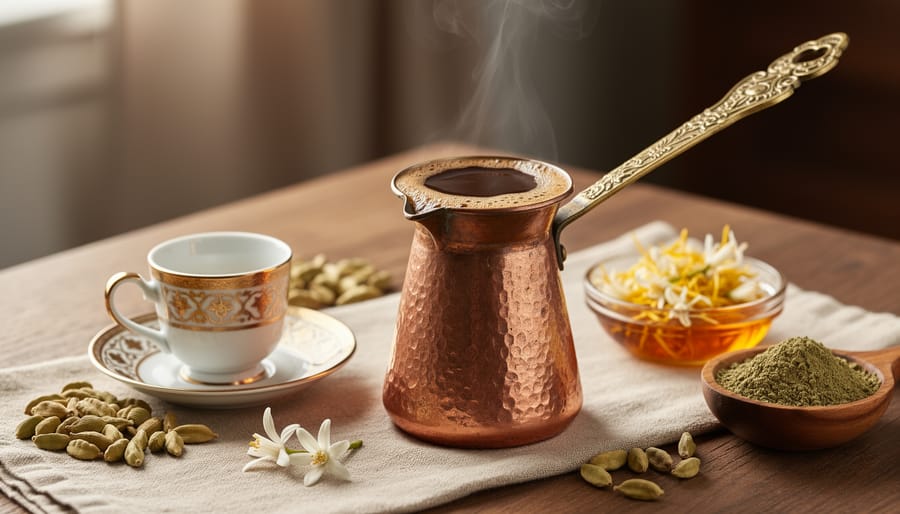
Turkish coffee stands apart from standard brewing methods and even contemporary approaches like cold brew vs iced coffee by creating an intensely concentrated, unfiltered experience steeped in centuries of Middle Eastern tradition. The preparation demands coffee ground to a powder-fine consistency, finer than espresso, which remains suspended throughout the beverage rather than being filtered out.
You’ll brew this in a cezve (also called an ibrik), a small copper or brass pot with a long handle and narrow neck. Combine the powdered coffee with cold water and sugar if desired, then add two to three crushed cardamom pods and a few drops of orange blossom water. Heat slowly over low flame, allowing foam to rise to the rim three times without boiling over. This patient process extracts maximum flavor while building the signature thick foam called kaimaki.
The cardamom contributes warm, citrusy spice notes that complement coffee’s natural earthiness, while orange blossom water adds delicate floral sweetness that lingers on the palate. Pour the coffee into small cups without straining, grounds and all. The thick sediment settles at the bottom as you sip, and in traditional practice, the cup is inverted onto the saucer after drinking. The pattern the grounds create has been read for fortune-telling for generations, adding mystique to this aromatic ritual.
2. Vietnamese Egg Coffee (Cà Phê Trứng)
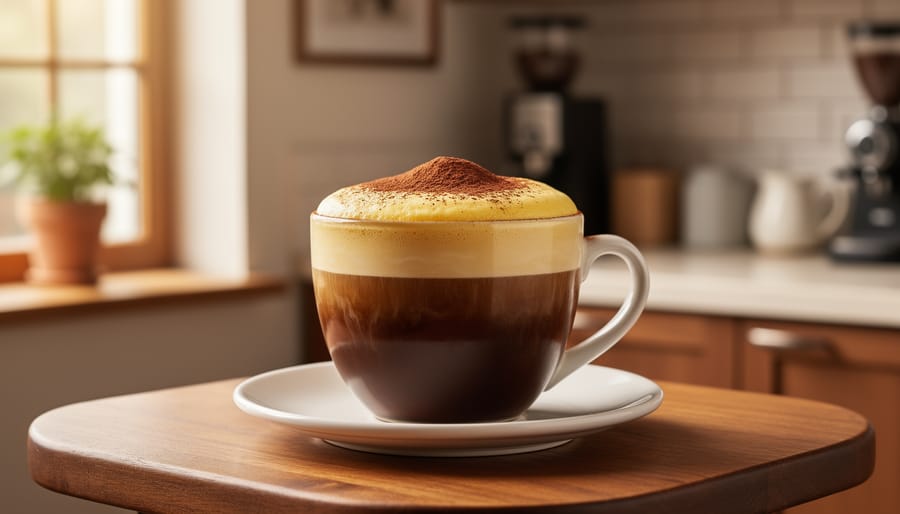
Vietnamese egg coffee transforms a morning cup into a luxurious dessert-like experience, born from wartime resourcefulness in 1940s Hanoi when milk shortages prompted creative substitution. The magic lies in whisking one or two egg yolks with sweetened condensed milk and a touch of sugar until you achieve a pale, pillowy mousse, think thick and glossy, similar to zabaglione. This takes about five minutes with an electric mixer or seven to ten minutes by hand, and the consistency matters: under-whisked yields a thin, runny topping instead of the signature cloud-like foam.
Pour your egg mixture over a base of strong Vietnamese coffee, traditionally brewed with a phin filter using dark-roasted robusta beans. The contrast is the whole point, the intensely bitter, almost chocolate-tinged coffee cuts through the sweet richness of the foam, while the egg adds body and a silky mouthfeel that standard cream can’t match. Some Hanoi cafés serve it hot in a bowl of warm water to maintain temperature, but it works equally well iced. The egg yolk provides enough fat to create stable foam without feeling heavy, making each sip feel indulgent yet surprisingly balanced.
3. Cold Brew Coffee Tonic with Tonic Syrup

Cold brew coffee tonic transforms your morning staple into a sophisticated sparkling beverage that’s perfect for warm afternoons. Pour four ounces of cold brew over ice, then top with three to four ounces of tonic water. The effervescence creates a completely different mouthfeel than typical iced coffee, while the drink’s layered appearance makes an impressive presentation.
The magic lies in how quinine, the bitter compound in tonic water, interacts with coffee’s naturally occurring chlorogenic acids. Rather than clashing, these two bitter elements create a complex, balanced profile where neither dominates. The result tastes more sophisticated than sweet, with the carbonation brightening coffee’s heavier notes and adding refreshing lift.
Store-bought tonic works fine, but homemade tonic syrup elevates the recipe considerably. Simmer cinchona bark (the quinine source), citrus peels, lemongrass, and a touch of sugar for twenty minutes, then strain. Mix two tablespoons of this concentrated syrup with plain soda water for fresh tonic that highlights your cold brew rather than masking it with artificial sweeteners.
Try variations with grapefruit zest and rosemary in your syrup for herbal brightness, or add cardamom pods and lime for a tropical twist. A splash of elderflower tonic creates floral complexity that pairs beautifully with light-roasted Ethiopian or Kenyan coffees.
4. Maple Bourbon Barrel-Aged Coffee

This technique transforms your daily beans into a complex, spirit-tinged brew without adding a drop of alcohol. Start with medium to medium-dark roast whole beans, their natural caramel and chocolate notes provide the foundation for this flavor layering. In an airtight container, combine 12 ounces of beans with 2 tablespoons of bourbon barrel oak chips (available at homebrew stores) and 2 tablespoons of pure maple syrup. Seal and gently shake to distribute the syrup, then let the mixture rest at room temperature for 3-5 days, shaking once daily.
The magic happens as the beans absorb the oak’s vanilla and toasted wood character while the maple penetrates the surface, amplifying coffee’s inherent sweetness. After aging, brush off any syrup residue before grinding and brewing normally, whether you’re making espresso, pour-over, or applying cold brew basics.
The result tastes remarkably like bourbon-spiked coffee but remains completely non-alcoholic. You’ll notice warm baking spice notes, subtle smokiness, and a lingering maple finish that feels decadent without added sugar at brew time. This preparation works beautifully for special occasion breakfasts or when you want coffee that tastes like it came from a craft roastery.
5. Cascara Tea with Honey and Cinnamon
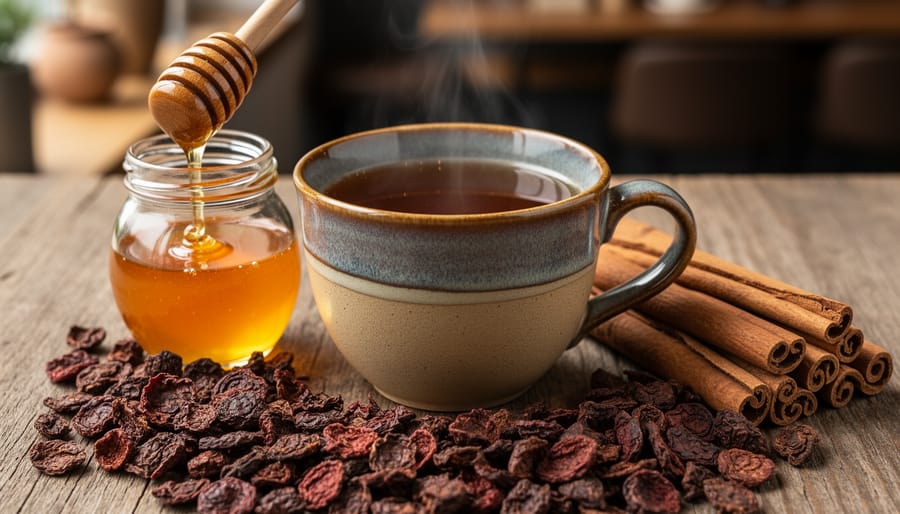
Cascara offers coffee lovers an entirely different way to experience the coffee plant, by brewing the dried husks of the coffee cherry itself rather than the beans inside. This byproduct of coffee processing creates a beverage that tastes more like a fruity herbal tea than traditional coffee, with notes of hibiscus, rosewater, and dried cherry dancing alongside a whisper of the caffeine you’d expect from the coffee family.
To prepare cascara tea, steep two tablespoons of dried cascara in eight ounces of just-below-boiling water for four to five minutes. The longer steep time extracts the cherry’s natural sweetness and complex fruit character. Strain and add a teaspoon of honey to amplify the floral notes, then dust with a pinch of cinnamon for warmth that complements the cherry undertones beautifully.
The result is a light, refreshing drink with about one-quarter the caffeine of regular coffee, perfect for afternoon sipping when you want something interesting but not overly stimulating. Cascara’s sustainable appeal adds another layer of interest: you’re utilizing a part of the coffee harvest that would otherwise go to waste. Look for cascara at specialty coffee roasters or online retailers, where it’s increasingly available as the specialty coffee world embraces this distinctive cherry-forward brew.
6. Nitro Cold Brew with Vanilla Bean and Sea Salt Cream
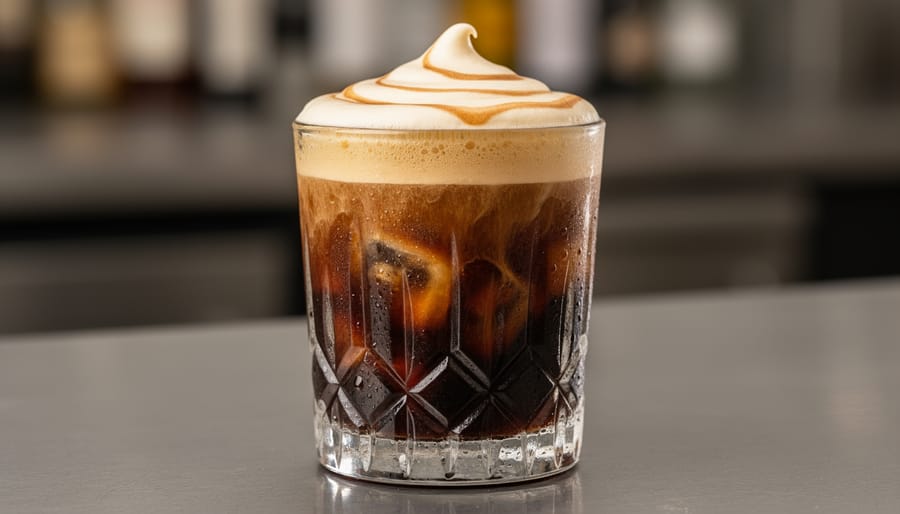
Nitro cold brew has become a café staple for good reason: the nitrogen infusion creates a silky, naturally sweet coffee with a mesmerizing cascade of tiny bubbles. You can recreate this experience at home with a whipped cream dispenser and N2O cartridges, which approximate the velvety texture of true nitrogen-charged coffee.
Start with quality cold brew concentrate, brew coarse-ground coffee in cold water for 12-18 hours at a 1:4 ratio, then strain. For the nitro effect, pour your cold brew into a 1-pint whipped cream dispenser, filling it about two-thirds full. Charge with one or two cartridges, shake vigorously for 30 seconds, then refrigerate for at least two hours. The longer it sits, the more the gas integrates. When you dispense, the coffee will pour with that signature creamy head and cascading bubbles.
The real magic happens with the salted vanilla cream topper. Scrape half a vanilla bean into heavy cream with a pinch of flaky sea salt, then whip to soft peaks. The sweet vanilla and savory salt create a complex contrast against the smooth, subtly sweet nitro base, the salt amplifies the vanilla while cutting through the cream’s richness.
Pour your nitro coffee first, then gently float the salted vanilla cream on top. The layers create both visual drama and a flavor experience that shifts with each sip as the cream slowly melds into the coffee below.
7. Spiced Moroccan Coffee with Ras el Hanout
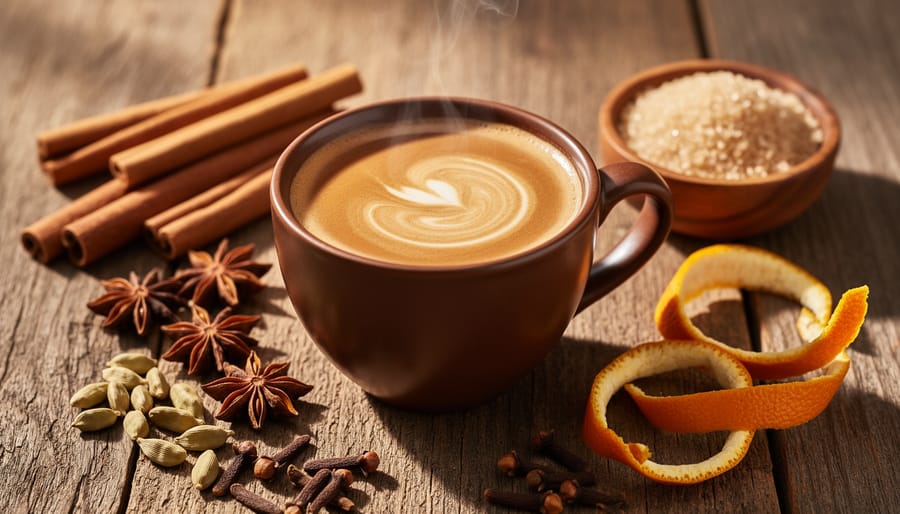
Moroccan coffee traditions transform your morning brew into an aromatic journey through North African spice markets. Ras el hanout, a complex blend typically containing cumin, coriander, cinnamon, ginger, cardamom, allspice, and sometimes rose petals or nutmeg, brings warmth and depth that complement coffee’s natural earthiness without overwhelming it.
The key to this recipe lies in blooming the spices alongside your coffee grounds. Add half a teaspoon of ras el hanout to two tablespoons of medium-coarse coffee grounds before brewing. For pour-over methods, let the spices and grounds sit together for thirty seconds after the initial bloom pour, allowing the hot water to extract the essential oils. French press brewers should extend steeping time to five minutes to fully develop the spice flavors.
The result is a fragrant cup with layers of sweet cinnamon, warm ginger, and subtle savory notes from the cumin and coriander. Unlike the vigorous shaking technique used in beverage mixing, this gentle infusion creates smooth integration rather than aggressive extraction.
Serve this spiced coffee alongside Moroccan date cookies or almond pastries, the coffee’s complexity mirrors the sweets’ honey and nut flavors. Start with a light hand on the spice blend; you can always add more, but an overly spiced cup becomes medicinal rather than inviting.
8. Coconut Milk Coffee with Pandan
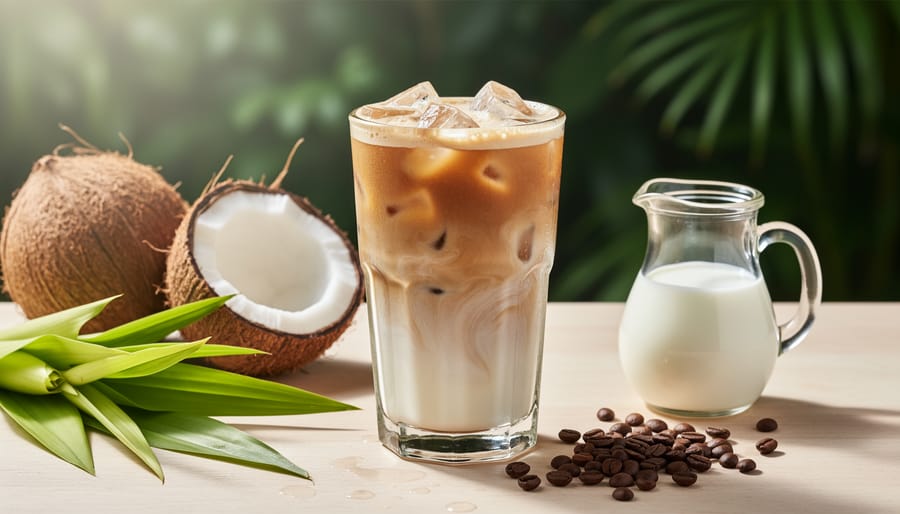
This Southeast Asian-inspired coffee drink brings together two ingredients beloved across Thailand, Malaysia, and Singapore: creamy coconut milk and aromatic pandan leaves. The result is a tropical coffee experience that tastes nothing like your standard latte while delivering the same comforting richness.
Start by gently heating one cup of fresh coconut milk (not canned coconut cream, which can be too thick) in a small saucepan over low heat. Tear or cut two fresh pandan leaves into pieces to release their essential oils, then add them to the warming milk. Let this steep for about 5 minutes, keeping the heat low enough that the milk barely simmers. You’ll notice the pandan imparting a subtle vanilla-like aroma with grassy, floral undertones that’s distinctly different from actual vanilla.
While the milk infuses, brew a strong coffee using your preferred method. A French press or Vietnamese phin filter works particularly well, as you want a robust coffee that can hold up to the coconut richness without getting lost.
Remove the pandan leaves from the milk, then pour the fragrant coconut milk into your coffee. The pandan adds complexity that prevents the drink from tasting one-dimensional, while the coconut milk’s natural sweetness means you might not need additional sugar. The combination creates a creamy, exotic coffee that transports you to a Bangkok café.
9. Espresso Martini Float with Coffee Ice Cream
This decadent creation transforms the classic cocktail into an indulgent dessert experience that works equally well as an after-dinner treat or a sophisticated pick-me-up. The espresso martini float combines the energizing kick of fresh espresso with the smooth richness of coffee ice cream, creating a drink that satisfies both your caffeine craving and sweet tooth simultaneously.
Start by brewing a double shot of espresso and letting it cool for two minutes. In a cocktail shaker filled with ice, combine the espresso, one ounce of coffee liqueur, and one ounce of vodka. Shake vigorously for fifteen to twenty seconds until the mixture becomes frothy and well-chilled. The vigorous shaking creates a light foam that crowns the drink, a signature element of any proper espresso martini.
Strain the cocktail into a chilled coupe or martini glass, then add a generous scoop of premium coffee ice cream. As the ice cream slowly melts into the cocktail, it creates swirling ribbons of cream that transform the drink’s texture from crisp and refreshing to luxuriously smooth. Each sip offers a different experience as the ratios shift.
For a non-alcoholic version, substitute the vodka and coffee liqueur with two ounces of cold brew concentrate and half an ounce of vanilla syrup. The result maintains the coffee-forward intensity while the ice cream still provides that signature creamy decadence that makes this hybrid so irresistible.
10. Japanese Iced Pour-Over with Yuzu and Shiso
The Japanese iced pour-over method revolutionizes cold coffee by brewing directly onto ice, a technique that locks in aromatics and acidity standard cold brew can’t match. As hot water extracts the coffee, it flash-chills on contact with ice, preserving the delicate floral and fruity notes that typically dissipate in conventional cooling methods.
Start with a light-to-medium roast Ethiopian or Kenyan coffee for pronounced brightness. Grind medium-fine and place your dripper over a carafe filled with ice equal to half your final brew volume. Brew with water just off boil, using your standard pour-over technique, the coffee cools instantly as it hits the ice, creating a clean, vibrant cup within minutes.
The yuzu and shiso syrup transforms this technique into something extraordinary. Combine equal parts sugar and water with fresh yuzu juice and torn shiso leaves, simmering until the sugar dissolves and the shiso releases its minty-basil character. Strain and cool completely. Add one to two tablespoons of this syrup to your finished iced coffee, the yuzu’s tart citrus amplifies the coffee’s natural acidity while shiso adds an herbaceous complexity that bridges sweet and savory.
This preparation showcases how Japanese attention to detail elevates simple ingredients into layered flavor experiences, perfect for warm afternoons when you want sophistication without heaviness.
11. Brown Butter Latte with Sage
This unexpected combination transforms a standard latte into something deeply savory and sophisticated. The technique centers on browning butter until the milk solids caramelize, creating complex nutty, almost hazelnut-like flavors that pair remarkably well with espresso’s roasted notes.
Start by melting two tablespoons of unsalted butter in a light-colored pan over medium heat, swirling occasionally. Watch as it foams, subsides, and the milk solids turn golden brown with a distinctly toasty aroma, about 4-5 minutes. Remove from heat immediately to prevent burning. While still warm, add the browned butter to heated whole milk (about 8 ounces) along with 2-3 fresh sage leaves, then use an immersion blender or frother to emulsify the mixture until creamy and slightly foamy. The sage infuses quickly, contributing an earthy, slightly peppery note that bridges the butter’s richness and coffee’s bitter edge.
Brew a double shot of espresso using a medium roast with chocolate or nutty tasting notes. Strain out the sage leaves and pour the brown butter milk over your espresso. The result is an indulgent latte with layers of caramelized, herbaceous complexity that feels more like a culinary creation than a typical coffee drink. A tiny pinch of sea salt on top amplifies all the flavors.
12. Affogato-Style Coffee with Olive Oil Gelato
This Italian dessert-coffee hybrid transforms the traditional affogato into something extraordinary by swapping conventional vanilla gelato for high-quality olive oil gelato. The preparation couldn’t be simpler: pull a double shot of hot espresso (about 2 ounces) and immediately pour it over two scoops of premium olive oil gelato in a chilled bowl or glass. The magic happens in those first moments as the hot espresso melts the cold gelato, creating a creamy, luxurious sauce that marries bitter coffee with the gelato’s subtle sweetness and olive oil’s distinctive character.
The key lies in sourcing excellent extra virgin olive oil gelato, where fruity, grassy, and slightly peppery oil notes shine through. When espresso hits this base, the oil’s complexity enhances rather than masks the coffee’s natural flavors. The bitterness of a well-extracted espresso finds balance with the gelato’s richness, while the temperature contrast delivers sensory excitement with each spoonful. You’ll taste hints of fresh herbs, green apple, or even artichoke depending on your olive oil’s origin, all woven through coffee’s roasted depth.
This recipe draws on the same precision and layering principles found in home bar techniques where quality ingredients and proper execution matter more than complexity. Serve immediately with a small spoon to capture the perfect semi-melted consistency.
Tips for Experimenting with Your Own Unique Coffee Recipes
Creating your own unique coffee recipes begins with respecting coffee as a complex ingredient rather than a blank canvas. Quality beans provide the foundation, experiment with a coffee you already enjoy drinking plain, since no amount of creative additions will rescue poor-quality beans. The roast level you choose determines which flavors will harmonize or clash with your additions.
Light roasts, with their bright acidity and floral notes, pair beautifully with citrus, berries, and delicate herbs like lavender or chamomile. Medium roasts offer versatility, their balanced profile welcoming both sweet additions like caramel or vanilla and savory elements like nuts or spices. Dark roasts, with pronounced bitterness and chocolate notes, handle bold flavors well, think cinnamon, cardamom, bourbon, or rich dairy components that won’t get overshadowed.
When experimenting, follow these core principles:
- Start with high-quality, freshly roasted beans as your foundation
- Consider temperature carefully, some ingredients extract better in hot coffee, others shine in cold preparations
- Balance intensity by matching strong flavors with robust coffee and subtle additions with lighter brews
- Document your ratios and techniques so you can recreate successes and learn from failures
Begin with single additions before layering complexity. Add one new element, maybe cardamom pods in the grounds or a splash of maple syrup, and taste how it transforms your coffee. This approach teaches you how individual ingredients behave and which combinations intrigue your palate. Once you understand how cinnamon affects acidity or how coconut milk changes body, you can confidently build more elaborate recipes. Trust your taste preferences over trends, and remember that the best innovations often come from unexpected pairings that genuinely excite you.
Frequently Asked Questions About Unique Coffee Recipes
Preparing unique coffee recipes at home inevitably raises practical questions, especially when recipes call for unfamiliar ingredients or specialized techniques. These answers address the most common concerns we hear from home brewers exploring specialty coffee territory.
Where can I find unusual ingredients like cascara, pandan, or orange blossom water?
Most specialty ingredients appear in ethnic grocery stores (Middle Eastern markets for orange blossom water, Asian grocers for pandan), while cascara is typically available through specialty coffee roasters or online retailers like Amazon. Health food stores and well-stocked supermarkets increasingly carry items like yuzu juice and quality tonic syrups in their international or mixology sections.
Do I need expensive equipment to make these unique coffee recipes?
Most recipes work with basic brewing equipment you likely own: a standard coffee maker, French press, or pour-over setup. The few exceptions (like nitro cold brew) suggest workarounds using whipped cream dispensers, which cost around thirty dollars and serve multiple purposes beyond coffee.
How do I adjust recipes if my coffee is stronger or weaker than what’s called for?
Start by brewing to the strength you prefer, then adjust complementary ingredients proportionally: if your coffee is bolder, increase sweeteners or cream slightly to maintain balance; if it’s lighter, reduce additions or use less dilution. Taste as you go rather than following measurements rigidly.
Can I prepare these recipes ahead of time, and how should I store them?
Cold preparations like coffee tonics and iced pour-overs hold well for 24 hours refrigerated, though carbonation fades quickly. Hot drinks are best made fresh, but you can prep components separately: brew concentrated coffee, make flavored syrups, or infuse milks up to three days ahead, then combine when serving for optimal flavor and temperature.
Remember that ingredient quality matters more than perfect technique when you’re starting out. A mediocre Turkish coffee made with exceptional beans and fresh spices will taste better than a technically flawless version using stale coffee. Focus first on sourcing good coffee and fresh complementary ingredients, then refine your preparation methods as you gain confidence with each recipe.
The recipes in this collection demonstrate that coffee deserves the same experimental spirit we bring to cocktail mixing and culinary exploration. Whether you’re whisking egg yolks for Vietnamese cà phê trứng, aging beans with bourbon barrel chips, or flash-chilling pour-overs with Japanese yuzu, you’re working with a remarkably versatile ingredient that responds beautifully to creative combinations.
What makes these recipes truly special isn’t their complexity. It’s how they invite you to think beyond the automatic drip and discover what happens when coffee meets cardamom, tonic water, pandan leaves, or brown butter. The best unique coffee recipe isn’t necessarily the most elaborate one in this list. It’s the one that speaks to your palate, fits your morning routine, and makes you excited to brew.
Your perfect cup might blend Turkish tradition with modern technique, or it might be a simple cold brew elevated with an unexpected twist. The world of coffee flavors is yours to unlock, one experiment at a time.