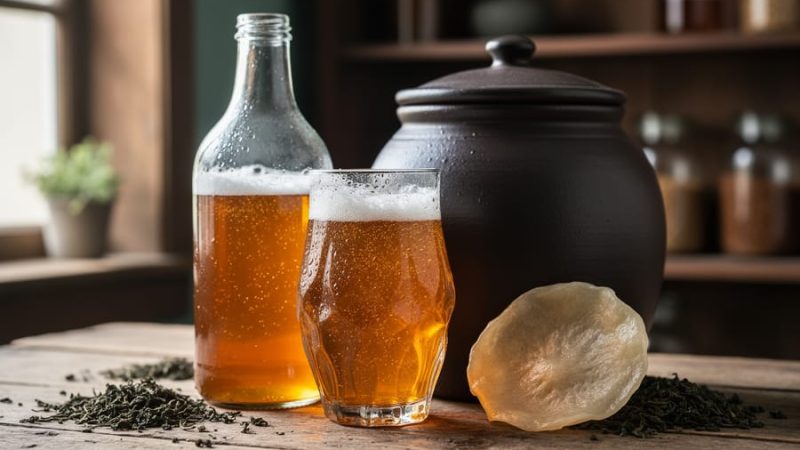
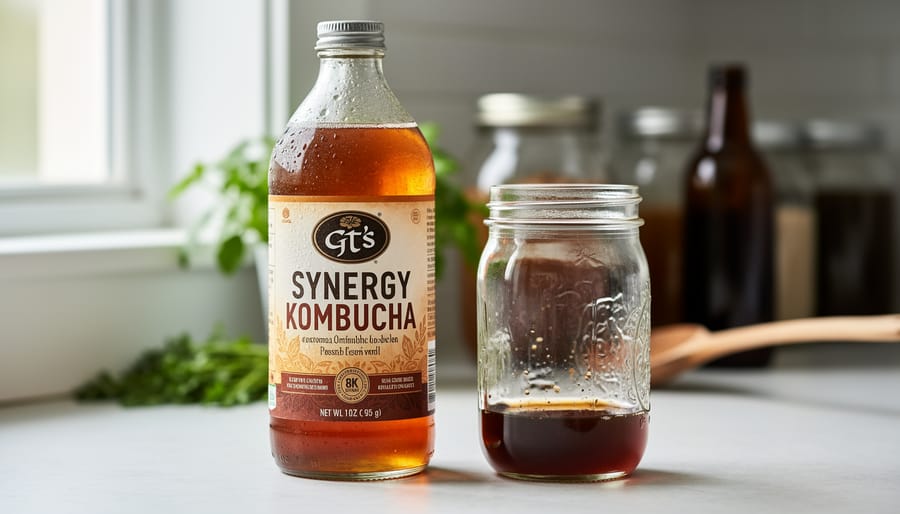
GT’s Synergy Kombucha is available across Canada at major grocery chains including Sobeys, Safeway, Food Basics, and Save-On-Foods, with 16-ounce bottles typically priced around $4.00 and options for in-store pickup or delivery. For home brewers, these same bottles serve double duty: you can drink them straight or use them as a starter culture to brew your own kombucha at a fraction of the retail cost. This dual approach lets you enjoy the convenience of ready-made kombucha while learning the fundamentals of fermentation without hunting for specialized SCOBY suppliers.
The beauty of working with Synergy is its accessibility. Unlike traditional kombucha brewing that requires obtaining a SCOBY (symbiotic culture of bacteria and yeast) from specialty suppliers or fellow brewers, Synergy bottles contain live cultures that naturally develop into a new SCOBY during fermentation. Since tracing the origin of kombucha thousands of years ago, home fermenters have propagated cultures this way, and GT’s raw, unpasteurized formula maintains those active organisms essential for successful brewing.
Canadian shoppers benefit from widespread retail distribution. GT’s Organic Synergy Raw Kombucha in flavors like Cranberry and Peach Paradise appears regularly on grocery shelves in 480-milliliter glass bottles, while seasonal varieties rotate through stores. Save-On-Foods offers online ordering with delivery or curbside pickup, making it simple to stock up whether you’re drinking it or brewing with it. The raw, glass-packaged format preserves the living cultures that both create Synergy’s signature effervescence and make it viable as a brewing starter.
Why Use Synergy Kombucha as Your Starter
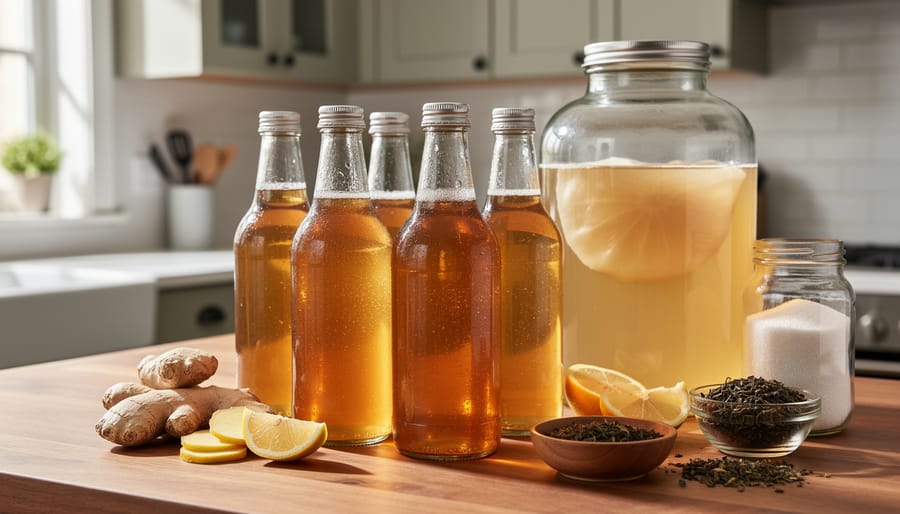
Using GT’s Synergy Kombucha as your starter culture offers several distinct advantages over traditional SCOBY-based methods or generic store-bought options. The raw, unpasteurized format means you’re working with live, active cultures that haven’t been killed off by heat processing, these beneficial bacteria and yeast are exactly what makes kombucha special and what you need to kickstart fermentation in your own batch.
Synergy’s glass packaging plays a crucial role in preserving culture viability. Unlike plastic containers that can leach chemicals or allow oxygen permeation, glass maintains the integrity of the live organisms from bottling to brewing. The kombucha inside stays potent, giving you a reliable foundation for your first fermentation.
- Guaranteed live cultures without hunting for a SCOBY from unknown sources
- Quality organic ingredients that carry over into your homemade batch
- Consistent fermentation results thanks to GT’s established brewing standards
- Immediate availability at Canadian retailers instead of waiting for mail-order cultures
- Lower barrier to entry, grab a bottle and start brewing the same day
The established quality of GT’s brewing process means you’re not gambling on whether your starter contains the right balance of bacteria and yeast. Commercial operations like GT’s maintain strict quality control, so when you pour that Synergy into your sweet tea, you know you’re introducing proven cultures capable of transforming your base into proper kombucha. This reliability matters especially for first-time brewers who might struggle to identify whether a homemade SCOBY or questionable online culture is healthy or contaminated.
Where to Buy Synergy Kombucha in Canada for Your Starter Culture
Major Grocery Chains Carrying Synergy
GT’s Synergy Kombucha has strong distribution across Canada’s major grocery chains, making it convenient to pick up a bottle for your starter culture during your regular shopping trip.
Sobeys Inc. carries Synergy products throughout their stores. You’ll find the raw kombucha selection in the refrigerated beverage section, typically near other fermented drinks or natural foods. The glass bottles preserve the live cultures you need for brewing.
Safeway Canada stocks several Synergy varieties, including GT’s Organic Synergy Raw Kombucha Cranberry in the 480ml format. This size works well for starter culture purposes, giving you enough liquid to begin a batch while leaving some to drink. Check your local Safeway’s refrigerated drinks aisle, usually positioned alongside specialty beverages.
Food Basics offers GT’s Synergy Raw Grape Kombucha with in-store pickup available. This option lets you order online and collect your bottle without browsing the aisles, which is handy when you’re specifically shopping for brewing supplies. The grape variety provides a neutral flavor base that won’t dominate your first batch.
Not every location stocks identical flavors, so if you’re looking for a specific variety, call ahead or check the store’s website. Most chains rotate seasonal offerings throughout the year, which explains why you might see different options on each visit.
Online Ordering and Delivery Options
Save-On-Foods offers a convenient online shopping platform where you can purchase GT’s Synergy Raw Kombucha Peach Paradise for either home delivery or curbside pickup. This flexibility makes it easy to stock up on starter culture without visiting the store, particularly useful when you’re planning a brewing session and want to ensure you have fresh Synergy on hand.
To order, visit the Save-On-Foods website and search for GT’s Synergy products in their beverage section. You’ll need to enter your postal code to confirm whether delivery or pickup services are available in your area, as coverage zones vary by location. Once you’ve verified service availability, you can add bottles to your cart and select your preferred fulfillment method, same-day or next-day delivery to your door, or curbside pickup at a nearby store.
The online inventory system updates regularly, so if Peach Paradise is out of stock, check back within a day or browse other GT’s Synergy flavors that work equally well as starter cultures. Delivery fees and minimum order requirements apply depending on your location, but bundling your Synergy purchase with other groceries can help you meet thresholds while setting up your brewing supplies in one order.
What to Look for When Purchasing
When shopping for Synergy Kombucha to use as your starter culture, prioritize unflavored or lightly flavored varieties, heavy fruit additions can introduce unwanted sugars that complicate your first fermentation. Look for “raw” and “unpasteurized” clearly marked on the label; these live cultures are essential for successful brewing. Check the expiration date and choose the freshest bottle available, as older stock may have weakened bacterial activity.
Expect to pay around $4.00 for 16-ounce seasonal varieties at Canadian retailers. Glass packaging protects the beneficial bacteria better than plastic, and GT’s Synergy uses exclusively glass bottles. Inspect each bottle for visible sediment at the bottom, that cloudy layer indicates active cultures, which is exactly what you want for brewing.
Tools and Ingredients You’ll Need
Getting started with home kombucha brewing requires just a handful of basic tools and ingredients, with GT’s Synergy Kombucha serving as your ready-made starter culture. The beauty of this approach is that you can pick up everything you need during a single grocery run to one of the many Canadian retailers carrying Synergy products.
Here’s what you’ll need to brew your first batch:
- Fermenting vessel: A 1-gallon glass jar or ceramic crock with a wide mouth for proper air circulation
- Breathable cover: A tightly woven cloth or coffee filter secured with a rubber band to keep out contaminants while allowing oxygen flow
- Large pot: For brewing and dissolving sugar in your tea base
- Wooden or plastic stirring spoon: Metal can react with the fermentation acids, so avoid it during brewing
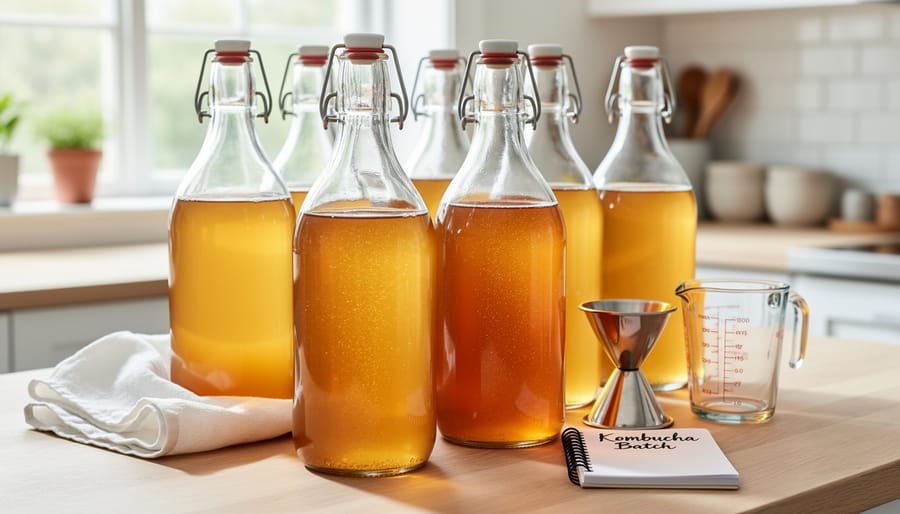
- Glass bottles for second fermentation: Swing-top bottles or recycled kombucha bottles with tight seals to build carbonation
- Kitchen thermometer: To ensure your sweet tea cools to the right temperature before adding your Synergy starter
- pH strips (optional but recommended): For monitoring acidity and ensuring safe fermentation
- Black or green tea: Organic loose-leaf or bags work equally well; avoid flavored varieties with oils
- White granulated sugar: One cup per gallon of tea to feed the fermentation
- Filtered water: Chlorinated tap water can harm the beneficial cultures, so use filtered or spring water
- GT’s Synergy Kombucha: One 480ml bottle provides enough starter culture for a full gallon batch
When shopping for your Synergy starter, any unflavored or lightly flavored raw variety will work. You can find GT’s Organic Synergy Raw Kombucha in flavors like Cranberry at Safeway Canada or Grape at Food Basics, both in convenient glass packaging that preserves the live cultures you need. The raw, unpasteurized format is essential since pasteurization would kill the bacteria and yeast required for fermentation.
Keep your workspace clean and your equipment sanitized. While you don’t need a sterile laboratory environment, washing everything with hot soapy water and rinsing thoroughly will prevent unwanted bacteria from competing with your kombucha cultures.
Safety Guidelines Before You Start
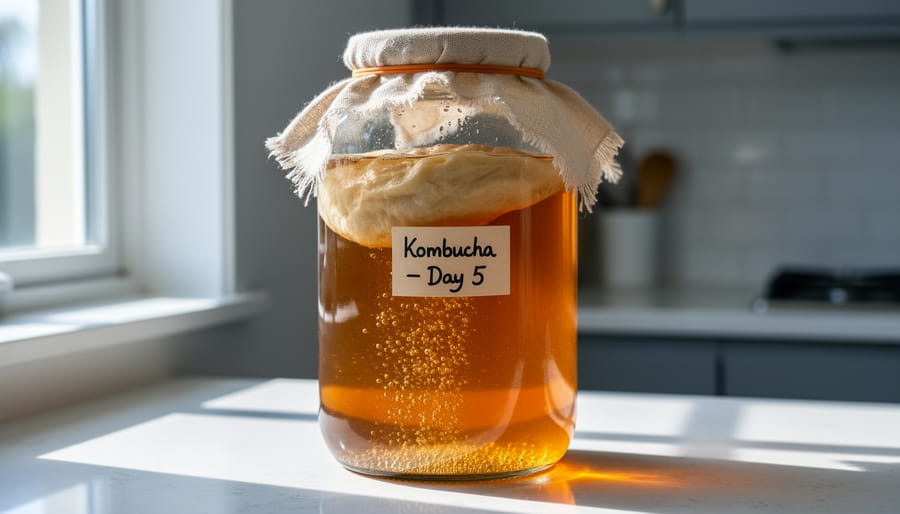
Before you begin your week-long fermentation journey understanding proper safety protocols is essential for brewing kombucha that’s both delicious and safe to drink.
Start with sterilization. Wash all equipment, your fermenting vessel, utensils, bottles, and measuring tools, with hot, soapy water, then rinse thoroughly with boiling water or white vinegar. Residual soap can interfere with fermentation, so ensure everything is completely clean. Your hands should be freshly washed before handling any ingredients or touching the brewing vessel.
Temperature control matters. Ferment your kombucha in a space that stays between 68-78°F, away from direct sunlight and potential contaminants like fruit flies. Cover your vessel with a breathable cloth (tightly secured with a rubber band) rather than a sealed lid, allowing airflow while keeping debris and insects out.
Monitor pH levels if possible. Healthy kombucha should drop to a pH of 2.5-3.5 during fermentation. A pH above 4.2 after several days suggests weak fermentation and higher contamination risk.
Mold typically appears in the first few days if it’s going to develop. Unlike the smooth, cream-colored SCOBY that forms naturally, mold looks dry and fuzzy. When in doubt, throw it out. Don’t taste a batch you suspect is contaminated.
Keep your workspace clean, avoid cross-contamination from other fermentation projects, and never use cracked or chipped glass containers that can harbor bacteria in crevices.
Step-by-Step Brewing Process
Preparing Your Sweet Tea Base
Start by boiling 4 cups of filtered or spring water. Once it reaches a rolling boil, remove from heat and add 4-5 tea bags of black tea, green tea, or a combination of both. If you are using loose-leaf tea instead of bags, measure out 1-2 tablespoons and steep according to how to brew tea properly typically 3-5 minutes for black tea and 2-3 minutes for green tea. Remove the tea bags or strain out the leaves, then immediately add 1 cup of white granulated sugar while the tea is still hot, stirring until completely dissolved.
Pour the sweetened tea concentrate into your fermenting vessel, then add 8-12 cups of cool filtered water to bring the total volume to about 1 gallon. This dilution step is critical for achieving the right starting temperature. Test the liquid with a clean thermometer, aiming for 68-85°F before you add your Synergy starter. If the mixture is too warm, wait another 30-60 minutes and test again. Adding Synergy to hot liquid will kill the beneficial bacteria and yeast cultures, ruining your batch before fermentation even begins.
Adding Your Synergy Starter and Beginning Fermentation
Once your sweet tea has cooled to room temperature, measure out the right amount of Synergy starter. The standard ratio is one cup (240ml) of raw Synergy kombucha per gallon (approximately 4 liters) of sweet tea. For smaller batches, use about two tablespoons of Synergy per cup of sweet tea. Any unflavored or lightly flavored GT’s Synergy variety works well, though unflavored gives you the most neutral starting point.
Pour the Synergy directly into your cooled sweet tea and stir gently with a clean wooden spoon or plastic utensil, avoid metal, which can react with the acidic kombucha. The live cultures from the raw, unpasteurized Synergy will immediately begin colonizing the sweet tea, though you won’t see visible activity yet.
Cover your fermenting vessel with a clean cloth or coffee filter secured with a rubber band. This breathable cover allows necessary airflow while keeping out dust, insects, and airborne contaminants. Never seal the jar with a lid during first fermentation, as the cultures need oxygen and the process produces gases that must escape.
Place your covered vessel somewhere with stable temperature between 68-78°F (20-26°C). A kitchen counter away from direct sunlight works perfectly. Avoid spots near heating vents, air conditioners, or windows with temperature fluctuations. Keep the vessel out of direct light, which can interfere with fermentation and degrade nutrients. The location should be accessible for monitoring but undisturbed, resist the urge to move or jostle the fermenting kombucha unnecessarily.
Monitoring First Fermentation
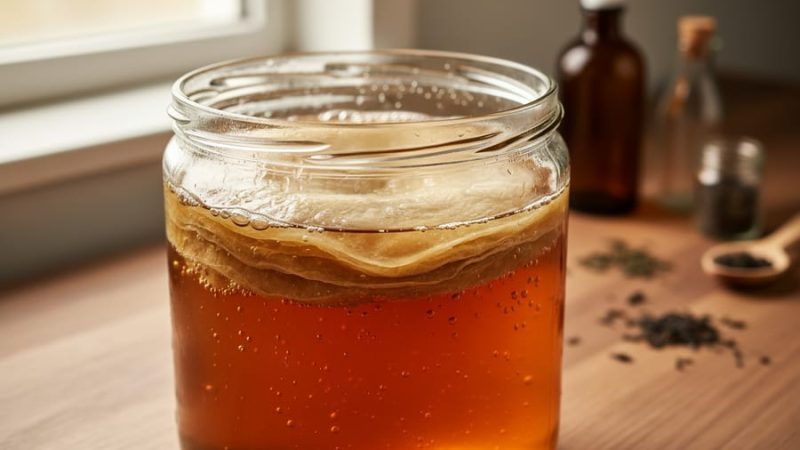
During the first week, your fermenting kombucha will look fairly quiet, maybe a few bubbles clinging to the glass and a slightly cloudy appearance as the Synergy cultures begin multiplying. Between days seven and ten, you’ll likely notice a thin, translucent film forming on the surface. That’s your new SCOBY developing from the live bacteria and yeast in the Synergy starter. It might look patchy or uneven at first, which is completely normal.
Start taste-testing around day seven by pouring a small sample with a clean spoon (never double-dip). Early kombucha tastes sweet with a mild tang. As fermentation progresses, the sweetness fades and the tart, vinegary notes strengthen. You’re aiming for a balance that suits your palate, some prefer it sweeter around day eight, others let it go until day twelve or fourteen for a sharper, drier finish.
Temperature drives the timeline. Warmer spots (75-80°F) accelerate fermentation, sometimes finishing in seven days, while cooler environments (68-72°F) need the full two weeks or longer. If it’s taking too long, move your vessel somewhere warmer; if it’s souring too fast, shift it to a cooler spot. Trust your taste over the calendar, when it hits that sweet-tart balance you enjoy, it’s ready to bottle, regardless of the day count.
Bottling and Optional Second Fermentation
Before bottling, set aside one to two cups of your finished kombucha as starter for your next batch, this homemade starter will work just as well as the original Synergy you purchased from Sobeys or Safeway. Pour the remaining kombucha through a fine-mesh strainer into clean glass bottles, leaving about an inch of headspace. For a plain, unflavored brew, cap immediately and refrigerate. If you want carbonation or added flavor, this is your chance: add fresh fruit, juice, ginger, or herbs directly to each bottle (about 10-20% of the bottle volume), then seal tightly and leave at room temperature for 2-4 days to build fizz. Burp the bottles daily to release excess pressure. Once carbonation reaches your preferred level, move all bottles to the refrigerator to halt fermentation and preserve flavor.
How to Tell When Your Kombucha Is Ready

Knowing when your homemade kombucha has finished fermenting takes practice, but a few reliable indicators make the process straightforward. After seven to fourteen days of first fermentation, start checking your brew daily using multiple verification methods to determine readiness.
Taste testing is your primary tool. Draw a small sample with a clean spoon and evaluate the flavor balance. Ready kombucha should taste pleasantly tart with a slight sweetness remaining, not sugary like the initial sweet tea, but not vinegary either. The transformation happens gradually: early batches taste mostly sweet, then develop a mild tang around day five or six, and eventually reach that characteristic sweet-tart balance. Your personal preference dictates the exact stopping point, so trust your palate.
Your kombucha is ready when it shows these key indicators:
- Taste balances tart and sweet, without excessive sugar or vinegar sharpness
- pH measures between 2.5 and 3.5 (use inexpensive pH strips from brewing supply stores)
- Liquid appears cloudy rather than clear, with possible yeast strands suspended throughout
- Smell is pleasantly acidic and yeasty, similar to the Synergy starter you used
- Gentle fizz appears when you stir the brew, indicating active fermentation
Temperature significantly affects fermentation speed. Warmer environments (75-85°F) finish faster, sometimes in seven days, while cooler rooms (68-72°F) may need the full two weeks. If your kombucha tastes too sweet after fourteen days, leave it another few days and test again. Conversely, if it becomes too sour for drinking, don’t discard it, reserve some as an extra-strong starter for your next batch, which will ferment faster thanks to the higher acidity and concentrated cultures.
Troubleshooting Common Issues
Home brewing with Synergy as your starter occasionally hits a snag, but most issues have straightforward fixes once you know what to look for.
Weak or stalled fermentation usually points to temperature problems. If your fermenting vessel sits in a spot cooler than 20°C, the culture slows dramatically. Move it somewhere warmer, or wrap the jar in a towel during cold months. Check that you’re using enough starter, at least 10% of your total liquid volume. Too little Synergy means the cultures struggle to acidify the sweet tea quickly enough.
Excessive sourness happens when fermentation runs too long or too warm. Taste your brew daily after day seven, and refrigerate once you hit the tartness you prefer. Next batch, reduce fermentation time by two or three days, or relocate your vessel to a cooler corner of the kitchen. The longer kombucha ferments, the more sugar converts to acid.
Lack of carbonation during second fermentation often comes from insufficient sugar for the yeast to consume in the bottle. Add a teaspoon of fruit juice, fresh ginger, or a pinch of sugar to each bottle before sealing. Make sure bottles are completely airtight, and give them at least three days at room temperature before refrigerating.
If a SCOBY doesn’t form after two weeks, your Synergy starter might have been too cold or diluted. Use a fresh bottle from stores like Sobeys or Safeway next time, and ensure it’s raw and unpasteurized. The culture layer will develop gradually as fermentation progresses.
Unexpected off-flavors, vinegary, overly yeasty, or musty, signal contamination or imbalance. Sterilize all equipment thoroughly before each batch, keep the brewing area clean, and discard any brew showing mold or foul odors. Start fresh with new Synergy starter and sterilized tools to reset the process.
Frequently Asked Questions
Can I use flavored Synergy varieties as a starter culture?
Yes, flavored varieties like GT’s Synergy Raw Grape Kombucha or Cranberry work as starter cultures, though they may impart subtle flavor notes to your first batch. For the most neutral starting point, choose lightly flavored options, and your homemade kombucha will develop its own profile after the first generation.
How many batches can one bottle of Synergy start?
A single 480ml bottle can start your first batch and then continue indefinitely through successive brewing cycles. Each time you bottle your finished kombucha, you’ll reserve a portion as starter for the next batch, making that initial Synergy purchase a one-time investment rather than a recurring expense.
How long does homemade kombucha last compared to store-bought Synergy?
Properly refrigerated homemade kombucha stays fresh for two to three weeks, similar to opened commercial bottles. The main difference is that homemade versions may continue fermenting slowly even when chilled, becoming slightly more tart over time, whereas unopened Synergy bottles remain stable until their printed expiration date.
Is brewing at home cheaper than buying Synergy from Canadian stores?
Home brewing dramatically reduces per-bottle costs once you’ve started. While a 480ml Synergy bottle at Safeway or Sobeys runs around $4.00, the ingredients for a homemade gallon (about eight 480ml servings) cost roughly $3.00 to $4.00 total in tea and sugar, with your initial Synergy starter being reusable across countless batches.
The cost comparison becomes even more favorable as you scale up production. If you drink kombucha regularly, purchasing ready-made Synergy at Food Basics or Save-On-Foods can add up quickly, whereas home brewing lets you produce large quantities for the price of basic pantry staples. That said, many brewers keep both options in rotation, buying Synergy when they want specific flavors like Peach Paradise or need the convenience of grab-and-go bottles, while maintaining their home brewing practice for everyday consumption. The beauty of learning to brew is that you’re never locked into one approach, and having Synergy readily available through delivery or curbside pickup at Canadian retailers means you can always supplement your homemade supply when life gets busy.
Making kombucha at home with Synergy as your starter culture puts quality fermentation within reach, especially when GT’s products are readily available across Canada at Sobeys, Safeway, Food Basics, and Save-On-Foods. You’ll save considerably over time, one $4.00 bottle can start multiple batches, each yielding several servings that would cost significantly more if purchased individually. The convenience of online ordering with delivery or curbside pickup at Save-On-Foods makes restocking your starter simple when you need it.
Once you’ve mastered the basic brewing process, don’t hesitate to experiment. Try different tea bases, play with fermentation times to adjust tartness, or explore fruit and herb combinations during second fermentation. Some batches will turn out better than others, and that’s part of the learning curve.
Both paths, brewing your own or buying ready-made Synergy, offer authentic raw kombucha in glass bottles with active cultures intact. Home brewing gives you creative control and cost savings; purchasing ready-made provides consistent flavor and zero effort. Many enthusiasts do both: keeping favorite Synergy flavors on hand while brewing their own experimental batches. Either way, you’re getting quality fermented tea that delivers the probiotic benefits and refreshing taste kombucha lovers seek.